
Tech Force set out to hire 1,000 technologists last year — it’s onboarded 10 so far
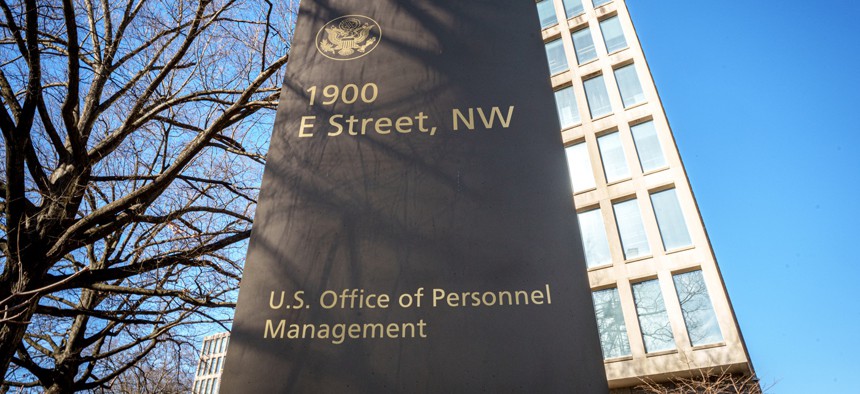
J. David Ake/Getty Images




 By
Natalie Alms
By
Natalie Alms
The effort is meant to infuse the government with young engineers, cyber and data workers. It follows the loss of almost 20,000 technology workers through the Trump administration’s efforts to downsize the workforce last year.
Late last year, the Trump administration began an effort to recruit early-career software and data engineers after pushing almost 20,000 technology employees out of their government jobs under widespread downsizing imperatives.
The goal of that new effort, called the U.S. Tech Force, was to hire a 1,000-strong cohort — potentially as soon as the end of March, Scott Kupor, the head of the Office of Personnel Management, said in December.
So far, the program has onboarded only 10 new hires, Tech Force Director Kevin Hennecken said during a Thursday event held by the Alliance for Digital Innovation trade association. Overall, the program has made 180 to 200 hires.
“I would love to have everybody here yesterday,” Kupor told Nextgov/FCW in an interview. “But I’m learning the government hiring process does take time.”
OPM is managing the program centrally, working with agencies across the federal government to place fellows into two-year stints. OPM is also partnering with about 40 companies, like Amazon Web Services and Nvidia, to train the new hires, as well as provide managers from within their own ranks to take a leave of absence to work for the government.
Onboarding these new managers has also lagged. Three or four managers are in the process of onboarding now, said Kupor.
The Justice Department issued a memo in March blessing OPM’s plan to allow those private sector managers to keep their deferred compensation packages while working for the government — a setup that’s made ethics experts nervous.
“It’s always going to be slower than we would have wanted, but I don't think we’re discouraged by that at all,” said Hennecken, who said that the goal is to hire 300 to 500 fellows by the end of the summer. “I think it just takes time to build a program.”
A ‘heavyweight process’
Federal hiring is governed by strict rules and processes, some of which were established centuries ago and were meant to move the government from the spoils system to one based on merit.
It’s a “heavyweight process” that moves more slowly than the private sector, said Kupor, who previously worked in venture capital.
Kupor often laments the relatively small number of young workers in the federal government compared to the private sector. How to recruit and hire early-career talent within the federal system has long been a difficult challenge that has intersected with efforts to move the government away from antiquated technology into the 21st century.
Other efforts to hire cybersecurity talent or fill the gap by re-training existing employees with new skills have also stumbled.
For Tech Force, OPM has had to clear up “confusion” among HR officials in agencies about how some of the typical government hiring rules apply, said Kupor. The government typically prioritizes federal employees who have been laid off if they apply for other, open jobs that they’re qualified for.
That could have been welcome news for feds displaced last year as the Trump administration sought to shrink the size of the government workforce, many of whom are still searching for new jobs. But those rules don’t apply to Tech Force because of the type of hiring authority being used, said Kupor.
Government agencies also aren’t used to hiring off of centralized lists like those OPM is using to share Tech Force candidates after centrally testing and screening applicants, said Kupor, although doing more centralized hiring is one of his goals.
The hurdles have inspired an effort to drive a “tighter alignment” between agencies’ HR heads and senior political officials as part of OPM’s broader early career hiring push, said Kupor, so that any questions can be worked through more quickly.
A higher entry point
Eric Sidle, chief information officer and chief artificial intelligence officer at the Department of Housing and Urban Development, said Tuesday that delays in getting the new program going aren’t OPM’s fault.
The government’s HR agency is doing a "phenomenal job,” he said, noting that agency personnel shops themselves are busy balancing this effort against other priorities.
The early career talent that the government does hire as part of Tech Force — which may include cybersecurity-focused employees after OPM added that focus in April — will be making between $150,000 and $200,000, which is more than early-career hires in government typically make.
The government already has an early career tech program, called the U.S. Digital Corps, although it hasn’t onboarded a class since Trump took office for his second term. It pays its D.C. fellows a starting salary of $86,000.
While Tech Force is bringing employees into the government at a GS-14 level on the government’s pay and classification system — one of the highest available on the General Schedule — Digital Corps hires fellows at a GS-9 with the potential for promotions.
For Tech Force, agencies are getting resumes ranging from recent college graduates to people with a few years of experience on the job, one person familiar with the program told Nextgov/FCW.
Whether the relatively high pay being offered to those joining the program will affect the morale of the teams they’re joining is an open question, that person said. The Tech Force applicants being shared with agencies don’t have the typical experience and skills of someone at a GS-14 level, they added.
Those running Tech Force have emphasized that the government often struggles to compete for in-demand tech talent against the private sector, in part because the latter can usually pay more.
Unlike the U.S. Digital Corps, which was designed to funnel early-career talent into permanent roles, keeping the talent recruited by Tech Force in government service isn’t necessarily an expectation.
By working with OPM, private sector companies are meant to prove to potential applicants that the experience they get in the government will be valued on the market when they’re done.
While in the government, many of the new hires will be working in agencies on wholly contained Tech Force teams, but, in some cases, they’ll be integrated into existing units at government agencies, said Kupor.
Three weeks ago, OPM itself onboarded the first Tech Force fellow, who graduated college last year.
Kupor said he’s planning to bring more fellows into OPM to work on the Trump administration’s ‘War on Fraud’ by using data science to flag potential fraud in the government’s health insurance portfolio that is run for federal employees.
If you have a tip you'd like to share, Natalie Alms can be securely contacted at nalms.41.
NEXT STORY: Top White House cyber policy official to soon depart