
White House expected to direct intelligence agencies to protect quantum research from foreign threats
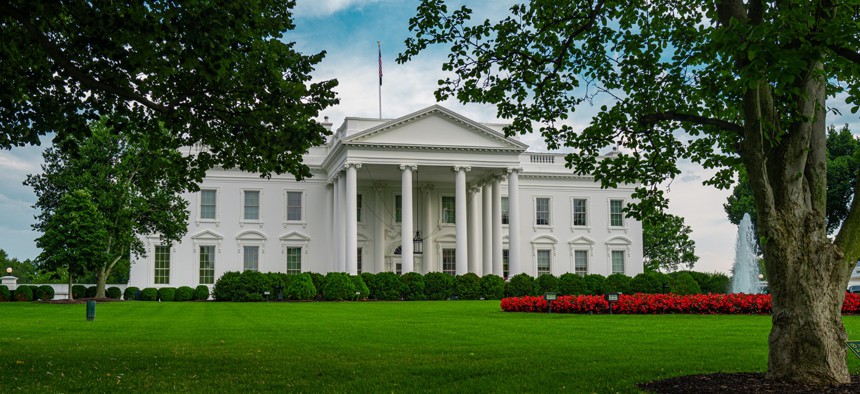
Tverdohlib/Getty Images


The executive order is expected this week and tasks the departments of Defense and Energy to build and host a quantum computer for scientific discovery.
A pending executive order expected this week will task the FBI and intelligence community with better protecting the nation’s quantum research from foreign spying, according to four people familiar with the matter and a readout viewed by Nextgov/FCW.
The people spoke on the condition of anonymity to communicate non-public details about the forthcoming order.
Two of the people said the order may be ready as soon as Monday, while one of the people said two quantum-related orders could be signed, with one targeting the broader quantum information sciences and technology research enterprise and the other bolstering post-quantum cryptography migration efforts.
The order with counterintelligence directives would also task the Energy and Defense departments to build and host a quantum computer for scientific research. Additionally, the Commerce Department would be told to draft plans for expanding federal investment in quantum computing companies, as Nextgov/FCW previously reported.
The instructions for the FBI and other intelligence agencies suggest officials expect foreign adversaries like China to increasingly target sensitive U.S. quantum research as the emerging technology becomes more prevalent in economic competition and national security discussions.
The directive also places quantum research security inside the broader race against “Q-day,” when powerful quantum computers could break today’s widely used encryption standards that protect government secrets, financial transactions and other sensitive data around the world. There is no firm Q-day deadline, but many experts place the risk in the 2030s.
“Quantum is exactly the kind of target foreign intelligence services prioritize. It is a small field, the talent is concentrated in a handful of universities and companies, and the work sits at the seam between fundamental research and national and economic security,” said Michael McLaughlin, a former U.S. Cyber Command official who served as chief of counterintelligence and human intelligence in the Cyber National Mission Force.
“That combination of extremely high value and a small, open community is what the counterintelligence community calls a soft target. Our adversaries do not need to break encryption to win here. They can recruit a researcher, co-opt a supplier, or use private equity to buy a lab and acquire a decade of progress at a fraction of the cost,” he said. “Treating quantum research as a counterintelligence priority is long overdue.”
Stronger anti-espionage protections, McLaughlin added, should include insider-threat and personnel security programs for academic and commercial labs; deeper reviews of equipment, software, vendors and people with access; closer scrutiny of foreign investment and talent-recruitment programs; and faster threat-sharing with universities and companies.
Anne Neuberger, who served as a deputy national security advisor under then-President Joe Biden, also argued in a June 17 Foreign Affairs analysis that the U.S. and allied intelligence agencies need to prioritize protecting private sector quantum property from espionage.
Advanced quantum computers would be important for national intelligence agencies like the NSA because they could eventually help break certain encryption systems and give the U.S. new ways to solve complex computing problems.
Its national security value also extends beyond encryption. The Army said this month that its researchers demonstrated a new quantum sensor that could help soldiers detect radio signals and better understand where they are coming from.
Conversely, adversary possession of a cryptographically relevant quantum device could allow foreign governments to decrypt protected U.S. communications, expose intelligence sources and compromise sensitive government or military data.
Researchers and officials have frequently warned of adversaries conducting “harvest now, decrypt later” attacks, collecting encrypted data today with the expectation that future quantum tools may allow them to read it years later.
During his first term, President Donald Trump signed the National Quantum Initiative Act, a 2018 law that helped organize the federal government’s quantum research push. Since key parts of it lapsed in 2023, Congress has been angling to reauthorize its provisions.
The expected order signals to some in the private sector that the U.S. government sees quantum computing as a strategic industry worth backing, and that federal support could help accelerate new uses for the technology.
“Washington made two things clear. America intends to build the most capable quantum systems in the world, and it intends to defend the infrastructure and data those systems can break,” Matt Cimaglia, the founder of investment firm Quantum Coast Capital, told Nextgov/FCW. “Capital follows that kind of clarity. When the government puts real demand behind the best technology and sets hard deadlines to protect the country, private investors know exactly where to commit.”