Supply Chain


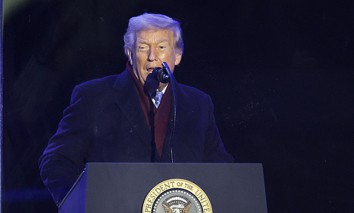
Trump’s national security strategy wants spy agencies to watch world supply chains
The paper puts much of its emphasis on the Western Hemisphere, while pushing for closer cyber collaboration with both regional partners and the private sector.
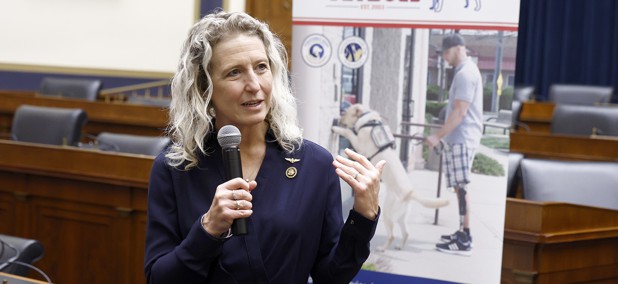

House bill wants VA to pilot cloud-based medical supply management system
The bipartisan proposal from Reps. Jen Kiggans, R-Va., and Jimmy Panetta, D-Calif., would direct the agency to test the system at one VA medical facility before potentially expanding it out further.


US dominance in AI needs to occur at every component layer, tech leaders say
Experts testifying in the Senate on Thursday noted how the entire artificial intelligence technology stack needs to be U.S.-led for global dominance in the field.


NVIDIA announces plans for fully US-manufactured AI supercomputers
The computer manufacturing company announced a new industry-wide effort to spearhead domestic semiconductor production, as the administration hails it as part of the broader “Trump effect” on industry.
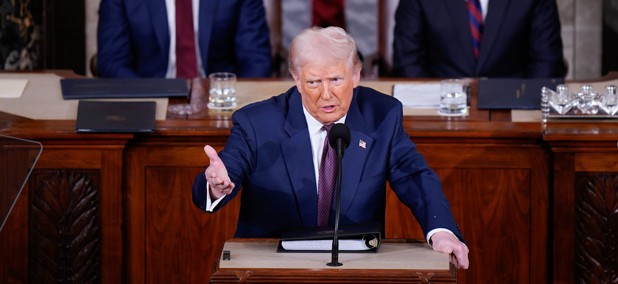

Democrats move to defend CHIPS following Trump’s calls for its removal
Following President Trump’s congressional address lambasting the landmark Biden administration bill, Democrats sounded off on Monday in its defense.


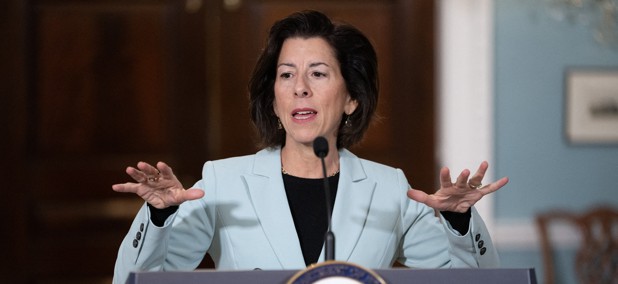
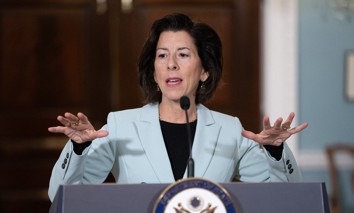
Commerce announces new export control on US AI products
The new export controls will alter licensing requirements for AI chips and closed-source models to allow allied nations to access U.S. AI innovation while preventing adversarial nations from doing so.


Device detonations reveal ‘incredible’ intelligence abilities: ex-NSA chief
“I think about our own supply chains and what we need to be able to do to ensure their integrity,” Paul Nakasone said.


White House launches digital twins funding opportunity
The Biden administration is investing over $280 million into digital twin technologies to innovate in semiconductor manufacturing and research.


New purpose-designed chips poised to boost generative AI development
Ethical use and computing power are two of the top concerns in getting AI into government service.
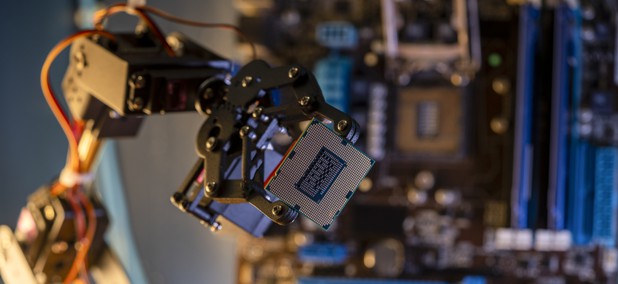

Commerce updates semiconductor supply chain alert system
Commerce and the International Trade Administration encouraged public and private organizations to submit reports on disruptions in the microelectronics’ supply chain.


Defense and Commerce team up to support semiconductor investments
The two federal agencies signed a memorandum of agreement to exchange information on programs outlined under the CHIPS for America Act.
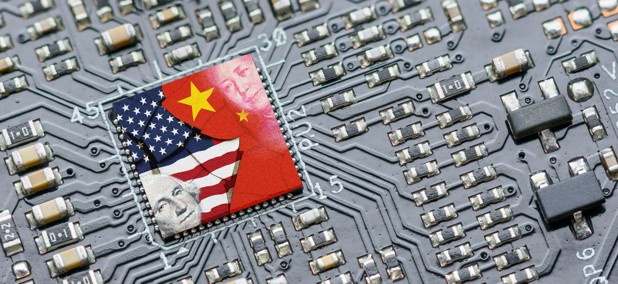

Semiconductor industry group warns against new limits on chip exports to China
A spokesperson for the National Security Council told Nextgov/FCW that the Biden administration’s export controls “have been carefully tailored to focus on technology with national security implications.”





State Department's Plan to Use $500M CHIPS Funding to Bolster the Supply Chain
The State Department is using its CHIPS funding to foster relations with allies, strengthen supply chains and build a robust semiconductor ecosystem.


US Needs Biotechnology Investment to Avoid Playing Catch-Up in Future, Admin Official Says
OSTP Director Arati Prabhakar discussed the Biden administration’s ongoing tech priorities following a record-breaking fiscal year 2024 budget request for research and development.


NIST Unveils Vision and Strategy for National Semiconductor Tech Center
The center will support semiconductor research and development efforts to advance U.S. competitiveness.

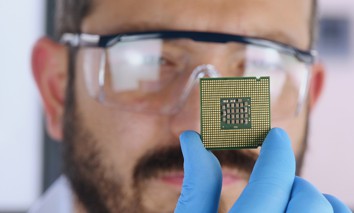
Government, Industry and Academia Stress Need for Semiconductor Workers
The experts from each sector noted it is imperative for the U.S. to address this workforce challenge to meet the nation’s semiconductor needs and innovate.

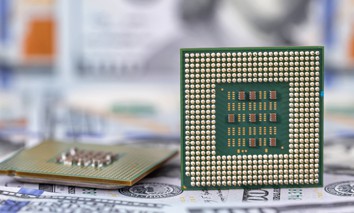
Republican Lawmakers Want to Know Where $50B CHIPS Funding is Going
Several Republican leaders sent a letter to Commerce Secretary Gina Raimondo asking for details about the funding.


Industry Lays Out Strategy for National Semiconductor Center Success
There are four key items needed to create a resilient semiconductor ecosystem and to help boost U.S. competitiveness.
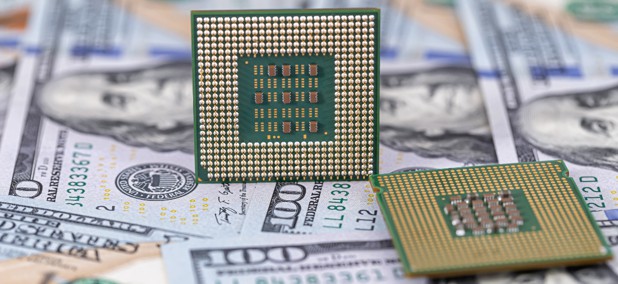

First CHIPS for America Funding is Now Available
The $39 billion will go towards American semiconductor manufacturing.


Commerce Head Says U.S. Must Double Semiconductor Workforce in Next Decade
The Commerce Secretary hopes to help meet American leadership, innovation, national security and economic goals.
