
House passes 10-day FISA extension after prospects of long-term deal collapse
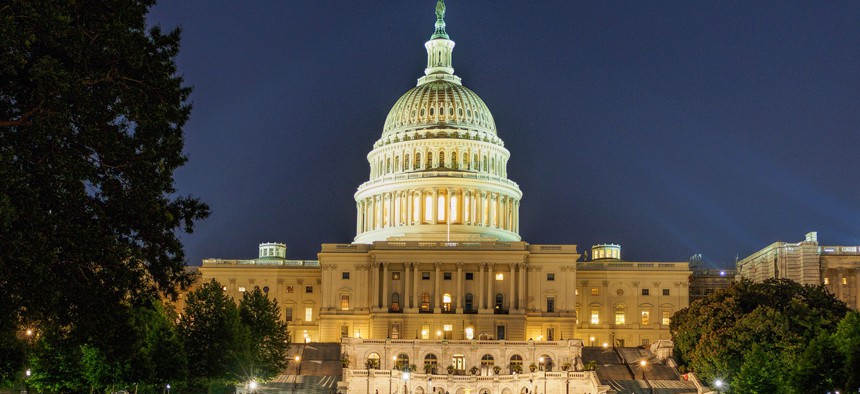
Darwin Fan/Getty Images






The short-term patch was cleared via unanimous consent after opposition from many Democrats and GOP hardliners sank a 5-year proposal with reforms not satisfactory to privacy advocates.
The House early Friday passed a 10-day extension of a key U.S. surveillance program after broader reauthorization efforts collapsed amid GOP divisions over the bill’s final form, derailing the Trump administration’s push for a longer-term renewal.
The spying power, Section 702 of the Foreign Intelligence Surveillance Act, lets U.S. intelligence agencies warrantlessly compel communications providers to furnish messages of foreign targets abroad. In the process, agencies can also collect Americans’ communications if they are in contact with those targets. Privacy advocates have long pushed for a requirement that agencies like the FBI and NSA obtain a warrant before searching U.S. person data collected under the program.
The 10-day measure, passed via unanimous consent, would grant lawmakers some additional time to negotiate over the future of the surveillance program. Under the bill, the surveillance law would extend the program until April 30. For now, it expires April 20, unless Congress acts in time. The short extension now goes to the Senate for consideration.
After an hours-long holding period from House leadership Thursday, a proposal to extend the authority for five years with a number of add-ons was introduced just before midnight, but it unraveled in the lower chamber early Friday morning amid opposition from many Democrats and GOP hardliners.
That measure would have extended Section 702 while adding new limits to how the FBI uses Americans’ data, but it did not require a warrant for those searches, which angered the civil liberties community.
“The substance of this proposal is utterly appalling. They say you shouldn’t look to see how the sausage gets made. This isn’t even sausage,” Rep. Jamie Raskin, D-Md., the ranking member of the House Judiciary Committee, said on the House floor in reaction to the 5-year proposal. “This is scrapple. It’s scrapple with dog food mixed inside of it.”
The Trump administration had initially sought a clean extension of the law for an 18-month period, meaning that a warrant reform would not be included in its desired reauthorization. But that 18-month bid collapsed soon after the 5-year proposal had tanked.
The outcomes are underscoring a growing likelihood that Republican leaders and the Trump administration may need to revise the legislation to win enough support, or convince hold-outs to not go against the White House’s wishes. The House Freedom Caucus, a group of GOP hardliners, has been a key source of opposition for the administration throughout the reauthorization process.
But the fight over the surveillance authority has also been shaped by rising unease over privacy and government power, with Democrats and advocacy groups questioning how Americans’ communications are handled and processed once collected.
Those concerns have intersected with broader debates over domestic surveillance, immigration enforcement and the potential for advanced artificial intelligence tools to amplify the government’s ability to analyze sensitive personal data.
The White House, CIA and others have stressed the importance of maintaining the surveillance authority amid ongoing national security threats, including those from Iran. Intelligence officials have long argued against a warrant for queries of U.S.-person data because they believe it would slow down timely national security investigations.
In an appearance before the House Armed Services Committee on Thursday, NSA and Cyber Command director Gen. Josh Rudd told lawmakers the authority has assisted in recent military operations and is “vital to keeping the nation safe.”
In March, the Trump administration notified Congress that the Foreign Intelligence Surveillance Court renewed certifications for the surveillance program, letting it operate for another year even amid its potential expiration.
But the split between the court’s recertification process and Capitol Hill’s role in extending Section 702 can create uncertainty for companies required to comply. While the court approves how the program operates, only Congress can authorize it to continue, raising questions about whether firms would still be obligated to provide data if the law lapses.
The House will have to reconsider other renewal solutions next week, assuming the Senate passes the temporary 10-day extension measure.