
GSA announces latest cohort of Presidential Innovation Fellows
Douglas Rissing/Getty Images



The 17 experts chosen to participate in the program will be detailed to selected federal agencies to help them develop and scale technology-focused projects.
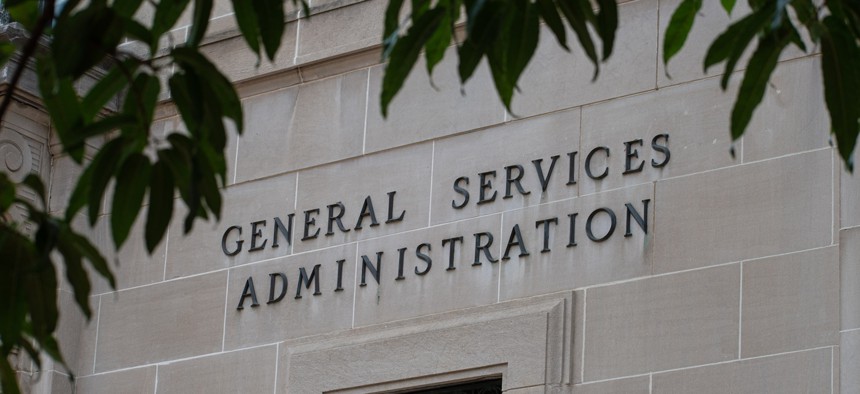
The General Services Administration on Thursday announced its 2026 cohort of Presidential Innovation Fellows, with the hand-picked technology experts set to be embedded within 10 different federal agencies.
In a release announcing the latest PIF class, GSA said the 17 technologists selected for the program include experts from leading U.S. companies and highlight the agency’s focus “on hiring top technology talent to deliver on key Administration and priority projects.”
The fellows will now spend a yearlong tour of duty at one of the 10 federal agencies selected to participate in this year’s PIF program, including the:
- Centers for Medicare and Medicaid Services
- Cybersecurity and Infrastructure Security Agency
- Department of Energy
- Department of State
- Department of Veterans Affairs
- Executive Office of the President
- National Institute of Standards and Technology
- National Oceanic and Atmospheric Administration
- U.S. Army Corps of Engineers
- U.S. Coast Guard
To participate in the PIF program, agencies submit project proposals to GSA detailing the issue areas they would like fellows to address, including outlining whether those focuses are “problems of critical agency and/or national priority,” and detailing a “clear line to positive impact, benefit, or customer experience for the public.” GSA then chooses the fellows and details them to some of the agencies.
“We are driving President [Donald] Trump’s mandate to deliver the most skilled technology workforce in the history of the U.S. government,” GSA Administrator Edward Forst said in a statement. “To achieve high-impact work that advances Administration priorities, we are embedding strong technical leaders who can perform with discipline and speed, filling critical skills gaps across our partner agencies and preparing them to meet the demands of the future.”
GSA said PIF fellows will provide guidance and support for projects designed to enhance public services and customer experience, including helping with implementation of the Cyber Incident Reporting for Critical Infrastructure Act, developing artificial intelligence tools to help speed up permitting for new infrastructure projects and helping to establish “an AI-ready Department of Veterans Affairs workforce and executing concrete AI and automation initiatives that improve veteran care delivery.”
The PIF program was first launched in 2012 during the Obama administration and was later codified by President Barack Obama in an August 2015 executive order. The fellowship operates as a part of GSA’s Technology Transformation Services.
“This class of PIFs represents the highest standard of technical talent in the federal government,” Greg Barbaccia, federal chief information officer and acting TTF director, said in a statement. “Their advanced expertise will advise our partner agencies on how they can best scale, secure, and transform the technologies that power our government.”
Since the start of the second Trump administration, the president — aided by the cost-cutting Department of Government Efficiency — has slashed the federal workforce, including eliminating GSA’s 18F consulting office that helped agencies with their technology needs. The U.S. Digital Service, which was founded the same year as 18F and helps agencies modernize their systems, has also been rebranded as the U.S. DOGE Service.
Almost 20,000 technology, data and telecommunications employees left their jobs in 2025 following Trump’s return to the Oval Office, according to government data previously analyzed by Nextgov/FCW.
Despite this government upheaval, the administration has placed an emphasis on hiring technologists and modernizing agency services, including loosening degree requirements to prioritize skills and experience. The White House also launched the U.S. Tech Force in December to help the government recruit AI talent.
NEXT STORY: Andrew Vanjani becomes CIO for USCIS