Regulations
Experts hope new AI czar’s leadership can move the needle on regulation
“Maybe [the AI czar] can work with Congress to help come up with some governance, some laws” covering AI, one former Trump official told Nextgov/FCW.


House Democrats call to cancel upcoming recess for time to legislate on AI
Four lawmakers stressed the need for more working days and bipartisan teamwork to respond to the national calls for strong artificial intelligence protections.
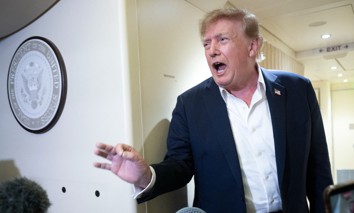
Trump redoubles pro-AI stance amid calls to slow development
Industry leaders put out a public call to “pace the frontier” of artificial intelligence development over the weekend, reinvigorating the debate over how to best compose effective regulations.


AI's growing role in rulemaking raises new transparency questions
As the Trump administration pursues an aggressive deregulatory agenda, concerns are mounting that artificial intelligence could make agency decisions harder to explain and defend.


Acquisition overhaul is providing needed ‘discretion’ for tech adoption, procurement chief says
“If it's not in the FAR, and it doesn't tell you you can't do it, then you should consider it,” Office of Federal Procurement Policy Administrator Kevin Rhodes said.




CISA expects to finalize key cyber reporting rule by September
Last month, CISA held additional stakeholder town halls on the forthcoming CIRCIA final rule after a now-resolved DHS funding lapse this spring delayed the meetings.
US opposes global AI standards but sees value coordinating on ‘real-world harms,’ State official says
The White House wants to shape global AI norms by maintaining and advancing the nation’s tech superiority, but sees “potential benefits” in collaborating with international partners on some issues.
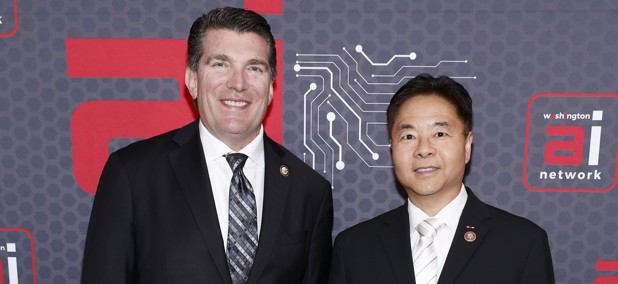
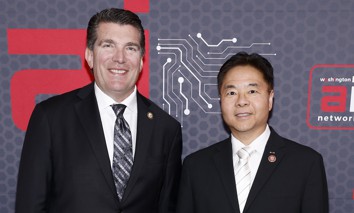
Lieu and Obernolte introduce consolidated AI bill package
The American Leadership in Artificial Intelligence Act takes provisions from previous bills and the 2024 Bipartisan AI Task Force report to move forward AI policies with support from both sides of the aisle.
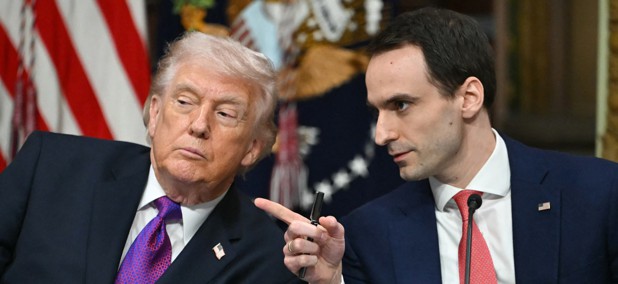
White House official advocates for a ‘give and take’ on state AI preemption
Office of Science and Technology Policy Director Michael Kratsios argued the administration’s AI policy framework allows states to regulate some things about the technology — like child safety and state government procurement — while ensuring a national standard.
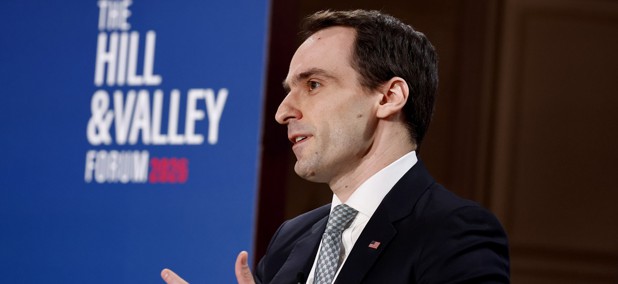
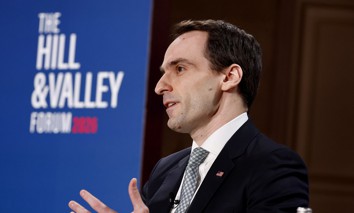
GOP policy leads highlight child safety as key step in national AI legislation
Legislators are still working through options for what that legislation will look like, including the possibility of reviving the proposed moratorium on state AI regulations.
White House releases regulatory vision for AI
The framework includes seven AI policy recommendations for Congress that attempt to balance consumer protections with advancing AI development.


Robotics ethicist calls for stronger US guardrails as automation accelerates
Automation is advancing while the rules are not, the research lead for robotics, ethics and society at the Robotics and AI Institute warned.



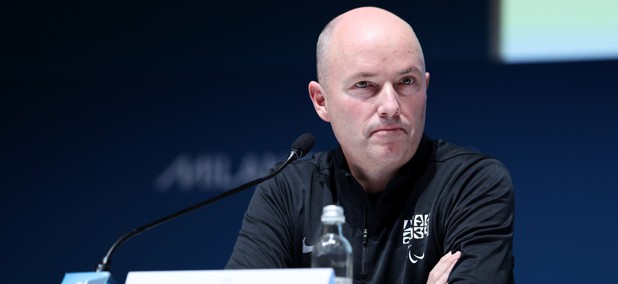

Republican governor asserts states’ right to legislate AI
Utah Governor Spencer Cox acknowledged the logic to the Trump administration’s plan for U.S. AI dominance, but not at the expense of state laws ensuring safety.
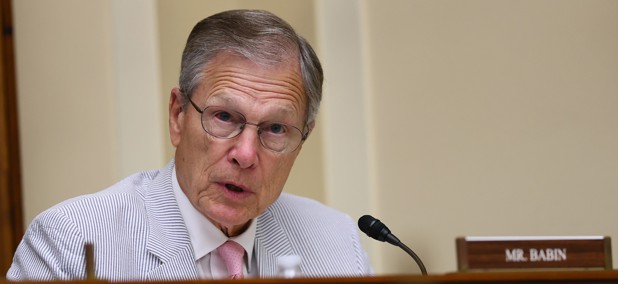
Republican lawmakers ask GAO to review current AI regulatory landscape
Leaders in the House Science, Space, and Technology Committee have asked the Government Accountability Office to examine the regulatory landscape at both the state and federal level.
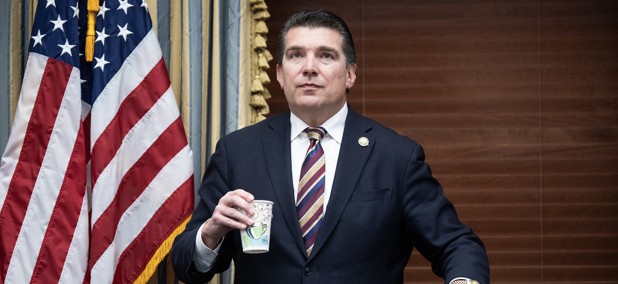
AI moratorium was never a ‘long-term solution,’ lawmaker says
Rep. Jay Obernolte, R-Calif., explained that Congress is angling to design a nationwide AI framework that works with state law while offering common guardrails.
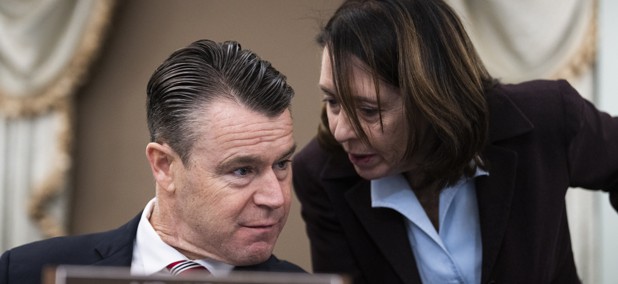
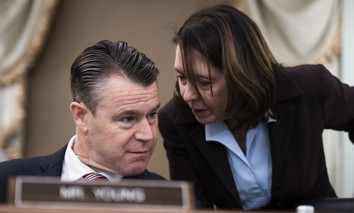
Bipartisan pair of senators acknowledge need for federal AI standard that accounts for state laws
Sens. Cantwell and Young sound off on the policy requirements the U.S. needs to strengthen its scientific enterprise to win the global AI race.

White House official, lawmaker call for amplifying US tech policy abroad
Sen. Ted Budd, R-N.C., and OSTP Director Michael Kratsios also advocated for a light-touch regulatory regime that has become a centerpiece of the Trump administration's tech approach.
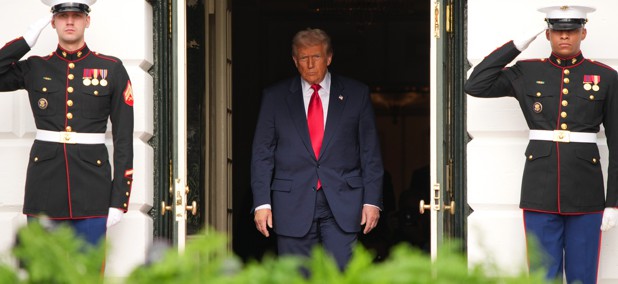

White House considers order to preempt state AI laws
A draft of a new executive order would withhold federal funding from states with artificial intelligence regulations that are deemed overly punitive or in violation of the First Amendment.
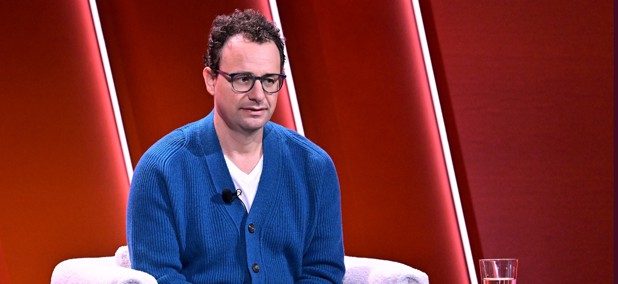
Anthropic CEO defends support for AI regulations, alignment with Trump policies
Following the White House AI and crypto czar’s critique of Anthropic’s regulatory perspective, the company’s CEO noted that it is committed to speaking honestly about AI’s risks and benefits.
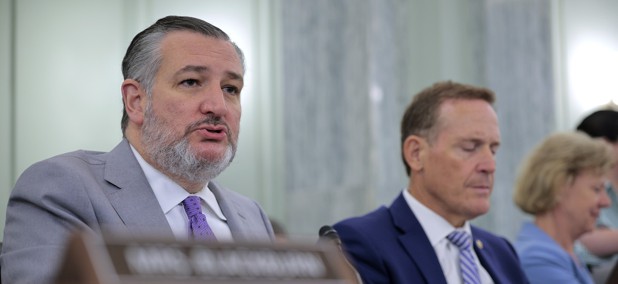
Cruz unveils new AI framework as blueprint for future legislation
Released in conjunction with the SANDBOX Act, Senator Ted Cruz’s new AI Policy Framework offers a new potential playbook for implementing artificial intelligence policy.
