Justice

DOJ signals interest in piloting AI legal assistant
The pilot would assess whether AI can execute multi-step legal tasks without step-by-step attorney prompting.


Former CISA employee pleads guilty to defrauding government with secret contractor jobs
Prosecutors say Richeline Fung secretly held contractor jobs tied to six agencies and claimed up to 33-hour workdays while working full time for the federal cyber agency.
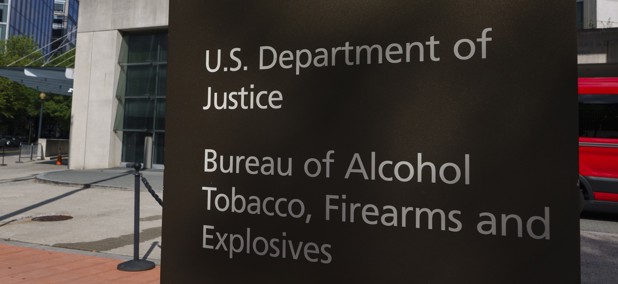
ATF investigating ‘major’ cyber incident after ransomware group claim
The agency says the affected system was isolated from its broader network and eForms platform but has not disclosed whether data was stolen.


FBI disables China-linked hacking tools used against US agencies
A hacking group used the tools to target networks belonging to NASA, the Federal Reserve, the National Institutes of Health, the U.S. Senate and the departments of Energy, Justice and Health and Human Services.
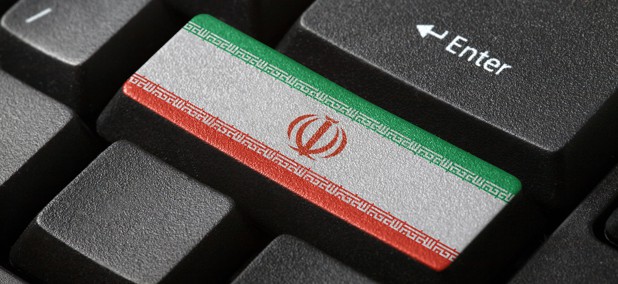

DOJ charges 17 Iranians in cybertheft campaign
Prosecutors say the Mabna Institute — which conducted intrusions for Iran’s Islamic Revolutionary Guard Corps, among other campaigns — stole 31.5 terabytes of academic data and breached email accounts at U.S. agencies and companies.



US seizes alleged China-linked sites targeting security clearance holders
Prosecutors said the domains posed as legitimate consulting companies to recruit current and former U.S. officials into sharing sensitive government information for payment.


DOJ to appeal intelligence court ruling over use of spying power
A judge on the Foreign Intelligence Surveillance Court took issue with how spy agencies use filtering tools to sift through raw data collected by the FISA 702 program.

DOJ clears the way for government to hire technologists still connected to their private sector employers
Ethics experts and public sector lawyers told Nextgov/FCW that they are skeptical about the arrangement of private sector technologists joining the government on leaves of absence while retaining their deferred compensation packages.
DOJ elevates deputy CIO to top IT role
Nikki Collier had been serving as the acting CIO since Melinda Rogers left the role last year, according to the CIO Council’s website.
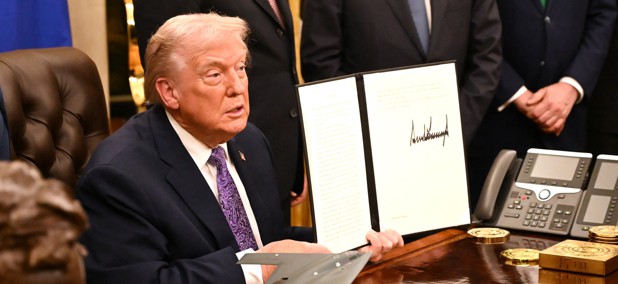

Trump signs order targeting ‘cumbersome’ state AI regulation
The order instructs certain federal agencies to identify which state laws undermine federal efforts to help the U.S. lead globally in AI.


US charges former Accenture employee with misleading feds on cloud platform’s security
Danielle Hillmer, most recently employed with SentinelOne, allegedly concealed a cloud product’s noncompliance with federal security regulations.
US court system to boost cyber posture after hack of electronic case management tool
The breach may have revealed the identities of confidential informants involved in criminal cases in several federal district courts, according to Politico.



Justice pushes agencies to use AI-assisted translations, when offering them at all
The July 14 memo encourages agencies to determine which services would be better operated exclusively in English and to make use of AI where translations are needed.


US unveils multiple operations to shutter North Korean IT worker schemes
At least one U.S. government contractor was hoovered up by the illicit worker operations, a senior FBI official said. The fraud has cost victims millions of dollars.


DOJ files complaint to get nearly $8 million in stolen funds back from North Korea
The DPRK has long been tracked as a cyber actor that uses worker schemes to steal funds for its missile program and other regime goals.

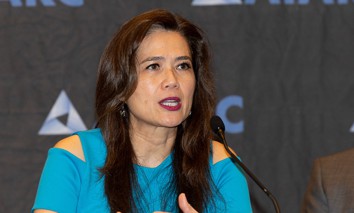
DOJ CIO announces departure from agency
Melinda Rogers said May 30 was her last day with the Department of Justice.
US, international and industry partners topple infrastructure of popular info-stealer malware
The collaborative effort worked to seize the takedown of some 2,300 domains that backed the web infrastructure of Lumma Stealer, sold to help hackers steal passwords and deploy ransomware around the world.


US and Netherlands seize network providers that helped hackers mask activities
The Justice Department and Dutch law enforcement shuttered 5socks and Anyproxy, services with Russian ties that sold proxies to cybercriminals. Lumen provided internet backbone data to the agencies.
Justice Dept. rescinds rules safeguarding media from government seizures
The rules, first issued under former Attorney General Merrick Garland, gave members of the press protections from legal mechanisms to obtain sensitive data linked to their reporting.
Democrats push Justice Department to keep Election Threats Task Force amid rollbacks
The task force was created to help protect election officials from stalking and threats, but its future remains in question after the Trump administration scrapped other election integrity initiatives.
