Health Tech


Abridge selected for VA ambient AI enterprise contract
The department plans to expand the technology to select outpatient care providers.


VA to gradually expand medical AI scribe following successful pilots
The department is seeking to expand providers’ use of the technology with an enterprise contract in 2026.


NIH seeks to engage patients as it scales use of AI with Bio Genesis Mission
The agency is in the early stages of determining how exactly it will collaborate with other agencies on the Bio Genesis Mission it announced in July.


FDA considers doctor-like ‘competency-based’ tests for medical generative AI
The Trump administration released ideas for regulating large language models used in health care as companies roll out chatbots to help patients manage mental health, diabetes and other medical conditions.


OpenAI Foundation gives $100 million fund state AI implementation for public health
The organization announced the launch of the Breakthroughs to Follow-Through Initiative, which will implement artificial intelligence tools in public health research work.




Federal agencies quietly joined health data superhighway governing council
The rapidly growing superhighway — known as TEFCA — will help federal agencies digitally obtain health records from thousands of hospitals, clinics and other medical providers.

HHS continues health tech initiative with 7 new industry pledges
The Trump administration says 60% of Americans now have access to medical records through an app of their choice because of its health technology initiative.


FDA announces first company to participate in health tech pilot
Under the TEMPO pilot program, Dexcom can receive Medicare reimbursement when seniors receive care from their software.


VA expands use of extended reality tech across healthcare operations
Anne Lord Bailey, who leads VA’s Strategic Initiatives Lab, said veterans who have used immersive tech have reported therapeutic benefits that extend beyond the conditions being treated by the headsets.
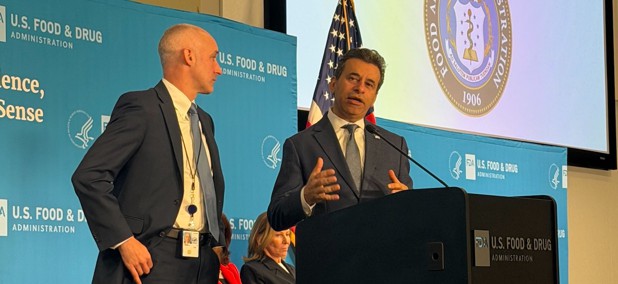
FDA to pilot real-time clinical drug trials through cloud and AI
The first-of-its-kind pilot could lead to speedier regulatory approval of medical drugs and devices and potentially reduce “20, 30, 40% of overall clinical trial time,” according to FDA Chief Artificial Intelligence Officer Jeremy Walsh.


CMS rule looks to kill faxed, mailed claims in favor of e-submissions
CMS Administrator Dr. Mehmet Oz said the new rule “will modernize American healthcare by standardizing electronic claims attachments and enabling secure electronic signatures.”


AI ‘nihilism’ is a barrier to better health care, CMS lead says
CMS Administrator Dr. Mehmet Oz said the agency has had internal discussions about introducing an agentic AI tool “for every beneficiary.”




VA’s early uses of robots have shown mixed success, but excitement remains
Early uses of robots across VA hospitals have highlighted the promises and drawbacks of the technologies, but they have also shown the capabilities these tools can offer clinicians, according to Acting Chief Innovation Officer Beth Ripley.
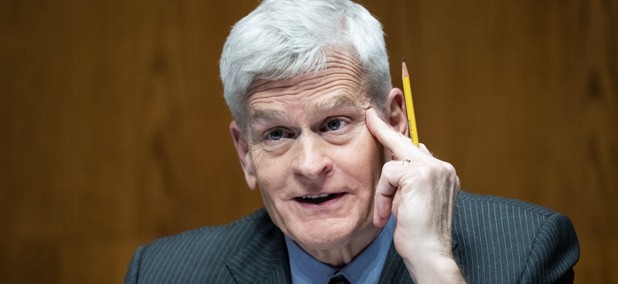
Lawmakers raise questions about security of health data shared with AI tools
“I do think there's some consumer safeguards that should be implemented,” Sen. Bill Cassidy, R-La., said about the way AI firms may apply users’ healthcare data.


Targeted AI adoption can drive change, current and former officials say
Agencies “don't need the fanciest AI model on the marketplace” to enhance their customer-facing operations, according to former VA Chief Experience Officer John Boerstler.


Lawmakers propose grant program to boost AI training in medical schools
The bill would enable qualified medical schools and institutions to receive up to $100,000 in funding to promote AI literacy.
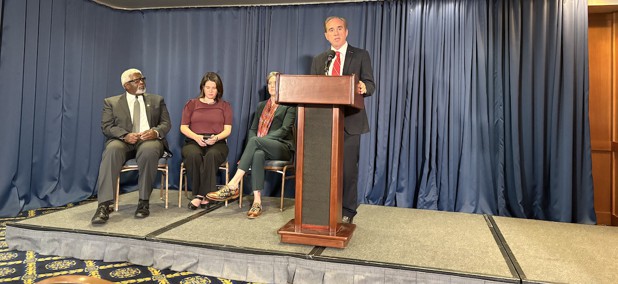
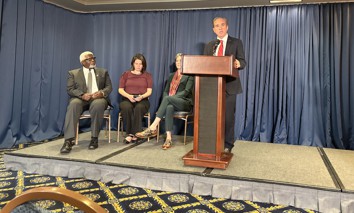
Post-9/11 veterans group’s project to modernize VA healthcare includes suicide prevention focus
The initiative from the nonprofit Iraq and Afghanistan Veterans of America is helmed by former VA Secretary David Shulkin and is looking into seven preliminary areas of care.
AI-based suicide prevention efforts at VA always have human involvement, official says
“We do not currently have any plans that I'm aware of to use AI as a treatment device instead of providers,” Evan Carey, acting director of VA’s National Artificial Intelligence Institute, told lawmakers.


In-home clinical uses of immersive tech will raise data privacy questions, VA official says
VA has over 40 use cases of augmented reality and virtual reality tools for patients and department staff.


Psychology experts call for AI age controls and chatbot tailoring
Experts testified before Congress about their concerns with artificial intelligence’s presence in mental health practices, particularly among adolescents and children.
