
Pulte appointment threatens fragile spy powers deal
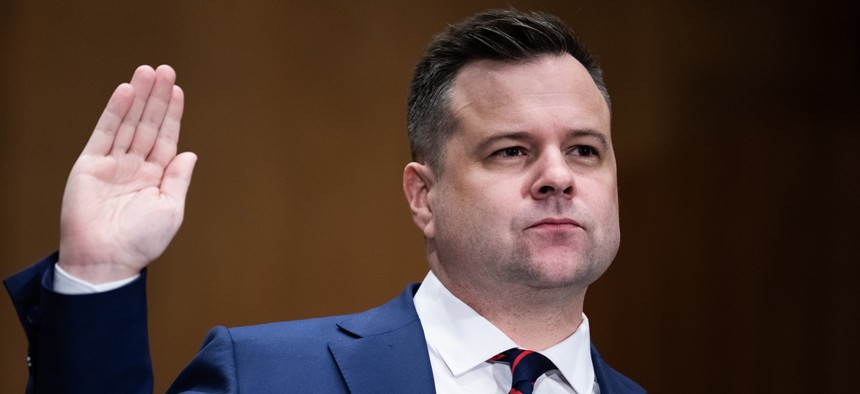
William Pulte, now the director of the Federal Housing Finance Agency, is sworn in to his Senate Banking, Housing and Urban Affairs Committee confirmation hearing in Dirksen building on Thursday, February 27, 2025. Tom Williams/CQ-Roll Call, Inc via Getty Images





Senate Democrats are warning that Trump’s move to install the FHFA director at the head of the nation’s top intel office could make it harder to pass an extension for Section 702 of FISA.
President Donald Trump’s decision to name Bill Pulte as acting director of national intelligence is threatening to disrupt a fragile Senate deal to extend a contentious surveillance authority.
Senate Intelligence Committee Vice Chairman Mark Warner, D-Va., asked Senate Majority Leader John Thune, R-S.D., on Tuesday to press the White House to reverse Pulte’s appointment, warning that leaving him in the role could sink a deal to extend Section 702 of the Foreign Intelligence Surveillance Act, according to a person familiar with the matter.
Section 702 allows spy agencies like the NSA to collect communications of foreigners abroad without a warrant. But it has long been controversial because Americans’ communications can be swept up in that collection process.
The latest dispute comes as lawmakers are trying to pass an extension of the law before it expires on June 12. The program has already survived multiple short-term renewals this year after Congress failed to reach agreement on a broader reauthorization bill.
Pulte currently leads the Federal Housing Finance Agency and does not have a national security background. Democrats have also accused him of using that role to target Trump’s political adversaries, fueling concerns about placing him atop the intelligence community as lawmakers weigh whether to preserve one of its most powerful spying tools. Punchbowl News first reported Warner’s request to Thune.
Warner has been one of the key Democratic negotiators in FISA talks, and was involved in a recent arrangement with Thune and Sen. Ron Wyden, D-Ore., that cleared the way for a 45-day short-term extension of the authority. That deal included a commitment to declassify a secret Foreign Intelligence Surveillance Court opinion, a key demand from civil liberties advocates.
But the status of that declassification process is unclear. Last month, Wyden said the Trump administration was ignoring the request.
GOP leaders are unlikely to pass an extension alone. Several Republican senators are expected to oppose any FISA deal, meaning Thune will need Democratic votes to move the bill through the Senate. The high chamber could hold an initial procedural vote on a Section 702 extension as soon as Thursday.
The emerging deal includes provisions meant to win over skeptical lawmakers, including a three-year ban on a central bank digital currency and language barring the FBI from using Section 702 information to prosecute U.S. persons. It stops short of including a full warrant requirement for queries of U.S. person data collected under the program, a measure long sought by the civil liberties community.
Secretary of State Marco Rubio, who previously served as the top Republican on the Senate Intelligence Committee, told House lawmakers Wednesday that he had never heard Pulte’s name during his time on the panel.
Thune also appeared to acknowledge broader concern about the appointment, telling reporters Tuesday that “we don’t need a weaponized DNI.” If the White House tried to nominate Pulte permanently, Thune added, he would have “a lengthy road ahead of him” to win confirmation.
Thune then referred questions about Pulte to Senate Intelligence Committee Chairman Tom Cotton, R-Ark., who told reporters he had “no observations on the matter.”
Over the last several months, the FISA fight has intersected with broader anxieties about domestic surveillance, immigration enforcement and whether emerging artificial intelligence tools could give agencies more powerful ways to analyze large amounts of sensitive personal data.
Section 702, enacted in 2008, codified parts of the once-secret Stellarwind surveillance program created under the Bush administration after the Sept. 11, 2001, attacks. In 2013, former NSA contractor Edward Snowden disclosed documents detailing how the authority was used, fueling a global debate over privacy and mass surveillance.
The program is frequently used to track myriad national security threats, including hackers, terrorist groups and foreign intelligence operatives.