
Trump admin launches US Tech Force to recruit temporary workers after shedding thousands this year
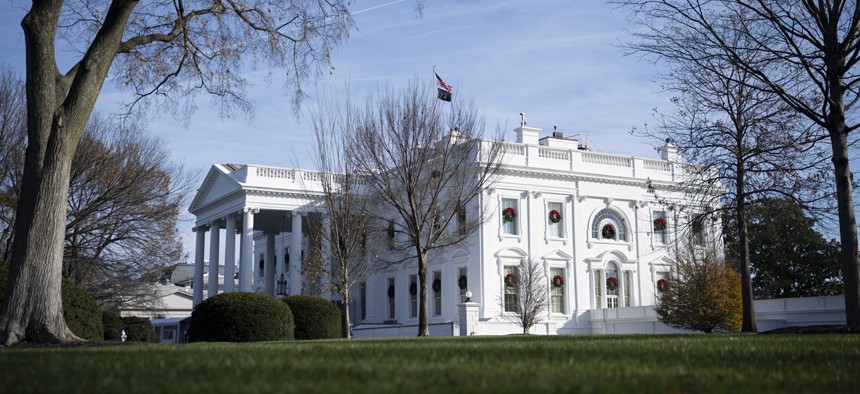
Celal Gunes/Anadolu via Getty Images



 By
Natalie Alms
By
Natalie Alms
Some of the recruits to government service will be on leaves of absence from private sector companies while working for government — a setup that raises ethical questions about conflicts of interest.
After pushing hundreds of thousands of government employees to leave their posts and dismantling many government technology units, the Trump administration is launching an effort to recruit new technology talent.
The United States Tech Force, announced Monday, is meant to source the artificial intelligence talent the government needs to win the global AI race and modernize the government, the administration says. The goal is to recruit an initial cohort of around 1,000 technologists who will be placed in agencies for two-year stints, potentially as soon as March.
“We need you,” said Scott Kupor, the director of the Office of Personnel Management. “The U.S. Tech Force offers the chance to build and lead projects of national importance, while creating powerful career opportunities in both public service and the private sector.”
While the primary focus of the new program will be recruiting early-career software engineers, data scientists and other technologists, the government will also be onboarding some engineering managers on leaves of absence from private sector companies.
About 20 technology companies have signed on to participate so far, including Palantir, Meta and Oracle. Elon Musk’s xAI is also participating, and the NobleReach Foundation — a nonprofit that seeks to inspire science and technology talent toward civil service — will be helping administer the program, OPM says. These companies will both be allowing their employees to take temporary terms of service in the government and giving training and mentorship opportunities to the Tech Force participants.
OPM is leading the new, cross-government program with several other government agencies — including the Office of Management and Budget, General Services Administration and White House Office of Science and Technology Policy — to work across the government at agencies like the Defense Department, Labor Department, IRS and others. The recruits will be employed by the agency they work for and paid between $150,000 and $200,000 annually.
The creation of the Tech Force follows the administration’s hasty closure of several of the government's existing technology teams and the exodus of thousands of other employees under the administration’s various other efforts to reduce the size of the workforce.
In March, the General Services Administration dismantled 18F, an internal government tech consultancy group, after Elon Musk posted on X that the group had been “deleted.”
Other agencies also saw losses. The Social Security Administration closed its tech-focused Office of Transformation in February, the Defense Digital Service closed after suffering mass resignations and the IRS had lost over 2,000 tech workers as of June, for example.
“There’s a lot of value in bringing in tech talent,” Donald Moynihan, a professor of public policy at the University of Michigan, told Nextgov/FCW. “That said, part of the reason why there’s a need for tech talent in government right now is because [Department of Government Efficiency] drove out some very talented individuals who were already in government.”
“Another concern is that this could simply recreate some of the worst aspects of the early days of DOGE, which is to bring in people who don't really understand or respect some of the legal constraints that come with working in the public sector,” he said.
Trump created DOGE with a nominal focus on technology on his first day in office, although the group became a controversial flashpoint for its work implementing administration goals to cull the ranks of federal workers, shutter entire agencies and access sensitive government data and systems.
The website of the new Tech Force emphasizes that the program does not have a “political mission.”
The ideas behind the new Tech Force aren’t necessarily new. Other government programs have also sought to bring in specialized workers for time-limited stints meant to infuse the government with new ideas and expertise.
Most notably, the U.S. Digital Service was created during the Obama administration to bring experts into the government for time-limited terms of service.
Trump transformed the group to house DOGE on his first day in office, and many former employees were dismissed or quit during the first months of the Trump administration, although around 50 staffers are still at the organization working in various government modernization and tech projects.
Kupor told reporters that the new program will be much bigger than USDS and bring in technologists to be stationed in agencies.
The government also already has an early career tech fellowship called the U.S. Digital Corps, which launched in 2022.
One unique aspect of the newest program is the involvement of private sector companies in allowing employees to participate and then come back to their prior jobs.
“My first question with any programs like this are, ‘What are the rules that are in place to guard against conflicts of interest?’” said Rob Shriver, former acting OPM director and current managing director of Civil Service Strong at Democracy Forward.
This is especially worthy of attention, he said, given DOGE’s approach to data — “coming in and taking over agency systems and accessing data without going through the regular procedures” — which has been at the center of several lawsuits.
The setup may vary by company, but the managing engineers from private companies participating in the program will “effectively take a leave of absence” to become full time government employees during the program, Kupor told reporters Monday. They won’t be required to divest from their stocks.
“We feel like we’ve run down all the various conflict issues and don’t believe that that’s actually going to be an impediment to getting people here,” said Kupor. “The huge benefit to the government will be getting people who are very skilled in the private sector at managing engineering teams.”
The idea is that the participants can return to their old jobs with new skills and expertise after working for the government, he said.
“Come work on literally the world’s most complex and difficult problems,” Kupor said in his pitch to potential recruits. “There is no bigger and more complex set of problems than we face in the federal government.”
If you have a tip you'd like to share, Natalie Alms can be securely contacted at nalms.41 on Signal.
NEXT STORY: Exit interview: GAO’s Gene Dodaro talks impoundments, tenure and retirement priorities