
US signs emerging technology deal with Finland
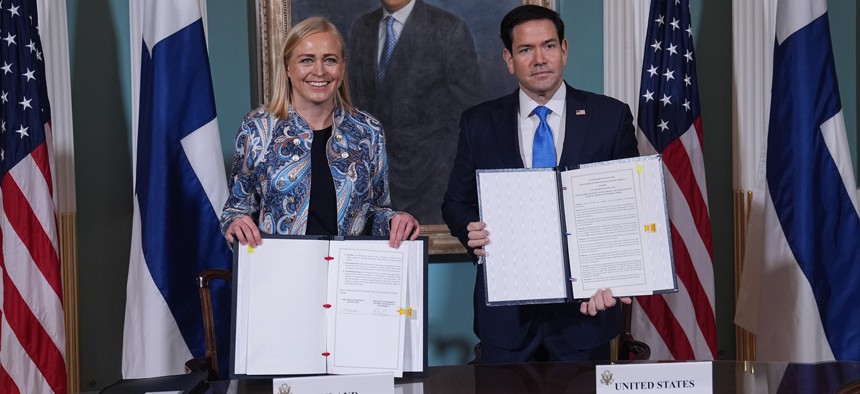
U.S. Secretary of State Marco Rubio (R) and Finnish Foreign Minister Elina Valtonen (L) sign a memorandum of understanding during a signing ceremony in the Treaty Room at the U.S. Department of State in Washington, D.C., on October 29, 2026. Mehmet Eser/Anadolu via Getty Images


The deal advances the countries’ cooperation on technologies like artificial intelligence and quantum computing.
The United States signed a Technology Prosperity Deal with Finland on Thursday in an effort to deepen technological cooperation and accelerate the adoption of emerging technologies.
The memorandum of understanding specifically cites artificial intelligence, quantum technologies and research and industrial security among the key areas of cooperation.
“Finland has world-class capabilities in quantum, in telecom, in nuclear and in nuclear energy, in space systems, in engineering, in biotech. I mean, you name it, and Finland has world-class capabilities, so it’s an incredibly important partnership for us,” Secretary of State Marco Rubio said during the signing ceremony.
For each area of cooperation, the memo also lists several focus areas for collaboration between the two countries.
For AI, the countries plan to promote development and exports across the full AI and network technology stack, partner to finance trusted technology stack exports, and strengthen existing research and development in 5G and 6G and next-gen communication technologies.
On the quantum front, the memo says the countries “intend to deepen cooperation to accelerate the development, commercialization, and responsible deployment of quantum technologies in ways that enhance prosperity and security.”
That includes collaborating through leading quantum institutions and national laboratories, supporting joint research investments into quantum manufacturing, advancing interoperable standards for quantum technologies, and endorsing and advocating for the adoption of post-quantum cryptographic standards.
As for research and industrial security, focus areas include strengthening security in research and industry, as well as establishing a bilateral research security dialogue and information exchange on threats and security concerns.
The countries also signed a Critical Minerals Framework on Thursday, which Rubio described as “the foundation of tech” and will cover efforts ranging from semiconductors to energy infrastructure.