
CIA, ODNI unclassified intelligence system hacked
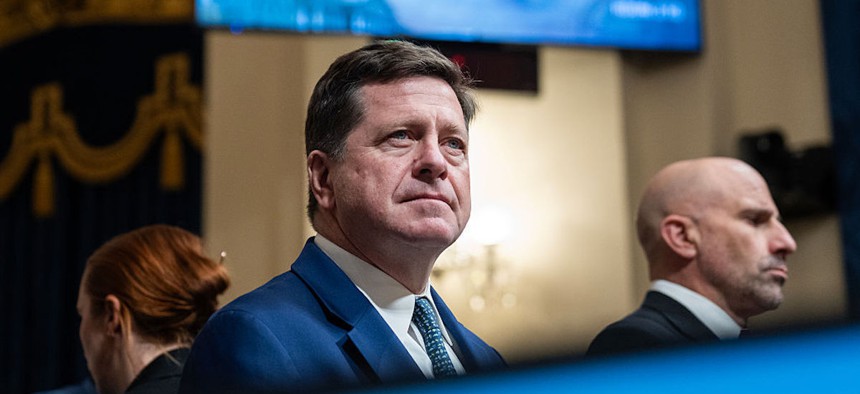
Director of National Intelligence Jay Clayton, and Christopher Raia, right, deputy director of the Federal Bureau of Investigation, arrive for the House Homeland Security Committee hearing titled "Worldwide Threats to the Homeland: 25 Years After 9/11," in Cannon House Office Building on Wednesday, November 18, 2026. Tom Williams/CQ-Roll Call, Inc via Getty Images





A person familiar with the matter confirmed the breach, while a second said the disruption was resolved and did not affect classified systems.
The CIA and the Office of the Director of National Intelligence discovered a breach of an unclassified system used to analyze public and commercially available information, according to a person familiar with the matter.
A second person familiar said it disrupted an unclassified network, but did not affect classified systems and that the matter has been resolved.
Both spoke on the condition of anonymity to communicate their knowledge of the hack.
The New York Times first reported the intrusion Tuesday. It’s unclear who carried it out or if any information was pilfered.
The CIA declined to comment. ODNI did not return a request for comment.
The affected system supports open-source intelligence, or OSINT, which analysts use to understand foreign governments, military activity and other developments through “open source” material such as news reports and social media.
Although that material is unclassified, an intrusion could reveal how spy agencies use it and which subjects are of interest to their analysts, said Ben Bernstein, a manager at cybersecurity firm Huntress.
“If you can see what analysts are searching for and what topics they’re tracking, you get a solid look at U.S. intelligence priorities and blind spots without ever touching a classified file,” he said.
“Depending on what was exposed, an adversary could learn not only what our intelligence agencies know, but also where their investigative priorities lie and where gaps in their intelligence may exist,” added Aleksandr Yampolskiy, co-founder and CEO at SecurityScorecard.
The disclosure also follows several recent intrusions into federal systems. President Donald Trump and other officials recently acknowledged a hack of the FBI’s National Crime Information Center. At the Agriculture Department, officials recently took multiple applications offline following a security incident, disrupting financial tools used to support payments to farmers, Nextgov/FCW and Government Executive first reported last week.
Government agencies and businesses have also faced a series of technology outages that administration officials attributed to maintenance and technical problems. The National Security Agency resumed normal operations Friday after a three-day disruption to its classified communications network, which Director of National Intelligence Jay Clayton attributed to software patching.
“Calling this ‘unclassified’ doesn’t make it harmless, though,” Bernstein said of the CIA and ODNI incident.