
Democrats warn tech firms of election security ‘backsliding’ ahead of midterms
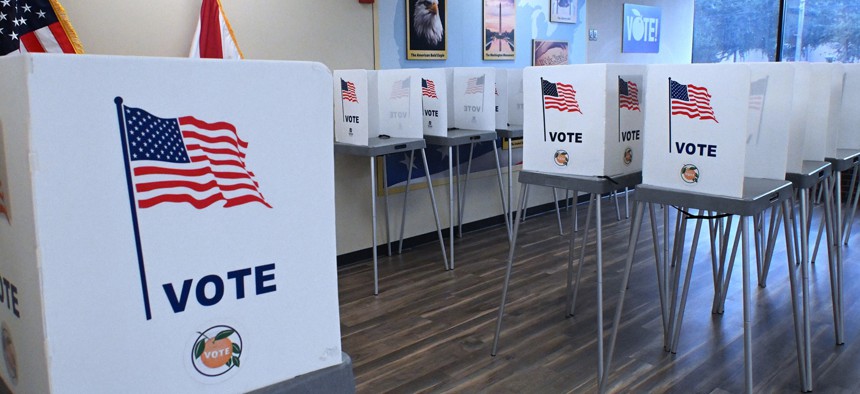
Paul Hennessy/SOPA Images/LightRocket via Getty Images




Senior intelligence and election oversight lawmakers want social media companies and AI developers to strengthen safeguards against false voting information, foreign influence campaigns and deceptive AI content.
Top congressional Democrats are pressing major technology companies to strengthen their election safeguards ahead of the midterms, warning that inconsistent enforcement and inaccurate AI-generated voting information could leave Americans more exposed to manipulation or interfere with their ability to cast ballots.
In a letter to the heads of 25 companies — including Alphabet, Meta, Microsoft, OpenAI and TikTok — the lawmakers said some firms are retreating from commitments to protect elections, even as their products make it easier for foreign adversaries and domestic actors to reach large audiences with deceptive material.
“Unfortunately, there are concerning signs of backsliding on some of your commitments to protecting elections from misuse of your products,” they wrote. “These signs are particularly alarming because they come at a time when the capabilities of malign actors are growing in scale and sophistication and our elections are under attack from multiple directions.”
The letter was signed by Sens. Mark Warner, D-Va., and Alex Padilla, D-Calif., and Reps. Jim Himes, D-Conn., and Joe Morelle, D-N.Y.
Warner and Himes are the top Democrats on their chambers’ intelligence committees, while Padilla and Morelle hold corresponding roles on the Senate Rules and House Administration committees, which oversee election matters.
Their appeal comes amid what several stakeholders see as weakening cooperation between federal agencies, technology companies and outside researchers tracking foreign influence operations, as Nextgov/FCW reported last week.
Nextgov/FCW has requested comment from TechNet and the Computer & Communications Industry Association, trade groups that count several recipients of the letter as members, including Google, Meta, OpenAI and Anthropic.
For the last two years, the Trump administration has dismantled multiple hubs focused on foreign influence and election disinformation, largely on censorship grounds. Federal agencies have contended that election security support continues despite these changes.
“Public reporting indicates that Russia continues to undermine confidence in U.S. elections through disinformation campaigns executed directly on many of your platforms; though such efforts clearly violate your terms of service, some of your companies have not quickly or consistently removed such content,” the lawmakers wrote, likely referring to recent Alethea research detailing the Russian influence efforts.
Russia is likely to pursue more overt influence operations in the coming midterms, while China is likely to play a longer game in the information space in order to attain broader geopolitical goals, a current U.S. official told Nextgov/FCW last week. Both nations are expected to make greater use of advanced AI tools for their efforts.
The lawmakers’ requests focus, in part, on information that can affect whether someone successfully votes, including registration deadlines, polling locations, identification requirements and mail-in ballot rules. Companies should distinguish deceptive claims about those procedures from political speech, and remove “demonstrably false” information once they become aware of it, the letter says.
They also want platforms to give election officials dedicated tools to report false information, use independent fact-checkers alongside internal teams and automated systems, and notify users when content they previously engaged with is later determined to be false or misleading.
As voters turn to chatbots for information about candidates and voting procedures, incorrect or outdated answers can also create problems, they said. “Equally alarming is that some of your AI chatbots have an unacceptably high error rate when responding to queries about election and voting processes, subjecting users to confusing or inaccurate answers that could result in voter disenfranchisement,” the lawmakers wrote.
A September study by the Institute for Strategic Dialogue documented chatbot errors that could misdirect voters. In two responses, Meta’s Muse Spark model incorrectly identified Nov. 4 as the date of this year’s midterm elections, a day after the actual election.
Some firms have publicly outlined election preparation plans, including Meta and TikTok. Last week, X also disclosed a takedown of thousands of accounts believed to have been carrying out foreign malign influence operations.
The lawmakers also challenged reductions in trust and safety staffing and urged companies to give independent researchers access to products and data needed to assess whether safeguards work.
“Refusing to grow and expand your election integrity teams — and even shrinking these teams — does not support your stated commitments to countering harmful election content and suggests to bad actors that your policies are not enforceable,” they wrote.