
CISA pledges election security support after cuts weakened ties with states
Mehmet Eser/Anadolu via Getty Images





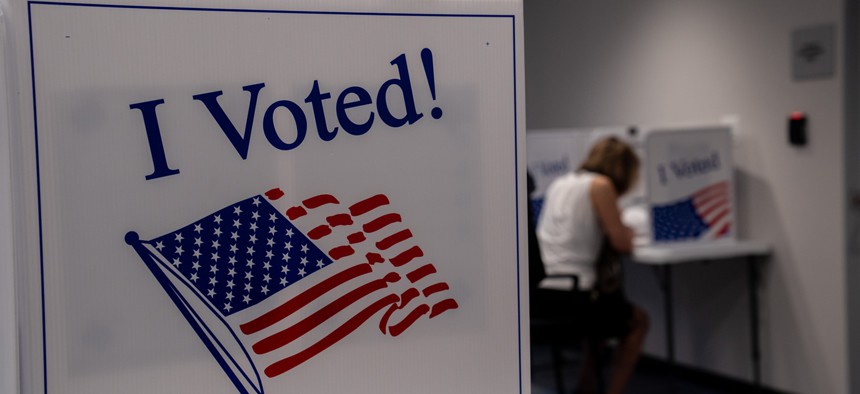
A new plan emphasizes threat sharing and coordination ahead of the midterms, but does not explain how those commitments fit with proposed cuts to dedicated election security funding.
The Cybersecurity and Infrastructure Security Agency is pledging to strengthen threat sharing and coordination with election officials ahead of the midterms, following administration cuts that state officials say weakened those relationships and their access to federal cybersecurity expertise.
The 2026 Election Infrastructure Security Plan, released Thursday, identifies CISA’s 10 regional directors as election security advisers and describes a free information-sharing platform connecting election officials, state intelligence hubs and federal partners.
The document offers one of the clearest public accounts to date of how the second Trump administration intends to support election security. But its emphasis on sustained cooperation comes after staffing and program reductions disrupted the federal support network, and as the administration has proposed eliminating dedicated election security funding and adviser positions.
“Election security is national security,” Homeland Security Secretary Markwayne Mullin said in a statement announcing the plan, adding that it “will be implemented in full.”
The document does not specify how many employees will carry out the work, announce the restoration of dedicated election adviser positions or identify funding for the effort. It also doesn’t explain how its commitments fit with the administration’s fiscal 2027 budget proposal, which would eliminate CISA’s election security program, including information-sharing support for states. Those proposed funding changes require congressional approval.
State officials have described the consequences of earlier reductions. Michigan Deputy Secretary of State Aghogho Edevbie told lawmakers in April that local election officials had lost contact with CISA personnel they previously relied on.
Under the arrangement described in the plan, regional directors will oversee election support while cybersecurity advisers and protective security advisers provide technical guidance and assess risks to facilities. Election officials can request assistance through CISA’s regional offices. State and regional fusion centers — which bring together law enforcement and other government partners to share threat information — are identified as a key channel for election intelligence.
Threats to elections can range from cyberattacks that disrupt voter registration systems to threats against poll workers to foreign influence campaigns that spread false information to mislead voters or undermine trust in the results.
CISA also says it is supporting a platform through which election officials can receive threat indicators, ask questions and coordinate with federal partners in near real time. All fusion centers and state and local election officials will have access at no cost, according to the plan.
The agency says the model was used during the 2026 World Cup, though it does not identify the platform, specify when officials can enroll or describe its staffing and operating hours.
The document also does not name the Elections Infrastructure Information Sharing and Analysis Center, which has historically been a key hub for election threat information that previously received CISA support.
Acting CISA Director Nick Andersen previewed the broader approach in remarks to reporters earlier this month, saying the agency would build on coordination with state and local officials during America 250 events and the World Cup as it prepared for the midterms.
The plan also describes how federal intelligence will reach election officials. CISA says it works with the FBI and DHS’s Office of Intelligence and Analysis to provide threat reporting through fusion centers and with the Office of the Director of National Intelligence on monthly classified briefings for critical infrastructure stakeholders.
Those briefings reach more than 70 secure locations nationwide and are accompanied by unclassified notes and mitigation recommendations. The plan does not specify how frequently election-specific briefings will occur.
The commitments come as recent reporting points to a narrower role for public warnings about foreign election threats.
The Record reported Wednesday that the administration recently delivered an overdue assessment of foreign threats to the midterms and briefed lawmakers and congressional staff. Officials indicated they would produce two more classified reports before the election but would not issue additional declassified information or public warnings, a departure from the frequent public updates federal agencies provided in 2024, according to the outlet.
The New York Times reported last week that classified intelligence assessments found Russia was conducting covert online operations to undermine confidence in the midterms and deepen political divisions. Officials told the newspaper the assessments did not find evidence of attempts to compromise voting machinery in ways that would affect the voting process.
ODNI in May assigned two officials to coordinate election-threat intelligence after shifting many of its Foreign Malign Influence Center’s responsibilities to other offices.
The new plan also unfolds against years of conflict between President Donald Trump and CISA, dating to the agency’s affirmation of the security of the 2020 election and its rejection of his false claims that the race was stolen from him.
The administration’s handling of election intelligence has added to those tensions. In July, Trump used newly declassified records about China’s possession and analysis of U.S. voter data to revive claims about the 2020 election. But a review found the documents did not establish that Beijing altered ballots, manipulated voting systems or changed the election’s outcome.
Separately, executives at Mojave Research said in August that their federal voting-system research ended after they identified serious security weaknesses in machines used in Puerto Rico in 2024 but found no evidence of exploitation or altered votes. The executives linked resistance to their work to Trump adviser Kurt Olsen and pressure to substantiate claims of election manipulation.