
GenAI.mil records almost 1.7M users, plans new model additions
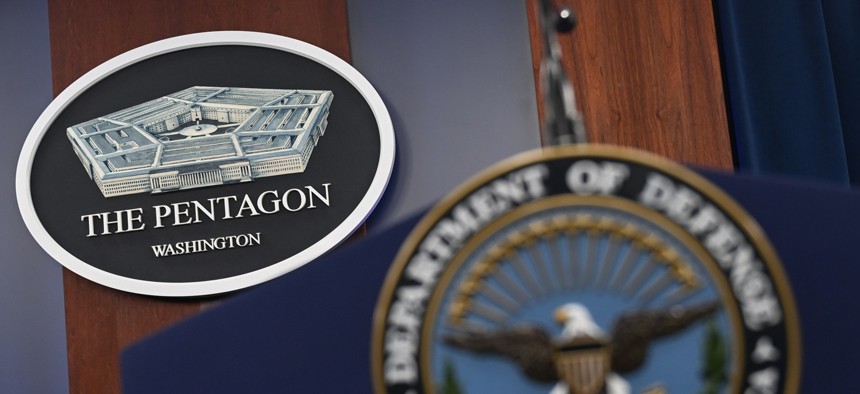
Celal Gunes/Anadolu via Getty Images


“It's just a really exciting time for generative AI in the department,” the Pentagon’s chief artificial intelligence officer said.
The Department of Defense plans to bring new models onto its internal, department-wide artificial intelligence marketplace and deploy them at higher classification levels, part of its updated procurement policy that aims for “commercial-first” in its deliverables.
Cameron Stanley, the chief digital and artificial intelligence officer at DOD told attendees at the AWS Summit in Washington, D.C. Tuesday that as GenAI.mil reached a record 1.7 million users –– along with the creation of over 100,000 custom agents –– even more models will soon be made available on the platform.
“We're looking forward to advancing, getting new models on to GenAI.mil, we're looking at GenAI.mil going to higher classification levels,” Stanley said. “It's just a really exciting time for generative AI in the department.”
GenAI.mil already hosts capabilities from SpaceX, OpenAI, Google, NVIDIA, Reflection, Microsoft, Oracle and Amazon Web Services that are available at Impact Level 6 and 7, as the Pentagon announced in May.
OpenAI confirmed in mid-June that its flagship chatbot, ChatGPT, will be eligible for controlled, unclassified information through GenAI.mil in July.
One major use of AI for the DOD has been to aggregate data for warfighters, resulting in faster decision-making. While Stanley said that “well-trained” soldiers, sailors, airmen, guardians and marines traditionally make these critical military decisions, AI is helpful in parsing through large volumes of data quickly
“Human cognition is just not going to be able to keep up in a lot of battlefields,” he said. “So what we've done — very successfully — is identify ways where we can accelerate certain identification of the right pieces of data or information in order to make that better decision.”
Stanley clarified that the addition of agentic tools to support analytics is deliberate, and features “very tight guardrails” to accelerate the analyses that he estimates would take two to three human analysts operating in disparate systems to identify.
“So we go from — instead of having six or seven systems we have to go across in order to make that decision — we're now doing it instantaneously, or nearly instantaneously, with humans appropriately managing the entire workload process and actioning it from the same system that we identified the decision from,” he said.
The goal of Stanley’s office, he said, is to be a “commercial-first organization.”
“We're trying to put the vendor next to the warfighter and have the vendor have one goal, one job, that's it, and that is to deliver exactly what the warfighter’s needs are,” Stanley said. “What we do is we create the environment with the right tools and the right environments with the right security in place with the right contracts in place.”