
GSA’s AI adoption is driving significant time savings, officials say
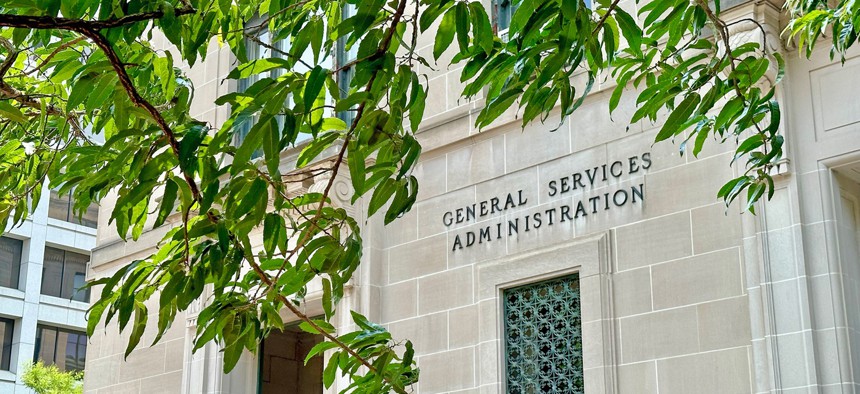
Douglas Rissing/Getty Images


GSA Deputy Administrator Michael Lynch said 70% of the agency’s workforce now regularly uses AI, which equates to “about 400,000 hours of just automation we've been able to unlock with technology.”
Artificial intelligence adoption is helping the General Services Administration’s employees shave hundreds of thousands of hours off their workloads, agency officials say, adding that it’s just the start of how the emerging capabilities can promote more effective citizen services.
Speaking at the Government Service Delivery conference in Washington, D.C., on Thursday, GSA Deputy Administrator Michael Lynch said the agency’s internal AI use has rapidly grown over the past year-and-a-half. Since being sworn back into office in January 2025, President Donald Trump has issued several executive orders and directives focused on expanding AI use at the federal level and across the broader U.S. tech industry.
GSA published an Elimination, Optimization and Automation playbook earlier this month that outlined how federal agencies can leverage new tools and technologies to address time-consuming activities across their workforces. This guidance, while new, is already a key part of GSA’s internal push to automate and save its personnel one million hours of time currently devoted to rote tasks.
At the beginning of Trump 2.0, Lynch said only around 15% of the agency’s workforce used AI on a regular basis. Now, he reported that roughly 70% of GSA employees are consistent users of the tools, which he said equates to “about 400,000 hours of just automation we've been able to unlock with technology.”
Lynch said the agency has also documented another 500,000 hours of time savings “that come from employees stepping up and raising their hands and saying, ‘Actually, this doesn't make any sense. We can either eliminate it or we'll have to optimize this.’”
These additional workload savings, he added, came from showing employees the benefits of AI and automation as force-multipliers for their work, rather than stoking fears that technology will ultimately make their roles obsolete.
GSA has also drastically expanded successful internal AI programs, such as its GSAi chatbot tool. Lynch noted that GSA “scaled up” that tool into USAi, a no-cost program it launched last year to serve as a testing ground and evaluation suite for agencies to try out AI tools. The platform’s launch supported tenets of Trump’s AI Action Plan, which was issued last July to accelerate agencies’ adoption of the emerging capabilities.
“We host, currently, over 25 different agencies in the federal government within that program,” Lynch said about USAi. “We are onboarding another 16 between now and the end of the year. We'll all have that safe, secure sandbox to be able to hopefully take … those pilots to scale.”
Other services, such as GSA’s OneGov initiative, have helped agencies acquire AI tools and other technologies at discounted rates by treating the federal government as one customer. Since OneGov launched in April 2025, GSA has reached agreements with twenty leading tech firms — including Microsoft, Amazon and OpenAI — to offer significant savings on some of their products and software.
An agency official said last month that over 120 orders “have been placed against OneGov’s AI offerings,” which has made the related services available to almost 3.4 million users across government. That is on top of the $1.15 billion in cost savings that GSA previously said it identified since the program’s launch.
GSA Chief Innovation Officer David Shive, who also spoke at Thursday’s conference, said greater AI adoption is already helping the federal government enhance services for the American public.
“AI is really about people, about people living their lives better,” he said, adding that the tools are being deployed by the agency to make federal services more effective and personalized.
Shive noted that GSA oversees Login.gov, the government’s centralized identity proofing platform that gives U.S. users the opportunity to create a single, secured account to access government websites. While he said “the [identity proofing] mechanics have worked really well in this space for a long time,” he added that “we've turned on AI to increase the quality” of the authentication process.
“Yes, it continues to happen super fast, but the percentage of effective proofing rates have gone way up,” Shive said. “This generates trust from those citizens that are entering into citizen services with their government. The value of that is just massive.”
Shive said he believes greater AI adoption will also help GSA rapidly drive advancements for the American public over the next year, allowing the government to provide its workforce with the resources they need to deliver services at scale across the U.S.
“Right now, I say we’re 50% of the way there. And by this time next year, I suspect we'll be 90% of the way there,” he added.