
US tech official calls for ‘transformational’ use of AI in scientific discovery
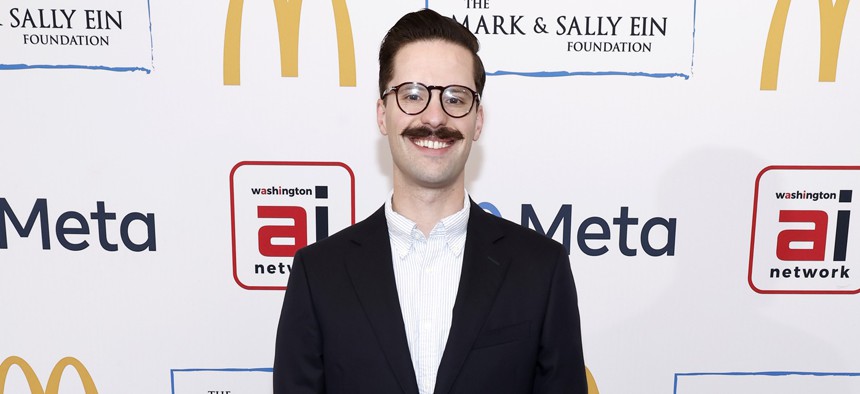
U.S. CTO Ethan Klein attends the 33rd Annual White House Correspondents' Garden Brunch on April 25, 2026 in Washington, DC. Paul Morigi/Getty Images for Haddad Media


Chief Technology Officer Ethan Klein said deploying AI agents across workflows will enhance scientific efficiency, which is particularly critical “because that underpins every one of these technologies that we're looking to develop.”
The Trump administration sees greater incorporation of artificial intelligence capabilities into the scientific research space as critical for continued U.S. technology leadership, a White House official said on Thursday.
Speaking at the Special Competitive Studies Project’s AI+ Expo, U.S. Chief Technology Officer Ethan Klein said a major focus of this administration “is having better integration and tie-in across the scientific development piece, all the way through tech development, testing, prototyping and scale up.”
Klein said greater adoption of emerging capabilities like agentic AI — autonomous systems capable of executing specific tasks with minimal human oversight — will have a profound impact on scientific research. A Market Connections survey of more than 200 technology executives across government that was released on Tuesday found that 53% of respondents said their agencies were already exploring uses of agentic AI or were planning pilots of the technology.
“Across a broad swath of applications, but specifically for scientific discovery, I think agentic AI will be transformational,” said Klein, who also serves as an associate director of the White House Office of Science and Technology Policy.
Greater use of these capabilities, he said, would help to expand and enhance data collection and transform the types of experiments that can be conducted by researchers.
“I think that if we're able to actually deploy these agentic AI … agents across those workflows, they're going to see a great amount of scientific efficiency,” Klein added. "And that's incredibly important, because that underpins every one of these technologies that we're looking to develop.”
The Trump administration has already taken some steps to enhance nationwide research efforts by leveraging AI. The largest of these is the Genesis Mission, which was launched in November 2025 and seeks to further harness AI for scientific advancement.
Klein said the initiative will help bring “a bit of that muscle [when it comes to] incorporating that into the workflows that we know are going to bring forth this new era of AI-enabled scientific discovery.”
Thursday’s panel, however, was held amid ongoing concerns about how the Trump administration’s push to scale back government operations through layoffs and reductions in force is impacting research efforts.
Just last month, President Donald Trump dismissed all 22 members of the independent advisory board overseeing the National Science Foundation, which supports nationwide science and engineering research. Critics have said the purge — which comes as NSF still lacks a permanent director — will harm continued U.S. scientific leadership.
Editor’s note: Market Connections is a business division of GovExec, the parent company of Nextgov/FCW.