
GSA aims to publish results on USAi program, official says
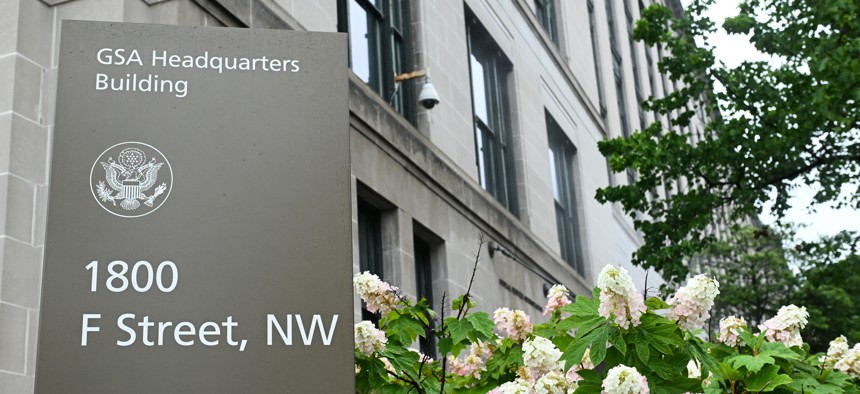
STR/NurPhoto via Getty Images



The agency’s chief AI officer discussed what GSA is learning from the new AI procurement program and how it plans to reveal those results.
The General Services Administration is moving to analyze the impact of the USAi program in order to better understand how agencies are using artificial intelligence tools in their daily operations.
GSA Chief AI Officer and Chief Data Scientist Zach Whitman offered new insights into the program’s progress Thursday, saying that the agency plans to release documentation on how the federal government is using AI.
“Fundamentally, we owe the public some transparency as to what [USAi] is doing and is it successful or not,” Whitman said on the sidelines of a Nextgov/FCW event.
Whitman explained that GSA is documenting the feedback agencies testing AI tools provide, and that the agency intends to use this information to get a picture of both what AI tools are being used in federal business operations and how well USAi is working. GSA introduced USAi in August of last year as a means of letting agencies experiment with AI tools.
“USAi allows you to, as an organization, see what's happening within that and make sure that you're on mission alignment,” he said. “USAi has one of the most valuable pieces of information that it generates, which is user data. And instead of that being very much abstract as a lot of these commercial offerings, we give you full access to the broad telemetry.”
Whitman said GSA is in the early stages of forming a board of representatives from participating agencies to provide feedback about the USAi platform and how it could improve. The results from the initial six months of the program, mandated by President Donald Trump’s July American AI Action Plan, will also be publicly released in a report.
“Fundamentally, we need to get to a steering committee, and then we could do a State of the Union of the USAi,” Whitman said.
He clarified that the data agencies are using in the AI tools they are piloting is completely private to that agency –– the data GSA works with focuses on which agencies are adopting AI tools, specific use cases, user quantity and the effect on mission outcomes.
Given the 43-day shutdown in 2025 and a looming partial government shutdown that could shutter parts of the Department of Homeland Security, Whitman said GSA is toying with extending the program timeframe for agencies to have a chance to “kick the tires” and explore a given AI tool. He projected that “maybe ‘27 is where we officially launch this thing.”
“I think that, fundamentally, we owe the public some transparency as to what [USAi] is doing, and is it successful or not,” he added. “We want to make sure that we have representation from tenant agencies. We also want to make sure that we're collaborating with academia.”
One of the documented trends Whitman and GSA have seen is the need for ongoing flexibility when trying new software procurements.
Whitman said USAi is giving agencies and GSA insights into why they want certain applications, what they want them to accomplish and when they can be deployed.
“So it just really is about choosing the right thing and making sure that you're not beholden to that thing,” he said.
Whitman further clarified that he believes the posture of AI adoption across the federal government shouldn’t be limited to what USAi offers, and successful outcomes can happen outside of the USAi platform.
“GSA wants to enable procurements. We want to enable technology adoption,” he said. “We need to stay flexible. Right now, USAi offers us that. But should a solution come along that its services are better, that’s great. We win in both scenarios.”