NOAA
A NOAA-backed tool shows the hidden value of healthier shorelines

The SHORE-BET calculator helps communities estimate the long-term value of marsh restoration and living shorelines, putting numbers behind storm protection, habitat gains and other benefits that are often easy to see up close but harder to measure broadly.


VA still on pace with EHR deployment after rollouts earlier this year, officials say
Other agencies are also looking to iterate on their version of the electronic health record system being used at the VA and DOD — including by bringing it onto ships at sea.


National Weather Service’s AI translation project lacks long-term plan, watchdog says
A new report from the Government Accountability Office warned that the weather agency “has not developed a long-term plan for the AI translation project because of current uncertainty on how the project will fit into broader NWS efforts.”


A new lunar benchmark: NIST’s moonlight data brings satellites into focus
NIST is releasing the first set of what it’s calling the Moonlight Radiometric Reference Dataset, a trove of data so precise that it could change the way we see our own planet.
Bipartisan bill calls for NOAA to use AI to forecast wildfires and extreme weather
The bill’s introduction comes amid Trump administration efforts to scale back the agency’s workforce and operations.


NOAA terminates space, climate and marine life advisory committees
Experts caution the groups play a key role in ensuring agencies use the best available science in their decision making.




DOGE enters NOAA, accesses IT systems and removes the top HR official
The Musk-led team is rooting out DEI and, some lawmakers fear, may have an eye toward grander aims at the agency.


Cloud and AI are ‘fundamentally changing’ ability to forecast weather, NOAA chief says
Half of the National Oceanic and Atmospheric Administration’s environmental data now runs on AWS.


Commerce launches initial phase of its space traffic coordination system
The new system will provide conjunction data messages “for approximately 1,000 space objects six times a day” during phase 1.0.

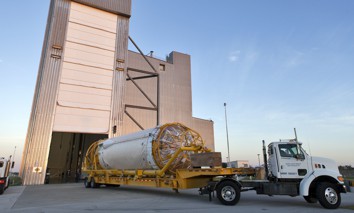
Lockheed Martin tapped to develop NOAA’s new series of weather satellites
Lockheed Martin won a contract to build three satellites for NOAA’s Geostationary Extended Observations program, with the option to develop an additional four spacecraft, under a $2.27 billion award announced on Tuesday.
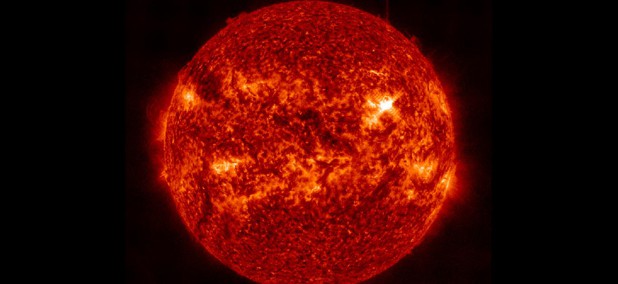
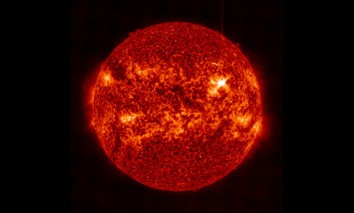
NOAA looks to sharpen solar storm forecasts with new satellite
The agency’s GOES-U satellite, scheduled to launch next month, will include an advanced instrument, called a compact coronagraph, to provide scientists with faster, more reliable data about solar storms.
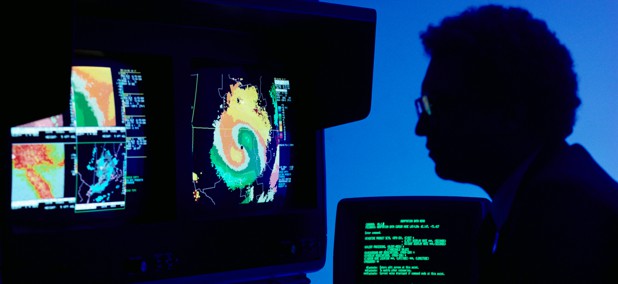
NWS says partial circuit failure caused network outage
A six-hour outage took key weather information updates offline for about six hours earlier this week, amid outbreak of severe weather.
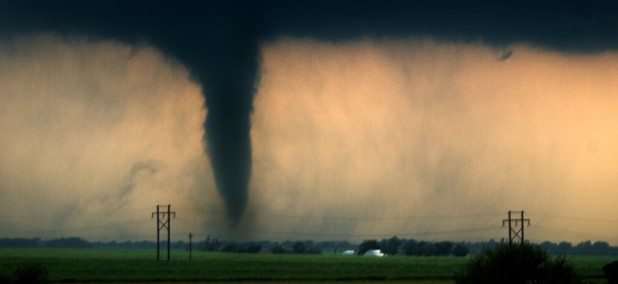
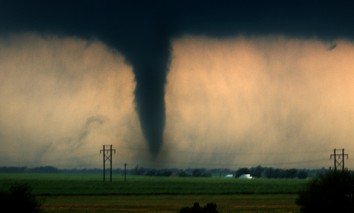
Federal weather system experiences outage amid severe weather nationwide
The agency is seeking money to shore up weather forecasting IT systems in fiscal year 2025.


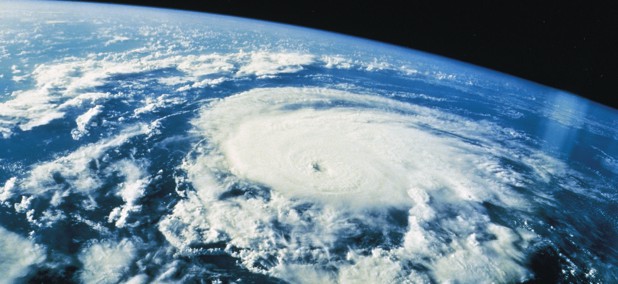
NOAA leverages AI for weather forecast translation
The artificial intelligence tool will replace the National Oceanic and Atmospheric Administration’s manual process for Spanish and simplified Chinese.
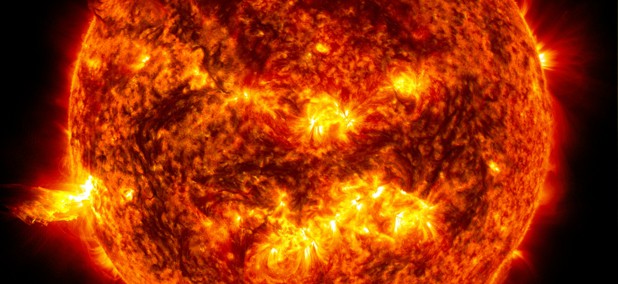
How NASA, NOAA and AI might save the internet from devastating solar storms
Coronal mass ejections that can occur during the solar maximum are electrically charged, meaning they can easily destroy electrical and computer equipment.


NOAA upgrades weather forecasting supercomputers
The National Oceanic and Atmospheric Administration will be able to make more accurate weather forecasts with upgrades to computer systems deployed in Virginia and Arizona.
NOAA looks to modernize with EIS
The weather and science agency sets up future 5G capabilities, critical sensor bandwidth with $311M Enterprise Infrastructure Solutions task order.
'Sharpiegate' probe elicits rebuke from Commerce IG
The Inspector General at the Department of Commerce is publicly complaining that the agency is using concerns about redactions as cover for blocking the complete release of a critical report surrounding the president's 2019 misstatements about the path of Hurricane Dorian.
NOAA taps cloud providers for data
The agency that provides daily weather data for commercialization officially moves it to the cloud by tapping three of the largest commercial providers.
How the shutdown affects open data
Developers rely on government data to build public-facing apps and services, and a lapse in appropriations can make things complicated.
Why acquisition management is the SENSR project's secret weapon
Getting four agencies to share spectrum and combine their radar systems is a massive undertaking. Settling on a single acquisition management system makes it much more manageable.
