
Treasury is creating a database with pandemic aid recipients’ sensitive information
J. David Ake/Getty Images


 By
Natalie Alms
By
Natalie Alms
Critics say the scope established in the agency’s systems of record notice “is an astonishing and dramatic departure from prior Treasury practice.”
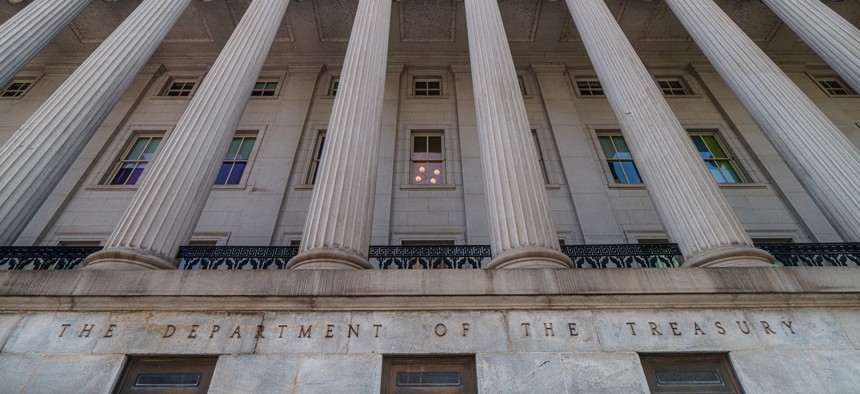
The Treasury Department is pooling information about people who received benefits from pandemic-era relief programs in a new, central database it says will be used to conduct program audits.
It’s the latest front in the Trump administration’s efforts to centralize government data, including information typically held by states about people who receive nutrition benefits and jobless aid. Many of the administration’s previous attempts have been subject to lawsuits.
Critics say the department’s required notice for the system is imprecise, overly broad and runs afoul of privacy laws governing the federal government. Treasury is amassing addresses, financial data, Social Security numbers and other data in the new system, which it says it may cross-match with other government data.
Typically, these types of notices are “routine matters that do not warrant comment,” Steve Sharpe, senior attorney at the National Consumer Law Center, said in a statement. “But the scope of this notice is an astonishing and dramatic departure from prior Treasury practice.”
The NCLC, a nonprofit focused on economic justice, called the new system a “baseless violation of privacy” in a comment on the February notice that it submitted with over 40 other organizations, including many state and local legal aid groups.
Treasury’s plan “could be construed to reach millions of individuals,” the comment reads.
The database will include information about the individuals and entities, like small businesses, receiving benefits from eight department programs, Treasury’s notice says. Congress created many of these during the pandemic to provide emergency relief.
Other programs feeding data into the new system, like one created to rebuild the Gulf Coast after the Deepwater Horizon oil spill in 2010, have no relation to the pandemic. The new system could also include other programs administered by the Treasury in addition to those listed in the formal filing, the notice says.
Local governments administer some of these programs, and they’re already required to report subrecipient and vendor information, the National League of Cities, the United States Conference of Mayors and National Association of Counties say in a comment, which also emphasizes the cost that reporting new data would entail, especially after some of these programs have been shuttered following the end of the pandemic.
Treasury did not respond to a request for comment. But if it moves forward with the new system as described in the notice, it will be saving information about a long list of people — not only those who receive assistance, but also people “associated” with the nonprofits, small businesses and other entities that received or delivered aid. The system will also house application information, which could include sensitive financial information.
The nonprofit Association of Public Data Users wrote in its comment that the notice “seems designed particularly to obfuscate the purpose of the collection and potential uses of the data.”
Although the stated purpose of the system is for audits, “we suspect the unstated purpose of the system of records is not to audit at all, but to get access to the information held by states that Treasury cannot otherwise directly compel them to submit to the federal government,” continues APDU’s comment, which it submitted with nine other organizations.
The Trump administration has pressured a range of state and local entities to share data with the federal government since the beginning of last year, including voter files.
The Electronic Privacy Information Center argues in its comment, which got sign-on from other organizations like the Center for Democracy and Technology, that the new system runs afoul of the Privacy Act’s principles of minimizing data collection, calling the proposed program “illegal and reckless.”
The notice signals more of the same “data grab playbook” from the administration, John Davisson, litigation director for EPIC, told Nextgov/FCW.
“Time and again we've seen this administration exploit personal data to construct wildly exaggerated narratives of waste and fraud, to carry out brutal immigration enforcement tactics, and attempt to undermine the right to vote,” he said.
If you have a tip you'd like to share, Natalie Alms can be securely contacted at nalms.41 on Signal.
NEXT STORY: Social Security delays launch of new nationwide caseload system