
Agriculture’s failure to force SNAP card upgrades is causing $555M in lost benefits, watchdog says
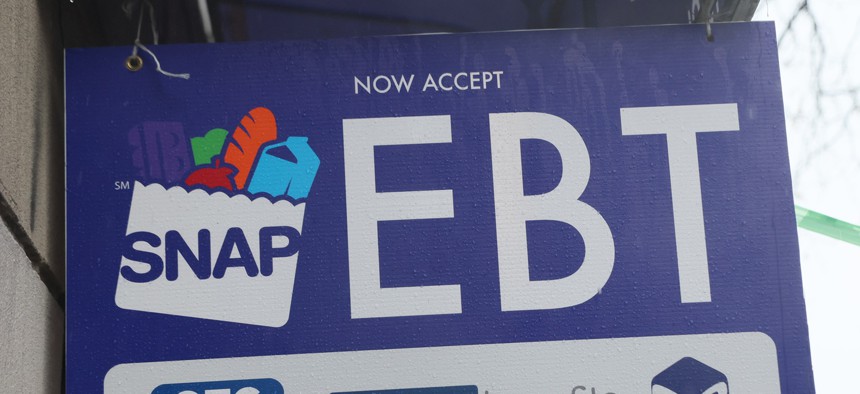
Michael M. Santiago/Getty Images




 By
Natalie Alms
By
Natalie Alms
The Trump administration’s imperative to combat fraud has largely focused on recipients scamming the system, rather than becoming victims of fraudsters themselves.
Agriculture Secretary Brooke Rollins says that she’s focused on fraud in the United States’ largest nutrition assistance program, but her department hasn’t acted to prevent scammers from stealing hundreds of millions in benefits, a government watchdog found.
The tally for SNAP “skimming,” where fraudsters steal SNAP card data and use it to take the benefits, could cross half a billion dollars later this year, according to a new estimate released by the Agriculture Department’s office of inspector general last week.
That is in large part because the government still relies on half-a-century-old card technology to get money for food to over 41 million Americans a month as part of the Supplemental Nutrition Assistance Program, or SNAP.
The electronic benefit transfer, or EBT, cards used to deliver SNAP lack the chip technology embedded in most common credit and debit cards, leaving them exposed to transnational crime rings that have been targeting America’s most vulnerable citizens for years.
Congress told Agriculture to create a rule forcing states to update their cards in late 2022, but the department still hasn’t done so, leaving the program exposed in an “ongoing nationwide crisis,” the watchdog report says.
The watchdog issued a recommendation that USDA finalize the rule, but the agency isn’t planning to publish it until Sept. 30, 2026, according to the new report.
Agriculture lost over half of the experts brought on to write the rule by May of last year, as the White House sought to shrink the federal workforce, according to September 2025 Government Accountability Office findings.
SNAP could lose $233 million to fraudsters between October 2024 and October 2026, the inspector general estimated in the new report. That’s on top of over $320 million the government has already lost nationwide since the fall of 2022, bringing the total to $555 million.
"Rulemakings are necessary, but only a small piece of the fraud prevention framework," an Agriculture spokesperson told Nextgov/FCW in a statement. "Just the other day, in Cleveland, USDA raided more than 270 retailers, recovered six skimming devices, which in total, created an estimated loss to the American taxpayer of $6.2 million."
The Secret Service actually led that effort, although USDA and the Department of Homeland Security also helped, according to a Secret Service spokesperson, who noted that businesses voluntarily engaged to learn about and remove any potential skimming devices placed on their machines.
The watchdog estimate comes as the Trump administration says that it is focused on combatting fraud, especially in light of the scandal unfolding in Minnesota social services. Vice President JD Vance announced a new assistant attorney general position focused on fraud earlier this month.
Rollins has been saying on news shows that fraud is “rampant” in SNAP for months, as the department pushes states to hand over sensitive claims data, an ask that a federal judge froze late last year, siding with over a dozen states that argued the request violates privacy laws.
But skimming has largely been absent from Rollins’ talking points.
She has said, among other things, that the department wants to review the rolls for undocumented immigrants, tying the issue to the unfounded claim that Democrats are “buying” elections using illegal immigration.
Although some lawfully present immigrants are eligible for the program, undocumented immigrants have never been eligible for SNAP and there is no evidence that ineligible immigrants are committing widespread fraud, experts have previously told Nextgov/FCW.
Rollins has also said that 500,000 people are receiving benefits in more than one state, although the department hasn’t provided additional detail on these claims.
Widespread benefit theft — where SNAP users are the victims, not the perpetrators of fraud — is the most pressing fraud problem in the program, advocates say, not where beneficiaries defraud the program.
Victims may not know that their card has been compromised until they are in the checkout line at the store. Over 670,000 households have been stolen from between 2023 and 2025.
The magnetic stripe on EBT cards is easy for criminals to copy using overlays installed on top of card readers, which steal card data, enabling fraudsters to make new copies and take the cash.
Cards with chip technology are more secure because they use tokenization, where the actual account number is replaced with a one-time code, making it more difficult for bad actors to get the data needed to clone the cards. This is why the financial industry moved to these types of cards in the first place.
California is the only state that’s moved to chip cards so far, although a handful of other states are also working on switching to modern cards. In California, EBT theft has dropped by 83% since January 2024 as the state issued new chip-and-tap-enabled cards, the state announced last week.
The state has also implemented forced PIN resets, a new app and website where users can freeze their card if they believe it has been stolen, and a new predictive model that identifies and corrects theft.
States looking to follow suit will face the cost of the transition — between $2 million to $11.5 million per state, according to GAO — right as the price of administering SNAP is getting more expensive due to Republicans’ One Big, Beautiful Bill Act pushing more program costs onto states.
In the absence of more secure cards, the Secret Service has been sending personnel store-to-store to physically check for skimmers on payment terminals. In 2025 alone, they’ve manually checked nearly 60,000 machines for skimmers so far across over 9,000 businesses.
For those whose benefits are stolen, whether they are reimbursed or not depends on if their state provides that relief.
Congress let federal reimbursement lapse in late 2024, after Trump tanked a bipartisan government spending stopgap and the previously included reimbursement provision was dropped from the Republicans’ proposal that ultimately became law.
While the federal government was reimbursing benefits between October 2022 and December 2024, it doled out over $322 million, although that’s likely less than the total that was stolen. Those whose benefits were stolen had to know to ask to be reimbursed. Congress also put a cap on how many times the government would replace stolen benefits, and how much.
Nearly 60% of people who lost benefits to EBT theft reported skipping meals, according to a survey of over 11,895 EBT cardholders early last year. Almost half said they took on debt.
Editor's note: This article has been updated to include comment from USDA and the Secret Service.
If you have a tip you'd like to share, Natalie Alms can be securely contacted at nalms.41 on Signal.
NEXT STORY: Biometrics are now a ‘bedrock’ of traveler identification, CBP official says