
FCC weighs three-year security renewals for Cyber Trust Mark products
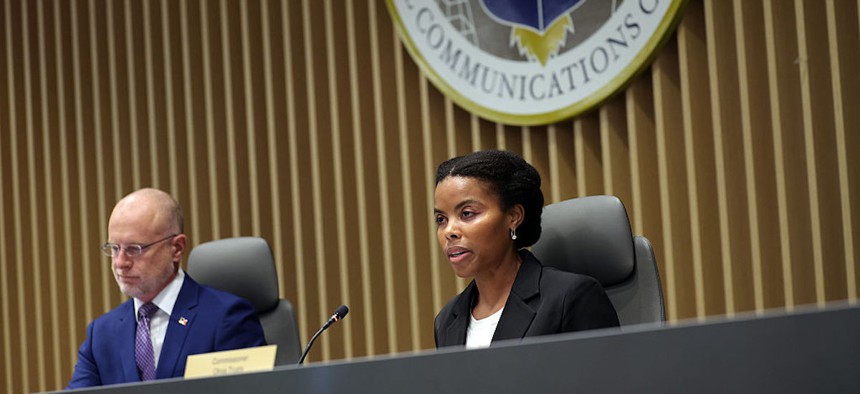
Federal Communications Commission (FCC) Commissioner Olivia Trusty (R) and Chairman Brendan Carr participate in a FCC meeting at the Federal Communications Commission headquarters on February 18, 2026 in Washington, D.C. Kevin Dietsch/Getty Images





The agency is seeking feedback on how to keep the developing consumer cybersecurity label meaningful after devices reach store shelves, including closer checks on baby monitors and home security cameras.
Manufacturers seeking the U.S. Cyber Trust Mark for connected household devices would need to renew their products’ security certifications every three years under an FCC proposal, as the agency works to bring the long-delayed labeling program to consumers.
The Federal Communications Commission is also considering whether baby monitors, home security cameras and products marketed to children should face more frequent checks after they go on sale because of the potential harm if hackers compromise them.
A notice published Monday in the Federal Register sets a Dec. 23 deadline for public comments on the proposals, which the FCC first released Oct. 27.
The voluntary program, developed during the Biden administration, is intended to help shoppers assess the cybersecurity of internet-connected products, much as Energy Star helps them identify energy-efficient appliances. Qualifying products would carry a label with a QR code linking to information such as how long the manufacturer promises security support and how to configure the device safely.
The renewal proposal addresses what happens as those products age and new cyber threats emerge. Manufacturers would have to demonstrate that their products still meet the program’s requirements, including changes adopted since their previous certification.
A stakeholder committee recommended allowing five years between renewals, arguing that a shorter period would burden manufacturers. The FCC’s Public Safety and Homeland Security Bureau favors three years.
“We are concerned that a five-year renewal period does not adequately align with the fast-paced nature of IoT threat evolution, potentially leaving consumers with outdated cybersecurity protections,” the bureau wrote.
The notice also covers how shoppers would see and use the label. Officials are considering recommendations to present online security information in English and Spanish, and direct QR codes to a government-hosted address. They are also seeking ways to discourage counterfeit labels and handle consumer complaints and products that fall out of compliance.
The proceeding follows FCC Commissioner Olivia Trusty’s remarks last month that she hopes labeled products will reach consumers within a year. FCC Chairman Brendan Carr assigned her to oversee the rollout.
The program has undergone delays and a change in leadership. The FCC selected ioXt Alliance as lead administrator in April after UL Solutions withdrew amid an FCC review of its alleged ties to China.