
AI is helping VA speed up claims processing, but Dems worry about errors
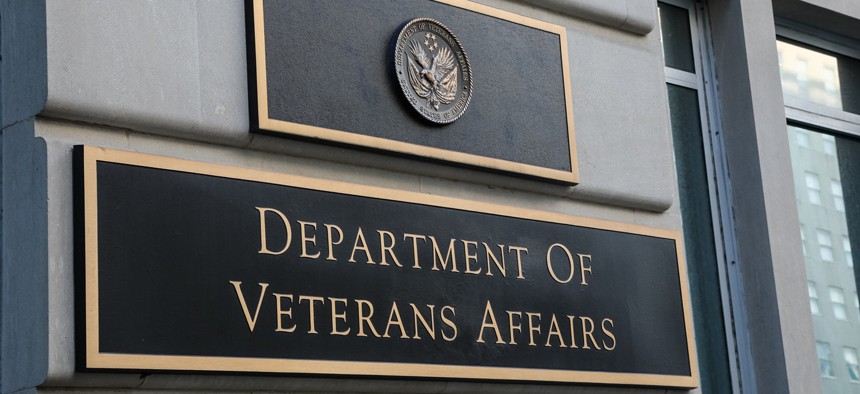
P_Wei/Getty Images



“Speed does not equal success,” Rep. Tim Kennedy, D-N.Y., said about VA’s use of automation and AI to process veterans’ benefits claims.
The Department of Veterans Affairs has been using artificial intelligence to speed up its processing of veterans’ benefits claims, but VA officials told lawmakers that human reviewers make the final decisions and that greater use of the emerging capabilities has not correlated with an increase in errors or issues — a claim disputed by Democrats.
During a House Veterans’ Affairs Committee hearing on Wednesday, Margarita Devlin — principal deputy under secretary for benefits at VA’s Veterans Benefits Administration — told lawmakers that “the average time to process a claim has dropped by 42% since January 2025, from 141 days to just 81 days.”
VA’s recently released 2025 inventory of AI use cases listed 367 examples of the emerging capabilities. Twenty-eight of these use cases are focused on the topic of “government benefits processing,” with the majority of these examples listed as still being in the pre-deployment phase.
One of the active AI use cases — and the one that received the most attention during Wednesday’s hearing — is called Automated Decision Support, or ADS.
VA’s inventory said ADS uses machine learning to automate “some of the up-front time-consuming development activities of retrieving information” and noted that the tool “is not intended to replace trained claims processors — it provides tools to assist with development tasks at a time when [the Veterans Benefits Administration] is receiving more claims than ever before.”
Devlin said the tool can review many elements of a veteran’s claim, such as, “if the veteran served in the Navy, were they then within 12 nautical miles of certain areas to qualify for certain presumptive? It'll look for what were their dates of service, and be able to put that all together. So what the employee is seeing is screens that present to them, ‘this has been satisfied, this piece has been satisfied.’”
Rep. Morgan Luttrell, R-Texas, said he was speaking on behalf of the House panel’s general sentiment when he said “we are eagerly behind the injection of AI models into the system so our veterans get what they need in a timely manner.”
Even as lawmakers expressed cautious support for the use of AI and automated capabilities, like ADS, to streamline claims processing, they pressed VA officials to ensure that the tool is working appropriately and includes human oversight.
Devlin said the AI “does not make any decisions and will not deny a claim,” adding that “it simply puts everything together for the decisionmaker so that they can make the decision faster.” She said that the department also regularly updates the ADS system, estimating that it occurs every six to eight weeks.
Sandra Flint — Deputy Under Secretary for Field Operations at VA’s Veterans Benefits Administration — told lawmakers that even if some of a veterans’ collected data appears to be missing from the tool, “that decisionmaker has the opportunity to go out and get the information, or go find the information he or she needs to to support the veterans’ claim.”
Democrats on the panel, however, were more critical of VA’s use of AI and the ADS tool, linking more reliance on these types of capabilities with what they deemed to be decreasing claims-processing accuracy.
Rep. Maxine Dexter, D-Ore., said she had the opportunity to speak with veteran service officers in her district, who told her that decision times were improving but that “their impression is that errors are increasing.”
Dexter also submitted for the record a claim that, she said, explained a veteran’s employability by referencing Google and that was “followed by a quote — direct quote — from language that certainly appears to be AI-generated content.”
Rep. Tim Kennedy, D-N.Y., also questioned the precision of VA’s reported error rate and said “speed does not equal success.”
Devlin told lawmakers that, as of the end of March, the accuracy rate was over 94%, which she said was “the highest it’s been in two years.”
But Kennedy noted that VA reported a “94% issue-level accuracy, but [an] 83.31% claims-based accuracy.”
Flint said the department switched to an issue-based quality rate “because that gives us a level of detail about what's actually happening in the claim, so we can hone in on the things that are important to veterans,” and added that a “claim-based score sort of masks what the real challenges are, because if you get one wrong, the whole thing is wrong.”
In a Wednesday press release, VA noted that it has reduced its backlog of veterans waiting for benefits “to less than 100,000 claims for the first time since 2020.”
These numbers had ballooned as a result of the coronavirus pandemic, as well as following passage of the PACT Act. The law, signed by former President Joe Biden in August 2022, provided veterans exposed to burn pits and other toxic chemicals during their service with expanded access to health services and benefits for medical conditions not previously covered by VA.
In addition to the AI tool used to streamline claims processors’ review of veterans information, VA is looking to expand its use of the emerging capabilities to other benefits processing responsibilities.
VA Press Secretary Peter Kasperowicz told Nextgov/FCW last month that the department “plans to broaden the ADS program to cover more types of conditions and claims,” which he said “means a greater percentage of claims will be eligible for automated processing, speeding up the process and reducing the workload for claims processors.”
VA is also pushing to fund additional adoption and use of AI capabilities.
The Trump administration’s proposed fiscal year 2027 budget, which was released earlier this month, recommended allocating $130 million to the Veterans Benefits Administration “for automation and artificial intelligence investments modernizing veterans claims processing by reducing errors and delivering benefits to veterans faster.”
An FY27 VA budget document focused on the department’s IT operations also proposed boosting its “Decision Intelligence and Automation” activities to $47.8 million, or $4.7 million more than what was enacted in 2026.
The budget document said that “the increase is driven primarily by the AI Infrastructure solution, enabling VA to pilot and scale AI tools that improve operational efficiency, enhance clinical decision-making, and support personalized care and benefits delivery, while sustaining governance frameworks for safe, effective, and ethical use.”
If you have a tip you'd like to share, Edward can be securely contacted at Grahed.40 on Signal.
NEXT STORY: Agencies report over 3,000 AI use cases in 2025