
TSA seeks private sector input to enhance airport security
Kent Nishimura/Getty Images

The agency is seeking solutions that “leverage innovative technology” to improve the security screening experience for both travelers and TSA personnel.
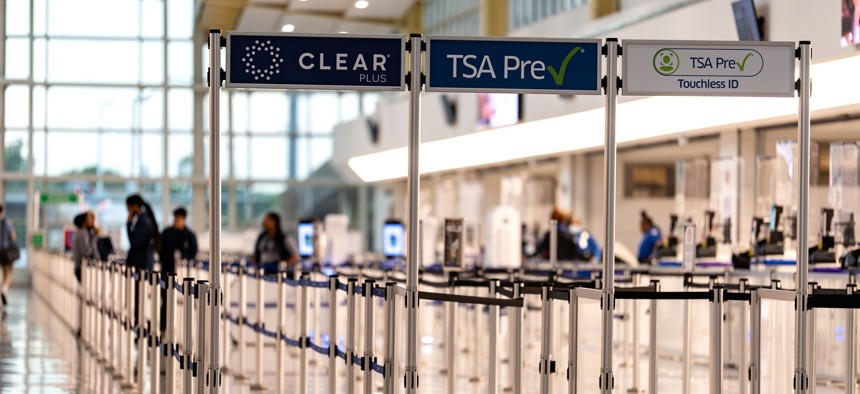
The Transportation Security Administration is asking the private sector to provide the agency with innovative airport screening tools, according to a recently published request for information.
TSA said on Friday that it is seeking ideas “for the development and deployment of turnkey solutions for use at airport security checkpoints,” particularly those that incorporate “cutting-edge screening technologies.”
The request seeks feedback through TSA’s Screening Partnership Program, which the agency said “contracts with qualified screening vendors to provide private security screening under TSA oversight at airports nationwide.”
The RFI, which was initially published on July 16, asks companies to provide solutions that “leverage innovative technology, modern operational models, and process design” to enhance the effectiveness of airport security, reduce operating costs and workforce requirements, improve passengers’ experiences and comply with the agency’s performance standards and regulations.
This includes technologies that "incorporate AI-driven threat detection and remote screening,” such as “threat detection for carry-on and checked baggage.” The RFI also seeks ideas for tools that can expand TSA’s current facial recognition capabilities, such as “advanced accessible property, body scanning, alarm resolution, and biometric ID verification tools.”
“TSA is constantly looking for innovative private sector solutions to enhance security and improve the passenger experience at TSA checkpoints,” the agency’s acting administrator, Ha Nguyen McNeill, said in a statement, noting that the RFI comes after the agency moved earlier this month to eliminate the requirement for airline travelers to remove their shoes during the security screening process.
“This effort will continue to drive a golden age of travel for future innovations by allowing private sector organizations to submit ideas or solutions that will help make airport screening faster, more secure, and easier on the traveling public,” McNeill added.
In an interview with Nextgov/FCW last October, TSA Chief Technology, Data and Artificial Intelligence Officer J. Matt Gilkeson said AI tools have the ability to significantly enhance the airport security process for both travelers and agency personnel, although he said the agency is taking a “crawl, walk, run approach” to adopting the tools.
TSA has also been increasingly using facial recognition to verify the identities of travelers, with the agency planning to roll out the technology to more than 400 airports in the coming years. A bipartisan group of lawmakers have pushed back against the deployment of biometric tools in the screening process, however, with the Department of Homeland Security inspector general agreeing earlier this year to audit TSA’s use of the technology.