Author Archive



Artificial Intelligence
House Democrats call to cancel upcoming recess for time to legislate on AI
Four lawmakers stressed the need for more working days and bipartisan teamwork to respond to the national calls for strong artificial intelligence protections.
Artificial Intelligence
FBI needs access to latest models to police AI-driven cybercrime, director says
Federal Bureau of Investigation Director Kash Patel spoke about how he thinks the bureau can best police new AI-related criminal activity, beginning with model access.
Artificial Intelligence
New bipartisan Senate science caucus will address AI
The effort is intended to engage in multiple scientific domains to strengthen U.S. innovation, including AI policy and regulation.
Artificial Intelligence
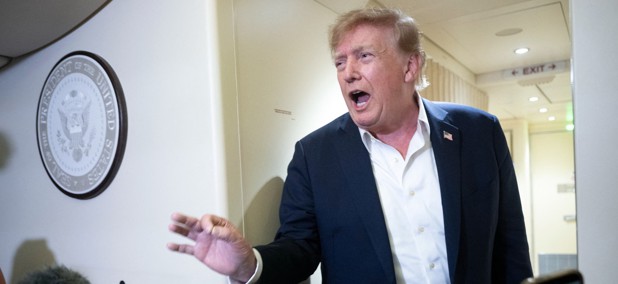
Trump redoubles pro-AI stance amid calls to slow development
Industry leaders put out a public call to “pace the frontier” of artificial intelligence development over the weekend, reinvigorating the debate over how to best compose effective regulations.


Policy
Tech bills of the week: Community protection from data centers; AI labs for education; and more
Recent proposals look to address data center concerns and establish grant programs to bolster students and educators’ AI and data science skills.


Artificial Intelligence
Lawmakers clash on safety testing language for in-development AI legislation, people familiar say
High-ranking members of the Senate Commerce Committee stand at odds with each other over how to best address “catastrophic risk” posed by artificial intelligence.


Artificial Intelligence
Hawley launches committee investigation into OpenAI’s breach of Hugging Face
Following reports of two autonomous attacks conducted by OpenAI’s agents, Sen. Josh Hawley sent a letter to OpenAI CEO Sam Altman for answers.
Artificial Intelligence
AI safety advocacy group launches new state-level effort
Americans for Responsible Innovation debuted the advocacy arm to bring responsible AI policy assistance to local lawmakers.
Artificial Intelligence
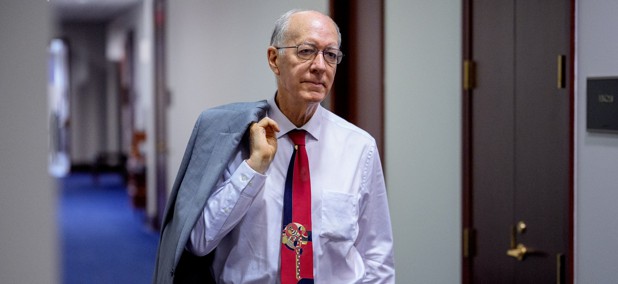
Democrats mull creating a select AI committee if they win the House
Reps. Bill Foster, D-Ill., and Ted Lieu, D-Calif., are advocating for the new select committee as a way to solely focus on artificial intelligence legislative issues.


Artificial Intelligence
Intelligence agencies warn of China’s large-scale AI model distillation efforts
Three agencies issued a joint statement warning that Chinese companies DeepSeek, Moonshot AI, Alibaba, MiniMax, StepFun and Z.AI have used the tactics to extract billions of tokens from U.S. models.


Policy
Tech bills of the week: Ban on AI superintelligence; AI oversight at the Pentagon; and more
Among this week’s bills is a sweeping measure to address the rapid pace of advanced AI development and deployment by banning work on superintelligent AI and temporarily pausing advanced AI development.


Policy
House BIOTech caucus is weighing IP security and AI-enabled biotech policy
Lawmakers on the caucus say they won’t push any new legislation forward before the end of the year, but they spotlit intellectual property protection and AI-enabled gene synthesis as concerns.
Artificial Intelligence
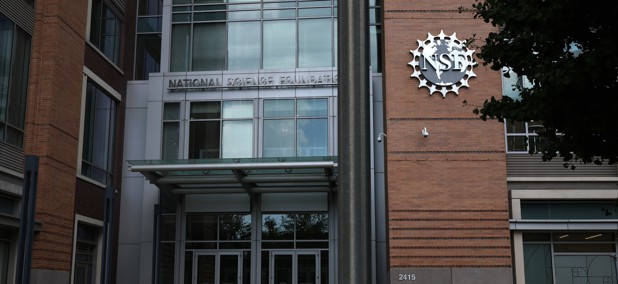
NSF launches a new AI research operations center
The new center will help support the National Artificial Intelligence Research Resource’s transition from a pilot into a permanent part of the agency.


Acquisition
Microsoft Fabric integration platform launches for select federal customers
The platform is now available on a preview basis for Government Community Cloud High environments and is designed to support the needs of agentic AI tools.


Policy
Tech bills of the week: identifying sponsored content in AI tools; Reshoring biotech manufacturing; and more
This week’s bills seek to label sponsored content in AI platforms, fortify emerging technology supply chains and spur adoption of open-weight models.


Artificial Intelligence
Judge rules Anthropic supply chain risk designation was ‘illegal and baseless’
A Northern California judge found that the AI company’s products did not represent a meaningful threat to national security, making the Pentagon’s designation “unlawful retaliation.”


Artificial Intelligence
Commerce official warns of obsolescence without AI adoption
Job replacement due to AI is less of a threat than falling behind due to lack of adoption, Senior Advisor for Technology and Strategy Matheus Passos said.

Artificial Intelligence
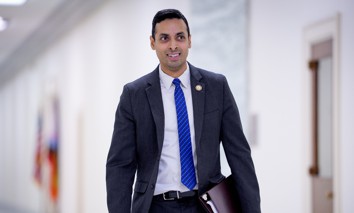
Dem lawmaker hopes to add AI containment language to FRONTIER Act
Rep. Suhas Subramanyam, D-Va., is pushing for a September markup of the landmark AI legislation along with new language on model containment following the OpenAI-Hugging Face incident.


Emerging Tech
GSA begins quantum security efforts for digital and physical systems
The General Services Administration is updating an existing identity and access management framework and expanding a physical security testing program to support a government-wide migration to post-quantum cryptography.


Policy
Tech bills of the week: Overseeing algorithm-set rental prices; and halting federal overreach in data center construction
Legislation introduced this week seeks to police the use of algorithmic price-setting for home rentals and rein in how the federal government influences new data center construction.
