Automation

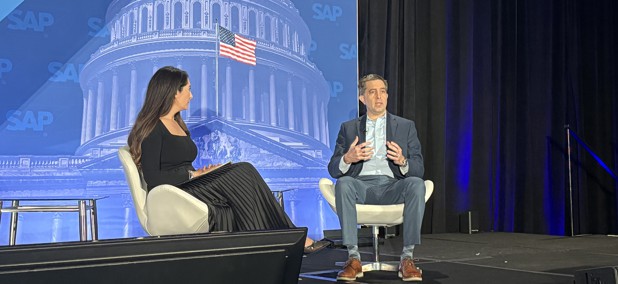
AI offers Secret Service unique mission enhancements, official says
Threats against the Secret Service’s full-time protectees are up over 40% since last year. The service’s CIO and CAIO Chris Kraft said AI “can help us as we investigate those threats, monitor those threats [and] bring together correlations between seemingly disparate information.”


Building the foundation for autonomous operations
COMMENTARY | In an autonomous enterprise, people and intelligent agents work together inside connected processes.


GSA to take its Emerging Tech Showcase governmentwide
The live and virtual event invites all of government to attend and will feature senior federal leaders, practitioners and industry experts sharing what’s working in government technology and innovation.


GSA publishes ‘Elimination, Optimization and Automation’ playbook for government agencies
The playbook’s framework has already helped the agency save hundreds of thousands of hours, and other agencies can now make use of it to launch their own automation initiatives.


Officials say federal employee background check system overhaul is finally on the right track
The director of the agency primarily responsible for background checks of federal employees said the change in administration likely won’t affect modernization efforts.




House committee introduces 5 guardrails for internal AI use
The Committee on House Administration released its April AI Flash Report reviewing past and present agenda items to implement AI systems in legislative operations.
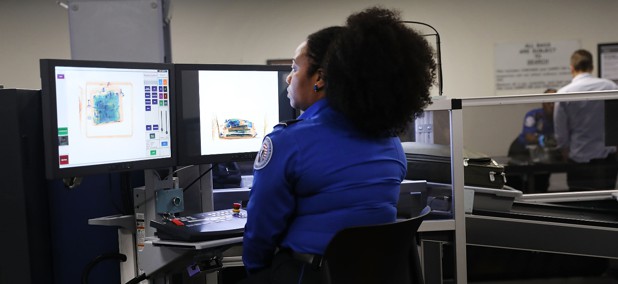
TSA looks to AI to enhance x-ray screenings of travelers’ luggage
The Transportation Security Administration is already using facial recognition to verify the identity of travelers but wants to improve its scanners to detect more prohibited items.


FCC makes AI-generated voices in robocalls illegal
The move gives states new authority to crack down on AI-generated voice-cloning schemes.


Autonomous tech featured in Senate border and foreign aid bill
The Senate’s proposed $118 billion immigration and foreign aid package includes more than $260 million to deploy emerging technologies to secure the border.


How USPTO built a culture of trust in its automation efforts
The U.S. Patent and Trademark Office’s use of automation has helped officials quickly address identified security vulnerabilities and software bugs, an agency official said.


White House looks to scale FedRAMP with automation
The cloud security program is being restructured to respond to the proliferation of cloud offerings.


State CIOs look ahead to a collaborative, automated future
A survey of state technology leaders found that the CIO role has evolved from one concerned with building a state’s own tech infrastructure to one focused on acting as a broker of services. The change comes amid increasing automation, use of AI and cybersecurity challenges.


State Dept. looks to AI for declassification, FOIA processing
The agency’s enterprise AI strategy is expected next month.


What will the federal government do with generative AI?
Federal employees are going to see AI tools show up in cloud-based productivity suites sooner rather than later, but it's not clear yet how the trending tech will impact public-facing digital services.


ChatGPT for State and Local Agencies? Not so Fast.
Tasks that can benefit from automation such as software development, traffic management or rote tasks are good candidates for ChatGPT, but those that need more subjectivity still require human intervention, experts say.


NASA Tests Autonomous Aircraft Decision Tech in Arizona Cities
The agency is aiming to help air vehicles respond to anomalies—such as weather changes—faster, as the vehicles are used to provide essential services.


DOD Official: AI and Autonomy Are Critical to the Future of War
The Pentagon is working to prioritize the ethical and responsible adoption of autonomous technologies across the U.S. military as it works to keep pace with global adversaries.


49% of Tech Pros Believe AI Poses ‘Existential Threat’ to Humanity, Per Report
Others believe artificial intelligence will be a necessary component of most major business strategies in the near future.


Report: Empathetic Tech Can Improve the Government Contact Center Experience
A little empathy goes a long way.


Artificial Intelligence Continues to Evolve in Government and Elsewhere
AI that started out simply tackling robotic process automation-type tasks is slowly evolving to take on more traditionally human and creative duties.
