
Trump says Pulte can declassify ‘whatever’ he wants, sparking fears of exposing intelligence secrets
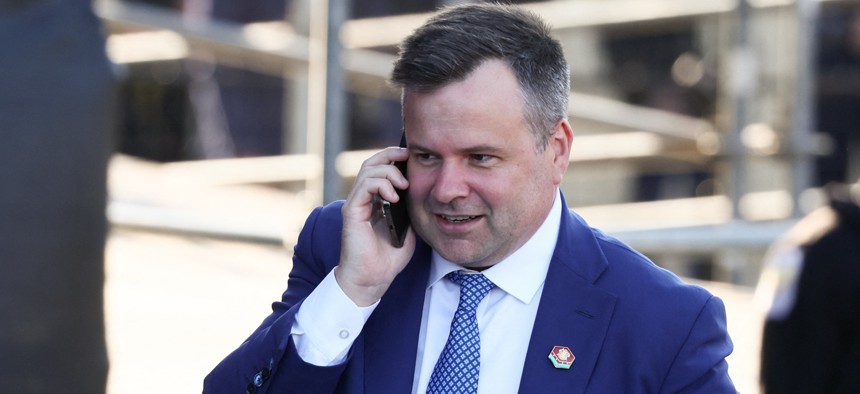
Acting Director of National Intelligence Bill Pulte attends a kick-off celebration for the "Great American State Fair" on the National Mall in Washington, DC, June 24, 2026. Jemal COUNTESS / AFP via Getty Images






“If he doesn’t care about blowing up cyber exploits, putting foreign relationships at risk, or getting people killed, he could declassify a lot,” one former official said.
President Donald Trump said Wednesday that acting spy chief Bill Pulte can declassify “whatever” records he wants and can declassify “almost everything,” a sweeping green light that has alarmed former intelligence officials, who warn that careless releases could expose sensitive intelligence capabilities and sidestep standard review processes with other spy agencies.
Trump said Wednesday that acting Director of National Intelligence Bill Pulte would only serve in the job for “a month or two months or something,” but has his permission in the interim to release classified records.
“Bill is there just for a fairly short period of time,” Trump told reporters at Joint Base Andrews in Maryland. “But while he’s there, I said you can declassify whatever you want.”
Under U.S. law, records declassification is usually handled through a structured review process meant to identify national security risks before materials are released. Trump’s comments appear to give Pulte political backing to move aggressively, but they don’t necessarily address how agencies with involvement in any records would be consulted first.
“My guess is that NSA and CIA are losing their minds at the idea of Pulte declassifying a lot of stuff,” said a former official, who, like others for this story, spoke on the condition of anonymity to be candid and for fear of retribution.
“If Pulte actually runs the traps and considers damage and balances, he won’t declassify much. If he doesn’t care about blowing up cyber exploits, putting foreign relationships at risk, or getting people killed, he could declassify a lot,” the former official added.
Intelligence records are typically reviewed by the agency that produced them before release, particularly if disclosure could expose that agency’s operations, but that consultation might be skipped entirely under Pulte, a second former official said.
An ODNI spokesperson did not immediately return a request for comment.
Trump has placed Pulte at the center of a wider declassification push that began under former Director of National Intelligence Tulsi Gabbard, who used her role atop ODNI to release records tied to Trump-era grievances over alleged weaponization inside the intelligence community. ODNI’s own public releases under Gabbard included documents the office claimed exposed efforts by intelligence officials to undermine Trump’s 2016 victory and material it said showed a conspiracy used during his 2019 impeachment proceedings.
The declassification push is part of a broader campaign to challenge an intelligence community the president has long accused of working against him. Since the 2016 Russia investigation, Trump and his allies have argued that intelligence and law enforcement shops have used their powers to damage his presidency.
“Trump’s statement alone saying that Pulte has this authority is damaging to national security because any person thinking about volunteering or working with the United States might think twice now, and is more likely to go to the Brits or another service,” a third former official said, adding that if Pulte moves to declassify intelligence involving other agencies, he would be in violation of the law.
The president “just signaled to any person providing intelligence to the United States that their intelligence can be released at Pulte’s whim, thus putting their entire security and safety in jeopardy,” the third former official added.
The White House has assembled a task force collecting thousands of pages of intelligence and law enforcement documents, mostly related to the 2020 election, with plans to declassify some of them in ways that could support Trump’s claims about election irregularities and fraud, NBC News reported Tuesday.
Trump’s declassification plans land against a long-running backdrop of concerns over his administration’s handling of sensitive intelligence. During his first term, officials said he shared highly classified information provided by the Israelis with Russian officials in the Oval Office. Separately, Russian and U.S. news reports later identified Oleg Smolenkov, a former Russian government official living near Washington, as a possible CIA source who had disappeared from Russia in 2017 after allegedly providing information on Russian President Vladimir Putin’s role in the Kremlin’s 2016 election interference efforts.
Trump was later indicted in June 2023 over classified records kept at Mar-a-Lago, including documents prosecutors said involved highly sensitive national defense information, though the case was dismissed and later dropped after he returned to office. Former President Joe Biden also faced a classified documents investigation, but a special counsel declined to charge him on grounds that there was not enough evidence to convict him of “willfully” retaining the sensitive materials.
Pulte’s short tenure has already produced early staffing changes at ODNI that have removed around 50 career and political staff from their roles in the office. The moves follow a broader downsizing campaign started under Gabbard.
The personnel churn included the sidelining of Will Ruger, the deputy director of national intelligence for mission integration. Pulte also brought in a new chief of staff, Christina Norton, who served as Pulte’s chief of staff at the Federal Housing Finance Agency and as the RNC’s election integrity director, helping oversee its 2024 poll-watching operation. Her move into ODNI has sharpened concerns that the office could be drawn further into Trump’s push to revisit election-related claims.
Trump’s comments come after he slowed a Senate push last month to quickly confirm Jay Clayton as permanent intelligence chief, allowing Pulte to take over the office on a temporary basis. Trump said Wednesday that Clayton would get his Senate hearing in two weeks.
Clayton’s nomination has drawn a generally positive response from senators. But Democrats have reacted furiously to Pulte’s elevation, and even some Republicans have expressed concern about installing someone with no prior intelligence community experience as acting DNI. The fight has already affected Section 702 of the Foreign Intelligence Surveillance Act, a key spying authority that had appeared headed for reauthorization in early June before Democrats balked in protest of moving forward with Pulte at the head of ODNI.