
Export-Import Bank set to consider framework backing US AI exports
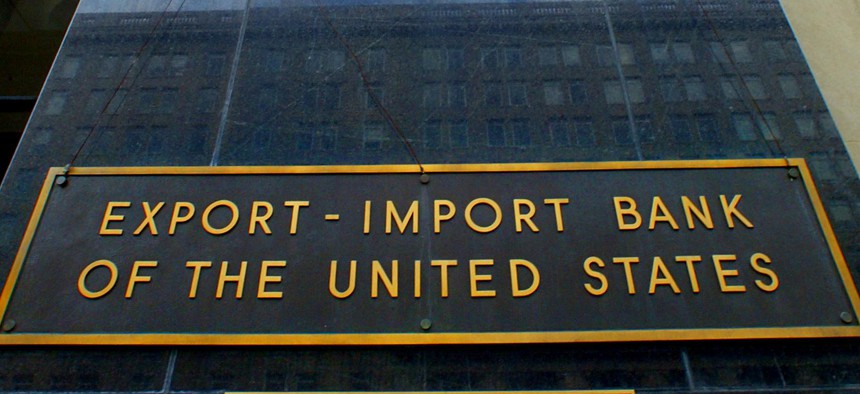
PAUL J. RICHARDS/AFP via Getty Images






The proposal would use federal export financing tools to support sales of American AI systems abroad, as the Trump administration weighs broader debates over advanced chip sales.
The Export-Import Bank board is expected to vote Thursday on a framework designed to support exports of U.S.-made artificial intelligence systems, as Washington seeks to expand the global reach of American AI products and services.
The ExportAI Initiative, as it’s called, seeks to boost the nation’s role in the global AI market “by modernizing EXIM financing tools and supporting the export of trusted U.S. AI technologies across industries of the future,” according to an initiative summary seen by Nextgov/FCW.
The move aims to position EXIM as a strategic financing arm for the global deployment of American AI, helping U.S. firms compete against other state-backed technology offerings overseas. The proposal would also streamline some export-related compliance requirements to help surge overseas AI deals and reduce administrative friction for exporters.
The summary does not name competing nations, though China, which heavily backs overseas projects through its own state financing, would likely be among them. It also does not name specific domestic AI companies.
One initiative measure describes “insurance and loan guarantees for the medium-term” and “direct loans and loan guarantees for the long-term,” signaling the bank would use different financing tools to assist in deals.
Rather than issuing direct subsidies, EXIM uses financial tools like loan guarantees and export insurance to help overseas buyers purchase U.S. technologies and infrastructure more easily.
In shorter- or medium-term transactions, the government could help reduce risk through insurance or repayment guarantees tied to purchases of U.S. AI technologies, such as cloud systems or cybersecurity tools. Longer-term projects, like foreign AI data center construction, could receive direct financing or government-backed loans.
Another ExportAI provision would tie export financing support to AI tech that the Commerce Department has approved or designated for overseas sale.
President Donald Trump is expected to sign an executive order this week focused on AI security and safety testing.
The ExportAI initiative summary notably does not address chip exports, which have become a contentious issue amid the Trump administration’s push to allow limited sales of advanced NVIDIA H200 AI chips to China. While some exports have reportedly been approved, few sales appear to have actually materialized.
The administration recently faced renewed calls to halt exports of advanced AI chips to China after the White House warned that Beijing is attempting to replicate components of American AI systems to develop competing models of its own.
Hardware like NVIDIA’s H200 underpins the computing power needed to train and run advanced AI models, including the large-scale querying associated with replication campaigns. Limiting access to those chips could slow China’s ability to develop and deploy competing models, though it would likely not stop those efforts altogether.