
Civilian agencies face 10% cuts in Trump’s 2027 budget
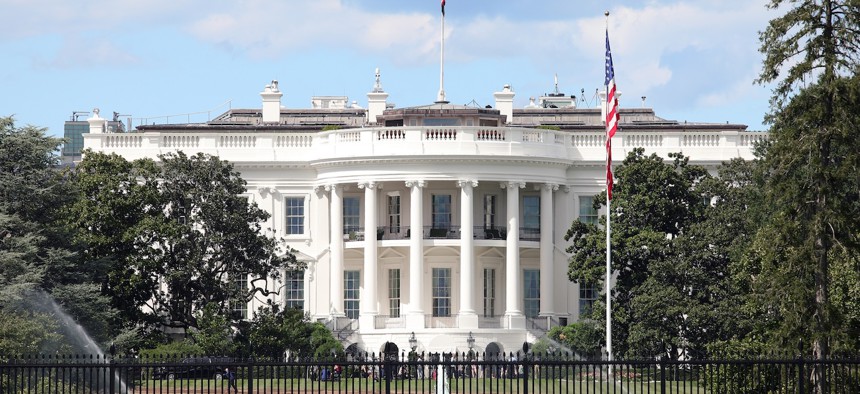
Office of Management and Budget Director Russ Vought said the fiscal 2027 budget builds on the cuts the Trump administration secured in the fiscal 2026 appropriations bills. ChiccoDodiFC/Getty Images





 By
Eric Katz
By
Eric Katz
Overall spending would increase thanks to a surge at the Pentagon and non-defense cuts were smaller than proposed last year, though dozens of programs and grants still face elimination.
President Trump on Friday proposed a $2.2 trillion fiscal 2027 budget, an overall increase on current spending that would include cutting non-defense agencies by 10%, or by $73 billion.
The proposed reductions were far less severe than the 22% in non-defense spending that the White House suggested chopping in his fiscal 2026 blueprint after Congress largely ignored those suggestions, though most major agencies would still see their budgets reduced under the new submission.
As Trump previously touted, defense spending in the new plan would spike by 44% to $1.5 trillion. A handful of other agencies would also see an increase compared to current spending: The Justice Department would receive a 13% boost mostly to supplement law enforcement efforts. The Veterans Affairs Department would receive a 9% bump, including an additional $800 million for electronic health records modernization. The Transportation Department would see a 6% increase, including a $1.3 billion increase for infrastructure and an additional $481 million for the Federal Aviation Administration to support air traffic controller hiring and additional modernization efforts. A 2% bump for the Energy Department would go toward the National Nuclear Security Administration; the rest of Energy would see an 11% spending decrease.
While nearly all agencies would experience a cut, those reductions were, nearly across the board, less than Trump proposed in his first budget. The biggest cuts would be the most significant at the Small Business Administration at 67%, the National Science Foundation at 55% and the Environmental Protection Agency at 52%. The president requested cuts of more than 25% to the departments of Health and Human Services, Interior and Housing and Urban Development in his first spending proposal last year, but he is now seeking reductions of 12%-13% for those agencies.

Office of Management and Budget Director Russ Vought said the fiscal 2027 budget builds on the cuts the administration secured in the fiscal 2026 appropriations bills.
“These final appropriations bills rooted out wasteful spending that the administration had identified across federal agencies,” Vought said. “The enacted bills also put us on a path to eliminate ineffective federal agencies that do not serve a useful purpose.”
The budget would eliminate 11 federal programs the administration deemed “woke,” such as the Education Department’s Teacher Quality Partnerships, HUD’s Pathways to Removing Obstacles to Housing and the EPA’s Environmental Justice Program. EPA, HUD and the Internal Revenue Service would face additional cuts in areas the administration said amounted to the “weaponization of the federal government.”
All told, the budget would eliminate dozens of grant and assistance programs focused on scientific and medical research, climate change, job training, housing, energy costs for low income Americans, refugees and migrants, disaster preparedness and many other areas across government.
The proposal would provide $50 million to the Agriculture Department to carry out its reorganization and mandatory relocations of thousands of employees and make investments to help HHS stand up its Administration for a Health America. Other major agency reform proposals in the budget included unifying federal firefighting into one agency, privatizing airport screenings at small airports, consolidating offices within DHS, eliminating an office focused on federal contractor oversight and slashing “layers of bureaucracy” at VA.
The White House said its budget would boost funding for federal law enforcement by 15% compared to current spending, including for more Homeland Security Department agents and additional federal prosecutors. The Drug Enforcement Administration, Secret Service and the Commerce Department’s Bureau of Industry and Security would all see increased funds for law enforcement hiring. The White House also highlighted a 12% increase for the Justice Department’s Executive Office of Immigration Review to support more courtroom space for deportation hearings.
Vought said the federal government has entered a new era of budgeting. OMB projected the government would slash spending at non-defense agencies by 24% in the next decade.
“A historic paradigm shift in the budget process is occurring and is producing real results for the American public,” the OMB director said. “Fiscal futility is ending. Now that our fiscal ship has turned to face in the right direction, I look forward to working with you to continue moving forward.”
If you have a tip that can contribute to our reporting, Eric Katz can be securely contacted at erickatz.28 on Signal.
NEXT STORY: Trump’s FY27 budget proposes boosts and cuts to tech operations