
New NSA director pushes for more intel-sharing with allies in internal meeting
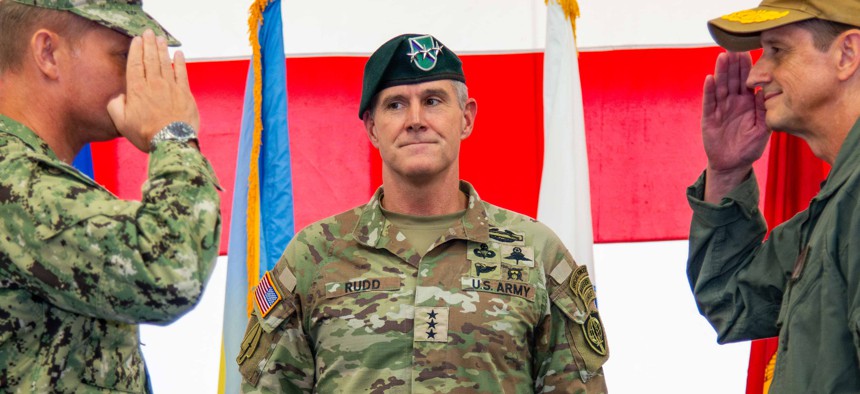
Lt. Gen. Joshua M. Rudd, then-deputy commander of U.S. Indo-Pacific Command, center, officiates a change of command ceremony at Marine Corps Base Camp Blaz Fitness Center, May 15, 2025. Mass Communication Specialist 1st Class Samantha Jetzer/U.S. Navy





Gen. Josh Rudd also told members of NSA and Cyber Command that the organizations should still focus on major cyber adversaries like Russia and China, despite the Trump administration’s emphasis on the southern border.
The new director of Cyber Command and the National Security Agency told both organizations’ workforces in a Tuesday all-hands meeting that he wants to double down on intelligence-sharing with U.S. allies and partners, according to two people familiar with the matter.
Gen. Josh Rudd, who was confirmed to lead both organizations earlier this month, told members of the signals intelligence titan and combatant command to partner with other allied countries “until it hurts,” one of the people said.
He also said that while the current Trump administration has put further emphasis on southern border security matters — a product of the current White House’s immigration and deportation policies — the NSA still should keep a watchful eye on major foreign adversaries like Russia and China, the second person said.
Both people spoke on the condition of anonymity because they were not authorized to discuss the contents of the internal all-hands call, which was Rudd’s first major address to the NSA and Cyber Command workforces.
Nextgov/FCW has asked both NSA and Cyber Command for comment.
The mission priorities described by Rudd could be a major reassurance for allies and partners that routinely exchange electronic intelligence with the United States, following months of unease over how certain White House policies have shaped intelligence-sharing relationships.
Rudd explicitly used the term “YESFORN” — a play on the “NOFORN” classification marking that restricts intelligence sharing with foreign partners — to emphasize expanded intelligence sharing with allies, one of the people said.
Both people also said Rudd wants to emphasize a culture of speed, integration and innovation, signaling a push for near real-time signal collection and analysis, tighter informating-sharing across organizations and faster adoption of emerging technologies to track threats.
Rudd comes from a less traditional background than past military leaders who have helmed the two organizations. Up until his confirmation earlier this month, Rudd served as the number two at U.S. Indo-Pacific Command, and he has spent his career largely in special operations and joint command roles. But some former officials and China analysts view Rudd’s Indo-Pacific background as relevant to U.S. cyber operations involving Beijing.
In his nomination hearings, Rudd told senators that his experience consuming and acting on cyber intelligence qualifies him to serve in the position.
In the new role, he will have to contend with declining morale inside NSA, as well as significant workforce cuts that were influenced by Trump 2.0 efforts to shed government bloat and spending waste.
Until Rudd’s confirmation, NSA and Cyber Command have been without a permanent leader since far-right activist Laura Loomer pushed for the firing of the post’s previous occupant, Gen. Timothy Haugh, last April.
To securely contact the reporter for this story, he can be reached on Signal via username djd.99
NEXT STORY: Mullin confirmed to lead DHS as shutdown drags on and 100,000 employees remain unpaid