
Lynx supercomputing cluster enters production at Lawrence Livermore
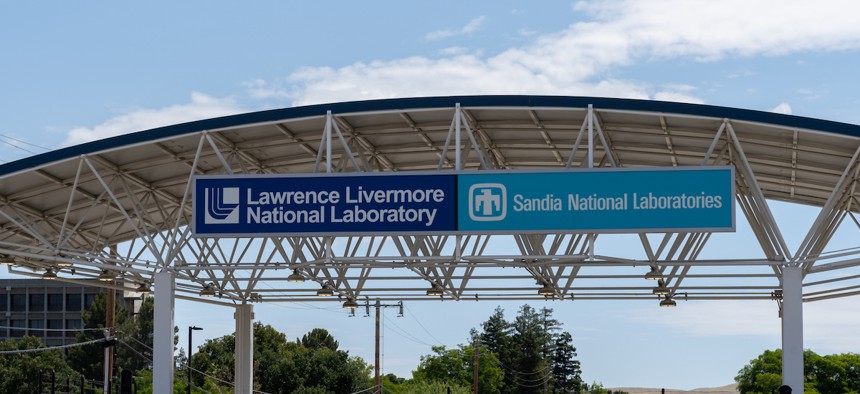
The entrance to Lawrence Livermore National Laboratory in Livermore, California, USA - June 12, 2023. JHVEPhoto/Getty Images






The lab welcomed the operational launch of its Lynx supercomputing cluster that will handle modeling and simulation efforts for the country’s nuclear stockpile.
Lawrence Livermore National Laboratory has a newly operational supercomputing cluster, joining its current network of delivering on national nuclear security modeling and simulation — part of the lab’s broader efforts to lead in advanced modeling applications.
The Lynx supercomputing cluster, composed of 952 nodes, runs on the CN5000 networking architecture from Cornelis and Dell PowerEdge servers. Both systems are focused on reducing congestion in handling artificial intelligence and high-performance computing workloads. Intel Xeon processors are also part of Lynx and support processing reliability.
The CN5000 networking system is designed to connect multiple computers together, facilitating large volumes of data processing for demanding computational workloads. Cornelis designed the CN5000 to serve as an interconnecting networking device, compatible with leading chip hardware from NVIDIA, Intel, and AMD.
Lynx was announced in July 2025, with the supercomputing cluster focused on adding to the U.S.’s stockpile stewardship management missions along with broader national security operations. In this vein, Lynx contributes to the ongoing work of the National Nuclear Security Administration’s Advanced Simulation and Computing program.
“We are excited to see the Cornelis CN5000 400G network come to life at Lawrence Livermore National Laboratory,” Matt Leininger, the senior principal HPC strategist at LLNL said in a press release. “The collaboration between NNSA’s ASC program and Cornelis has been rooted in a shared commitment to advancing high-performance computing. Lynx reflects the results of that public-private R&D investment and will support the modeling, simulation and analysis capabilities that underpin the modern NNSA complex.”
In a separate interview with Nextgov/FCW, Leininger said Lynx will handle some classified workloads, but may also dovetail into more data-intensive topics.
“The bread and butter [of Lynx’s uses] will be our HPC, but we're also, of course, trying to figure out how we can use AI and all its different flavors and forms, and integrate that into our workloads,” he said.
Lynx joins LLNL’s — and the world’s — fastest supercomputer, El Capitan, in Lawrence Livermore's supercomputer apparatus that handles stockpile analytics and work.