
Learning to fly: how Reentry simulates NASA’s most daring missions
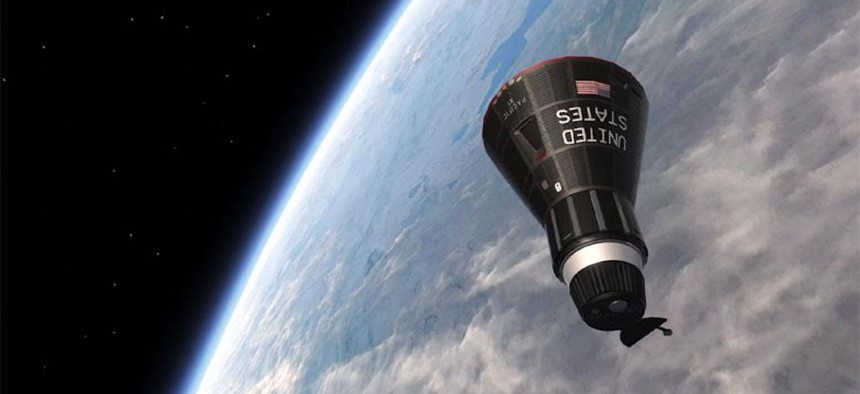
Screenshot from Reentry - A Space Flight Simulator





A digital and fun way to walk in the footsteps of early NASA heroes.
Thanks to the shutdown, there have not been too many innovative government programs operating over the past few months. NASA was able to continue its latest crowdfunding challenge, which asks people to help design new tires for future moon missions, largely because that is hosted by its partner site, HeroX. But beyond that, most everything was either shuttered or running with skeleton crews.
Now that things are back on track and the government is reopening, agencies will likely be putting a lot of effort into getting their systems back online and ensuring that their cybersecurity infrastructure is still functioning perfectly. Next week I am hosting a webinar with both government and industry experts to discuss that very topic, and I am looking forward to hearing about what they have to say, and sharing that information with everyone.
But for this week, I found myself with a bit of downtime and went looking for something fun (or distracting) to help pass the time. I am a huge fan of video games, especially those made in conjunction with government agencies like the ones that helped get us through the pandemic. Not too many agencies still make video games these days, although NASA still develops and publishes a fairly large catalog, mostly for educational purposes.
With so few official government games launching lately, I decided to go back to space anyway, albeit virtually. That led me to Reentry: A Space Flight Simulator for the PC on Steam, which turned out to be one of the most detailed and realistic astronaut simulations I’ve ever played. It’s not a NASA title, but it might as well be. The developers have clearly done their homework, and the result feels like a living tribute to the early days of space exploration.
The game puts players inside the cockpit of historical spacecraft like Mercury, Gemini or the Apollo capsules, each lovingly recreated down to the last switch and dial. And I do mean every switch and dial. You’ll be flipping dozens of them just to power up the guidance computer or initiate reentry procedures. In almost every game I have ever played, those switches and dials inside the cockpits are just for show. Here, you can actually flip or turn everything, although doing so might be a bad idea in the wrong circumstances.
There’s a satisfying sense of authenticity in mastering these complex systems, much like learning a real-world instrument panel. Much of my time with Reentry really felt like training. The game doesn’t hold your hand. It assumes you want to learn how everything works and rewards you when you finally do. And the training missions it offers are modeled after actual NASA procedures, so you’ll find yourself reading checklists, consulting manuals and repeating steps until they become second nature. The effect is both humbling and exhilarating. This isn’t arcade spaceflight. It’s engineering with a joystick.
What I loved most is how the game lets you experience the tension of early space missions. When you liftoff, you can feel the power of those five rocket engines producing close to eight million pounds of thrust. The sound is incredible and the screen actually shakes. There is virtual reality support too, which makes liftoffs even more terrifying to experience, especially since you are constantly worried if you set everything right or didn’t forget anything critical. The first time I experienced liftoff inside one of those little capsules, I kept thinking “what in the heck have I gotten myself into?” When you do hit the right orbit or survive reentry without overheating and burning up, it’s not because of luck. It worked because you’ve learned how to manage every single subsystem.
The one thing that I really learned from Reentry is that those early astronauts (and really this applies to any astronaut) were truly heroes. This gives the rest of us a digital way of walking in the footsteps of those heroes, with the bonus that if you make a mistake, you can always reload and try again.
For those who might want to experience what it’s like to be part of the space race without having to build an actual rocket, Reentry is the perfect blend of challenge and education. It’s also a reminder of how good games can be at teaching complex systems, the same reason that NASA, NIST, NOAA and many other agencies have leaned on simulation technology for decades. Even when the real government isn’t launching new projects, games like this can keep the spirit of exploration and learning alive.
John Breeden II is an award-winning journalist and reviewer with over 20 years of experience covering technology. He is the CEO of the Tech Writers Bureau, a group that creates technological thought leadership content for organizations of all sizes. Twitter: @LabGuys
NEXT STORY: IBM unveils updated quantum computing products