
Russia targets Democrats and Ukraine supporters ahead of midterms, top intel lawmakers say
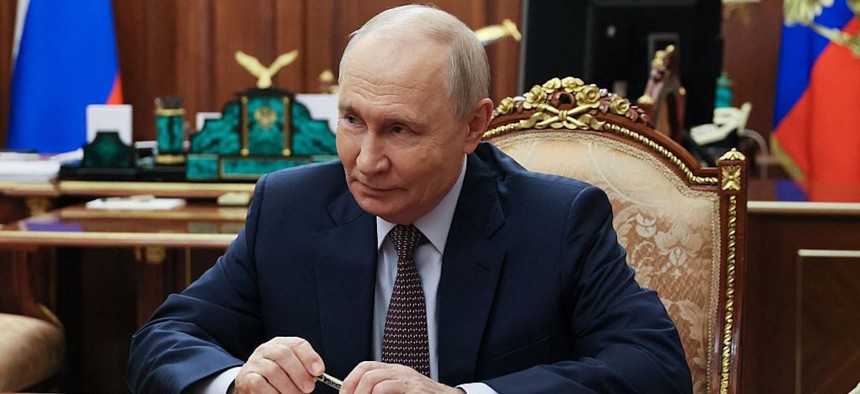
Russia's President Vladimir Putin attends a meeting with the Prime Minister in Moscow on October 19, 2026. Mikhail METZEL / POOL / AFP via Getty Images






Sen. Mark Warner, D-Va., and Rep. Jim Himes, D-Conn., described Russian disinformation and more targeted Chinese influence efforts during a press roundtable, while reporting better access under intelligence chief Jay Clayton.
Russia is targeting Democratic candidates and supporters of Ukraine from both parties with disinformation ahead of the midterms, the top Democrats on Congress’s intelligence committees said Wednesday as they outlined foreign efforts to influence voters and undermine trust in U.S. elections.
Sen. Mark Warner, D-Va., and Rep. Jim Himes, D-Conn., added that communication with the intelligence community has improved under Director of National Intelligence Jay Clayton, including a report received Tuesday outlining foreign activity. But Himes said several legally required threat assessments remain outstanding.
Himes and Warner’s descriptions of foreign adversaries’ operations ahead of next month’s elections echo patterns seen in previous cycles, with efforts to shape Americans’ views and undermine trust in institutions. There have been no indications of a foreign operation to manipulate voting machinery or alter ballots, they said.
“Do we expect disinformation? Yes. Do we expect specific election interference with the machinery of our electoral system? We’ve not seen that,” Warner said at a roundtable with reporters.
Himes described the Tuesday report, which is classified, as a “grab bag” of activity by foreign powers. Much of what he has reviewed resembles familiar patterns from previous elections, he said, although Warner warned that AI tools can make those operations more powerful.
Russia’s efforts include messages intended to cast doubt on institutions and voting systems, Himes said. “They’re throwing everything out there to generate a sense of chaos and anarchy.”
Warner emphasized Russia’s longstanding targeting of Democrats and pointed to public reports about deceptive content targeting Democratic candidates. Himes added that the intelligence he reviewed also indicated Russian focus on people from either party who have taken strong positions in support of Ukraine.
China’s efforts remain more targeted, the lawmakers said, with Warner noting its history of focusing on local or smaller races. They didn’t identify specific Chinese operations or targets from the classified findings.
Their account echoes Nextgov/FCW reporting from last week, where a current U.S. official said Russia is likely to pursue more overt influence operations around the midterms, while China is focused on shaping public opinion over time to advance broader geopolitical goals.
The lawmakers’ discussion of Iran and North Korea was less definitive. Himes said reporting on those countries often concerns what they are considering doing. He separately argued that Iran could influence Americans’ political views through its ability to affect oil prices.
Tehran could “take a couple of extra shots at ships in the Strait of Hormuz, which they’ve been doing in these last couple of weeks. They can activate the Houthis if they want to,” Himes said.
He added that intelligence sharing has improved since Clayton took over, describing it as “a little bit of a sea change,” though lawmakers are still waiting for some assessments. Intelligence findings due 120, 60 and 30 days before the election remain outstanding, as does the public version of the intelligence community’s assessment of foreign threats to the 2024 election.
A bipartisan classified election briefing for House Intelligence Committee members is also planned for next week, he added.
On Wednesday, the Office of the Director of National Intelligence, led by Clayton, held a briefing with state and local officials to discuss election threats. The call, originally scheduled for last week, was postponed due to technical difficulties.
The conversation and the offering of services “didn’t always appreciate the reality of being 13 days from the midterm election,” said one person who attended the call, speaking on the condition of anonymity to convey their thoughts about the sensitive discussion. They also noted that they “appreciated the gesture of partnership from federal organizations we haven’t heard much from these past 19 months.”
Himes said they have considered scenarios in which President Donald Trump cites intelligence to justify seizing ballot boxes or questioning the validity of the results. They have told Clayton, CIA Director John Ratcliffe and career intelligence personnel that they must be reachable if the president makes such a claim, so lawmakers can quickly establish what evidence exists.
“What is the basis of this intelligence? What is the source of this intelligence?” Warner said, describing the questions they would press.
If the president claimed attempts of foreign interference without briefing congressional intelligence leaders, Himes said he would publicly explain that he had received no information supporting the allegation.
“Now, does that end the crisis? No, but that’s the first step,” he said.
That concern follows Trump’s use of declassified intelligence in July to revive claims about the 2020 election. The records described China’s possession and analysis of U.S. voter information but did not establish that Beijing altered ballots or manipulated voting systems.
Both lawmakers offered a favorable account of intelligence analysts working on election threats. A recent meeting with career personnel at ODNI left them confident that a smaller remaining team was continuing to produce substantive work.
“We had a good feeling about the veracity and the commitment of the people that we met with on the non-political side, and they too will be available to us,” Himes said.