
CIA cyber intelligence helped US forces capture Maduro, deputy director says
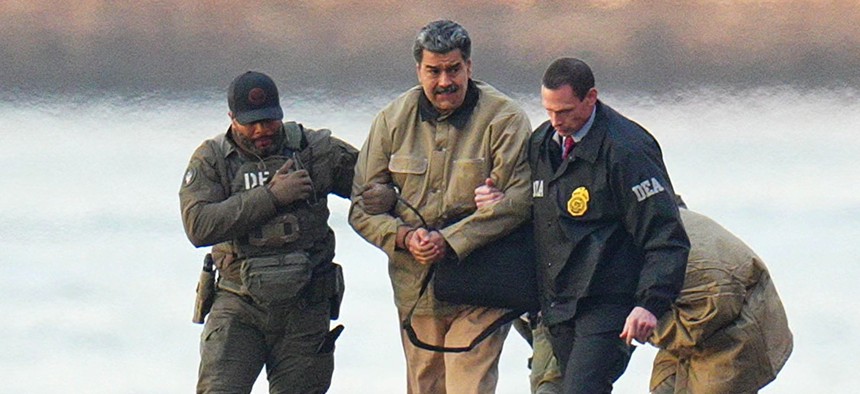
Nicolas Maduro and his wife, Cilia Flores, are seen in handcuffs after landing at a Manhattan helipad, escorted by heavily armed Federal agents as they make their way into an armored car en route to a Federal courthouse in Manhattan on January 5, 2026 in New York City. XNY/Star Max/GC Images



Michael Ellis credited the agency’s cyber intelligence officers with helping U.S. troops locate and apprehend the Venezuelan leader within minutes of landing.
CIA cyber operatives provided intelligence that helped U.S. forces locate and capture deposed Venezuelan leader Nicolás Maduro within four minutes of landing on the ground in January this year, agency Deputy Director Michael Ellis said Tuesday.
Ellis credited the agency’s Center for Cyber Intelligence with building what he called a “flawless intelligence picture” for Operation Absolute Resolve, the U.S. operation that seized Maduro.
“If you look at [Absolute Resolve], you know that operation was only made possible by a flawless intelligence picture, and that flawless intelligence picture was built on cyber operations enabled by our CCI team,” Ellis said, speaking at the Billington Cybersecurity Conference in Washington, D.C. Without that intelligence, he said, the agency could not have helped U.S. forces locate and apprehend Maduro as quickly as they did.
The remarks offer a more detailed public picture of how CIA cyber prowess helped U.S. forces locate and capture Maduro, expanding on earlier accounts from officials that acknowledged support without explaining the agency’s entire contribution.
Joint Chiefs Chairman Gen. Dan Caine previously acknowledged Cyber Command’s participation in the efforts and credited the CIA, National Security Agency and National Geospatial-Intelligence Agency with supporting the Venezuela mission. He described months of intelligence collection on Maduro’s movements and daily routines, but did not directly identify the CIA cyber role Ellis outlined.
During the capture mission, multiple intelligence agencies established crisis action teams to support Special Operations Command and Southern Command. A U.S. official familiar with the operation previously said the NSA provided geolocation support and monitored communications and signals that could reveal troop movements or plans to activate radar.
Ellis discussed the operation in explaining the CIA’s recent decision to elevate CCI to a mission center, a change he said gave their cyber operators greater priority and helped align resources around intelligence needs.
The change has helped the agency “bring cyber operations to bear to solve these tough intelligence problems,” Ellis said. He did not specifically identify the systems targeted or explain how the cyber operations revealed Maduro’s location.
The CIA primarily executes and coordinates human intelligence gathering overseas, often done undercover. Officers recruit and manage foreign assets to clandestinely gather intelligence on areas like economics and terrorism threats. Much of that work has often involved the use of technology, including computer intrusions.