
FBI queries of Americans’ data under FISA 702 rose 35% in 2025
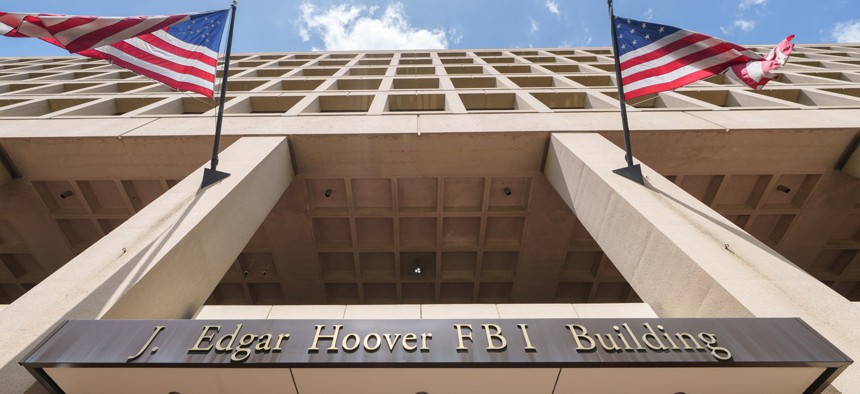
J. David Ake/Getty Images





The controversial spying power, which allows agencies to access foreigners’ overseas communications without a warrant, will expire in April unless Congress renews it. The White House is pushing for a clean extension.
FBI searches of U.S. person data collected using a controversial spying authority rose some 35% in 2025, according to an FBI letter to Congress that was obtained by Nextgov/FCW.
The bureau’s searches of Americans’ data, collected under Section 702 of the Foreign Intelligence Surveillance Act, rose from 5,518 in December 2024 to 7,413 in November 2025, according to the March 11 letter signed by Ted Groves, the acting assistant director of the FBI’s Office of Congressional Affairs.
The letter was sent to Sens. Chuck Grassley, R-Iowa, and Dick Durbin, D-Ill., the top lawmakers on the Senate Judiciary Committee.
The 702 authority, which permits the NSA, FBI and other agencies to access foreigners’ communications overseas without a court warrant, can incidentally sweep up communications of Americans talking to targeted persons, raising major civil liberties concerns.
The number of U.S. person communications gathered under 702 is often a key statistic cited by civil society organizations that have long pushed for major reforms to the law.
In 2024, only 38% of queries “returned either content or non-content 702-acquired information,” the letter says, adding that the figure dropped to 28% in 2025.
“Content” refers to the substance of the communications, such as the actual text of emails, chat messages or recorded phone calls. Conversely, “non-content” information is metadata about communications, including details like the email addresses or phone numbers used, IP addresses or the time a message was transmitted.
Collected 702 communications are stored in classified databases, where analysts query them for foreign intelligence. Search terms — known as “selectors” — can include names, phone numbers or email addresses of targeted individuals. Analysts may query stored U.S. person data when they believe doing so is reasonably likely to return useful information for investigations.
The letter was reported earlier by The Record, the news unit of cyber threat intelligence firm Recorded Future.
The FBI declined to comment.
Section 702 is due to expire in April unless Congress acts to renew it.
The Trump administration is pushing for a clean reauthorization of the law. FBI Director Kash Patel and CIA Director John Ratcliffe met privately with Senate Republicans Wednesday to push for an extension, as House Speaker Mike Johnson, R-La., said he intends to try passing a renewal the week before the authority lapses.
Ratcliffe has previously told Congress that the Trump administration attributes many of its national security achievements to Section 702, according to a person familiar with the matter who spoke on the condition of anonymity to share details of private discussions about the statute.
The increase outlined in the FBI letter will likely disappoint civil liberties groups, which have long pushed for a warrant requirement for searches of U.S. person data. National security officials have historically and successfully pushed back against a warrant measure in prior reauthorization cycles, though it came close to fruition during the 2024 reauthorization debate, when a House amendment failed in a 212–212 vote.
The FBI has acknowledged its improper use of Section 702, specifically admitting to searching for information on individuals involved in the January 6, 2021, U.S. Capitol riot, as well as people arrested during 2020 racial justice protests following the police killing of George Floyd.
The law, enacted in 2008, codified parts of the once-secret Stellarwind surveillance program created under the Bush administration after the Sept. 11, 2001, attacks. In 2013, former NSA contractor Edward Snowden disclosed documents detailing how the authority was used, fueling a global debate over privacy and mass surveillance.