
Cyber takes back seat to immigration in global threats hearing
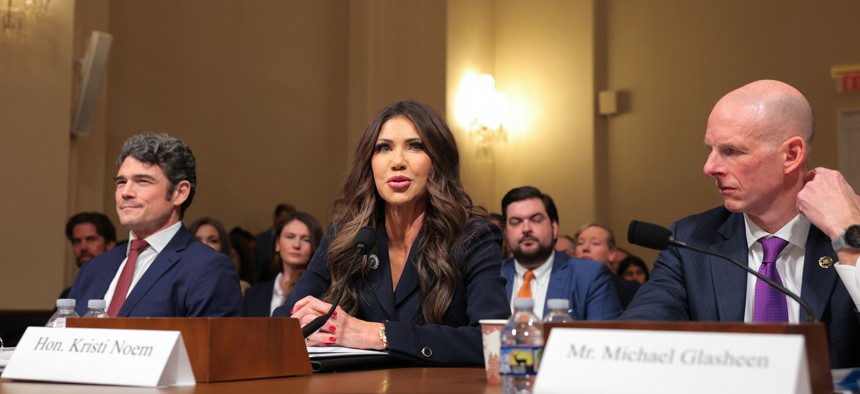
(L-R) Director of the National Counterterrorism Center Joseph Kent, U.S. Secretary of Homeland Security Kristi Noem, and Operations Director of the National Security Branch at the Federal Bureau of Investigation Michael Glasheen testify before the House Committee on Homeland Security in the Cannon House Office Building on December 11, 2025 in Washington, DC. Anna Moneymaker/Getty Images





Witnesses briefly touched on concerns about encrypted messaging and the threat China poses in cyberspace, as well as efforts to protect infrastructure that supports the worldwide internet.
Despite overwhelming focus on the Department of Homeland Security’s handling of immigration enforcement, a Thursday hearing on worldwide threats targeting the U.S. did feature some insights into the biggest cybersecurity challenges facing the nation.
DHS Secretary Kristi Noem, National Counterterrorism Center Director Joe Kent and FBI National Security Branch operations chief Michael Glasheen testified before the House Homeland Security Committee in the annual hearing meant to discuss terrorism, cybersecurity, drones and other matters that concern Americans’ security.
Kent said that the counterterrorism center is tracking the proliferation of encrypted messaging apps being used by terrorist proxy groups in the Middle East, as well as internet campaigns to spread propaganda online.
Those capabilities can allow groups to reach contacts in the United States to coordinate attacks, he said. Encrypted apps mask communications by converting messages into a ciphered text that outside observers can’t interpret.
Glasheen added that China continues to remain the most predominant cyber threat to the United States, echoing years of assessments from former officials and cybersecurity companies. A bedrock cyber intelligence-sharing authority, which was briefly renewed when the government reopened but faces possible expiration again next month, is “critical” for data exchanges to continue, he later said.
Asked by Rep. Morgan Luttrell, R-Texas, about how DHS manages undersea cable security, Noem said multiple department components are involved in protecting them from hacking or sabotage.
Those include the Cybersecurity and Infrastructure Security Agency and the Coast Guard, which conducts surveillance to seek out sabotage attempts on cabling systems, she said. The Office of Intelligence and Analysis, the embattled spy agency housed in DHS, also assists with “covert operations,” she said.
“They’re the ones who are coordinating with our intelligence agencies on what we see as hacking attempts, or enemies that would try to endanger those cables or cut them, damage them, so that they couldn’t be utilized to keep our critical infrastructure going,” Noem explained
Immigration dominated the rest of the hearing. Immigration and Customs Enforcement received a historic cash infusion this year, as the White House seeks to ramp up immigration raids and speed deportations. The agency, which is facing high degrees of controversy and scrutiny, is tapping into a recruitment pipeline run by DHS to boost the intake of cybersecurity and tech talent, a top agency official said last month.