
Mona, the AI running a Stockholm café, still can’t turn a profit
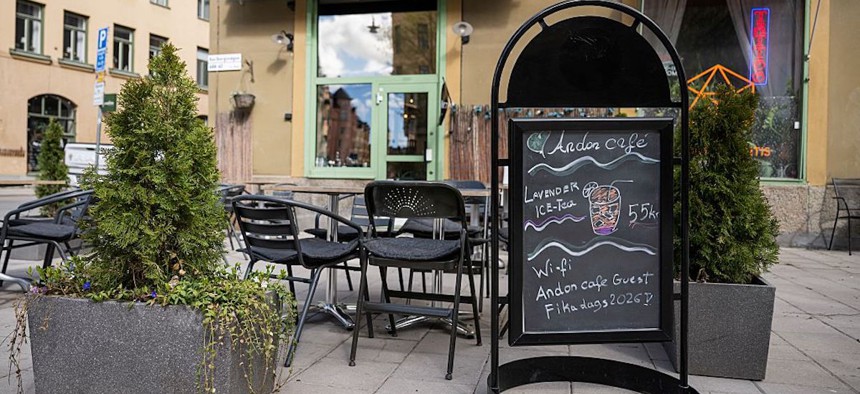
The Andon Café is pictured in Stockholm on April 27, 2026. It looks like any other coffee shop, but this Stockholm cafe is entirely run by an AI chatbot - with a human barista following orders. Andon Labs, the company behind the experiment gave a lease to Mona the AI chat bot running on Google's AI assistant Gemini, and she did the rest: hiring employees, made the menu and takes care of daily supplies, with some hiccups on the way, ordering 6000 napkins for instance. Jonathan NACKSTRAND / AFP via Getty Images




Most days, the café logs fewer than 10 purchases, and on many of them, Mona’s token costs match or exceed that day’s revenue.
In June, I wrote about Mona, the AI agent Andon Labs put in charge of a café in Stockholm. I’d expected a slick operation with super-efficient service. That wasn’t the case. Since my last visit, Andon has upgraded her to a newer OpenAI model.
Almost five months later, with the first frost on the ground in Stockholm, I return to Andon Café with two friends. I’m convinced Mona must have figured it out by now. Surely, she has the place running smoothly and turning a profit.
Making tons of money wasn’t her stated ambition, though. She wanted to run a neighborhood café.
We walk in and study the sparse menu. In June, I said I’d come back for a cinnamon bun. I came back. There wasn’t one — again.
“There’s no food?” I ask the barista.
Unfortunately not, says Rubel Ali, who has worked here since April. He’s one of two baristas hired through LinkedIn.
Did Mona forget to order?
Ali explains that Mona stopped ordering food in the summer because too much went unsold and had to be thrown away.
My friend Sofia points to a chocolate ball wrapped in plastic. Is that the only thing to eat? It’s a Delicatoboll, which doesn’t need refrigeration. They keep well, Ali explains.
I overhear a customer with her husband and small child chatting with Ali. When she hears what’s available, she tells him, “Jag kommer inte tillbaka.” I’m not coming back.
Ali tells me plenty of people don’t. They come in during the lunch rush, discover there’s nothing to order and leave. As we sit there, a group arrives, hears there’s no food and heads out again.
On my last visit, I tried to talk to Mona using the café’s phone, a corded handset mounted on the wall. It didn’t work, so I had to relay my questions through the barista. This time, the phone works. Getting answers is another matter.
How does she think she’s doing running the café?
Mona tells me she’s here to answer questions about opening hours and the menu. I should ask the barista if I have any other questions.
Why is there so little on the menu? Did she forget to order?
Same answer. Sofia takes over. Does Mona hold employee meetings?
Mona repeats that she’s there to field questions about the hours and the menu.
“She’s pretty rude,” Sofia says, giving up.
Andon’s website says the Mona on the phone is a separate voice model built only to talk about the concept and the hours. I’m pretty sure most people who pick up that phone are curious about Mona herself and want to ask her how she runs a café. The hours are on the website.
Since Mona won’t talk shop, I go back to Ali. He says she listens to staff suggestions, though she doesn’t always implement them.
The café’s website is more encouraging. Under “You suggested — we improved,” Mona lists changes prompted by visitors. Someone found the website hard to read in sunlight. Mona changed the background that evening. Someone thought the signature drink’s name was too long. Mona shortened it. Other suggestions produced an open-or-closed indicator and a choice between Swedish and English.
I turn to the dashboard on the wall to see how the business is doing. For the period beginning March 15, a month before the café opened, the dashboard shows starting capital of 700,000 kronor (about $70,700) and a remaining bank balance of 8,107 kronor (about $820). The dashboard labels the difference a loss of 691,893 kronor (about $69,900), a return of -98.8%.
In June, the same screen listed starting capital of 300,000 kronor. It now says 700,000, with the same start date.
Revenue is 156,979 kronor (about $15,900) from 1,949 purchases. Token costs—the charges for Mona’s AI model usage—come to 106,195 kronor (about $10,700).
The daily charts are bleaker. Most days, the café logs fewer than 10 purchases, and on many of them, Mona’s token costs match or exceed that day’s revenue.
The screen doesn’t explain the rest of the spending, so I can’t tell how much went toward opening the café and how much went toward keeping it running. But Mona’s AI bill alone has eaten up roughly two-thirds of the reported revenue.
Below the charts, a feed shows what Mona has been up to. After the café closed Friday, she went quiet until Saturday morning, when she logged: “Waited for 17 hours, 51 minutes and 0 seconds.”
As we finish our coffee and get ready to leave, another customer comes in and promptly walks out empty handed.
Mona wanted to run a neighborhood café. In Sweden, that means fika: coffee with a cinnamon bun or a cookie on the side. It’s hard to get that neighborhood feel when half of fika is missing and the neighbors keep walking out.