
ODNI is building a framework to boost spy agencies’ AI adoption
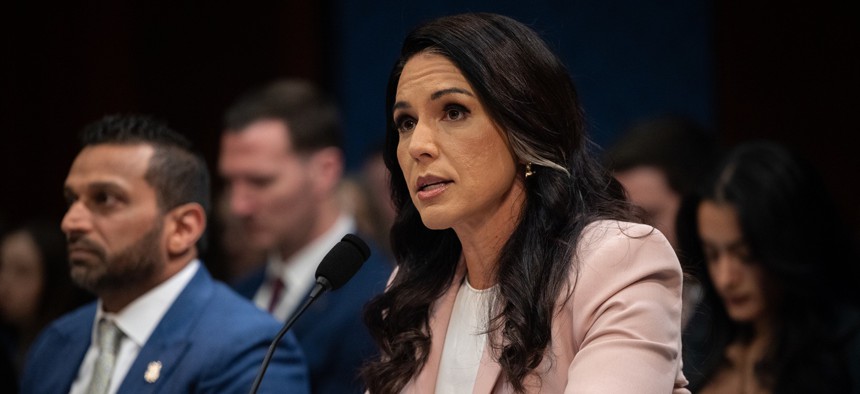
Director of National Intelligence Tulsi Gabbard testifies during a House Select Committee on Intelligence hearing on the 2026 Annual Worldwide Threats Assessment at the U.S. Capitol in Washington, DC on March 19, 2026. Nathan Posner/Anadolu via Getty Images






A tech modernization push launched last year also included expanded threat hunting across IC networks, according to an official.
The Office of the Director of National Intelligence is developing a policy framework and accompanying standards to speed AI adoption for cybersecurity and other tech tools across the intelligence community, as part of a broad cybersecurity and IT modernization effort launched under the Trump administration last year.
ODNI has also sought to tighten the intelligence community’s cyber posture, including through modernizing networks, standing up a shared authorization repository, pushing a zero-trust model and expanding threat hunting, according to an ODNI official who requested anonymity under ground rules accompanying a news release on the modernization efforts.
The office, which oversees America’s spy agencies and programs, is also working to align systems and policies across agencies and with the Defense Department, including joint use of classified commercial cloud infrastructure, the official added.
The update helps highlight a broader push to streamline cybersecurity operations across the nation’s spy agencies. It also shows how AI is becoming a core part of how intelligence offices detect and respond to cyber threats.
“Protecting our nation’s most sensitive information from those who seek to exploit it, while making sure our intelligence professionals have the tools and access they need to do their jobs, is not optional,” Director of National Intelligence Tulsi Gabbard said in a prepared statement. “It is essential to our national security.”
Intelligence agencies are a prime target for foreign adversaries and criminal hackers seeking to steal sensitive data, map operations and exploit vulnerabilities in some of the government’s most critical and classified systems. The intelligence community’s tech modernization push has spanned multiple administrations, accelerating over the past decade with the shift to cloud computing and evolving into a broader effort to break down data silos and speed up how intelligence is shared and analyzed.
This week, Politico reported that Gabbard is seeking to bring In-Q-Tel, the CIA-backed venture firm, under management of ODNI, a move that has sparked pushback from the CIA and others who warn it could disrupt the firm’s independence. The move could also give ODNI more visibility into and coordination over how emerging technologies are developed and deployed across the intelligence enterprise.