
NIH launches new AI agent for analyzing genomic data
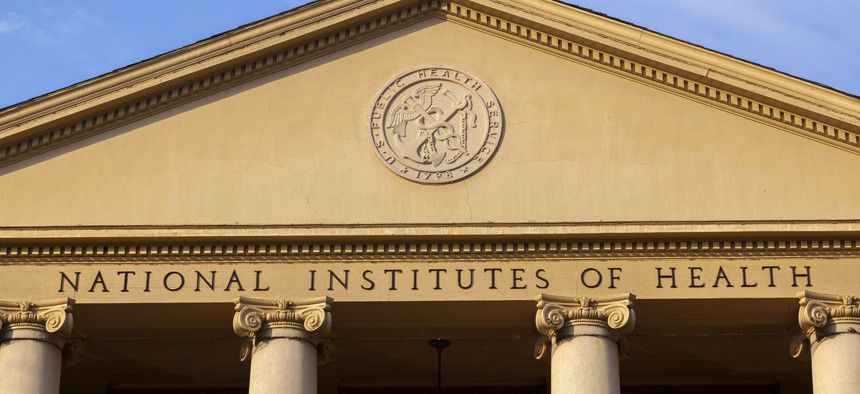
Grandbrothers/Getty Images



GeneAgent is the latest AI tool leveraged to expedite discovery in biomedical research fields.
A new artificial intelligence agent will help staff at the National Institutes of Health generate more detailed information on gene set work by interrogating its own output to help researchers sift through complex molecular data.
Called GeneAgent, the large language model will cross-reference its own initial predictions based on NIH data to offer analyses on biological pathways or functional modules to gauge how different diseases and conditions affect groups of genes.
Announced in a press release, one of the most critical components of GeneAgent is its ability to mitigate errors, like AI hallucinations, by independently comparing its own output against established knowledge arranged in separate databases.
“While LLMs such as GeneAgent are still limited by the information they can use and their inability to reason as humans, GeneAgent’s ability for self-driven fact-checking shows remarkable promise in mitigating AI hallucinations,” the press release said.
Research teams testing GeneAgent found that, when sourcing 1,106 gene sets from existing databases, GeneAgent first generated a list of functional claims based on this data, then independently used a self-verification capability to create a report that determined whether or not the software’s claim could be verified by existing data.
Two human experts manually reviewed 10 randomly selected gene sets evaluated by GeneAgent to see if its self-review capabilities worked and found that 92% of GeneAgent’s decisions were correct.
“Their detailed review confirmed the model’s effectiveness in minimizing hallucinations and generating more reliable analytical narratives,” NIH said.
The creation and deployment of GeneAgent signals AI’s potential application in biomedical fields, both in synthesizing large volumes of data and offering detailed analyses that could expedite knowledge discovery.
Scientists have long touted AI’s potential for drug discovery and other medical breakthroughs. Researchers at Walter Reed Army Institute of Research leveraged AI to help find drug components that could target COVID-19 in 2020, and the Biden administration hosted a 2024 event highlighting the research benefits of AI, partially in the drug discovery sector.