
sponsor content What's this?
Modernizing Government? Don’t Leave the Data Behind


Presented by
Melissa Data

Presented by
Melissa Data
No amount of automation solves inaccurate, stale or fragmented underlying data
Government agencies are getting with the program…modernization, that is. Moving applications to the cloud, automating workflows and tapping into AI-based support, and connecting systems is making citizen information more accessible to the government departments that need it. However, the quality of the data is another challenge entirely. A duplicate citizen record, an old or otherwise incorrect address, or a mismatched identity can undermine even the best and most advanced system of digital services. As modern government features increasingly connected systems, data moves quickly – spreading inaccurate data further and faster, and creating potential problems far from where the data may have originated.
Modernization, automation, and AI depend on the same foundation. When underlying citizen data is inaccurate, stale, or fragmented, agencies risk automating flawed processes and producing AI-driven insights that are no more reliable than the data that trained or informed them.
To stem the consequences of bad data, data quality must be built into how agencies collect, manage and share information, with just as much attention to security, performance, and ongoing maintenance as any other digital system. Can citizens access services without unnecessary delays? Are benefits delivered to the intended recipients? Can agencies respond in the best and most efficient ways when communities need help? These and many other mission outcomes depend on the reliability of the citizen data behind every transaction.
Citizen services, benefits and response are undermined by bad data
A citizen address may enter a government database to serve the purpose of delivering a tax notice or confirming eligibility of benefits. But that same information may eventually support other government missions, like identity verification, fraud screening, and public services such as emergency response.
Correct addresses alone are about far more than receiving important mail. Accurate location data helps agencies understand the areas where their constituents live, plan smarter response activities, and effectively deliver public safety alerts. An address that cannot be linked to a precise physical location (or is incorrectly associated with the wrong household) complicates emergency planning and delays urgent assistance.
The same information creates impact on benefits administration, causing missed communications and delayed payments. Gaps in identity verification also drive fraud, placing private or highly sensitive information in the wrong hands. The Government Accountability Office (GAO) pegs annual federal fraud losses ranging between $233 billion to $521 billion during fiscal years 2018 through 2022. Losses vary across risk environments and accordingly are not agency-specific, representing 3-7% of average federal payment obligations. Clearly, poor data quality makes it harder to verify recipients and identify suspicious claims.
Even routine government operations suffer consequences when citizen data is incorrect. Outdated addresses and location data affect proper routing of services and distort assessment of community needs – resources can’t be allocated effectively if the geography is not clearly defined and well-understood in terms of the constituents it serves.
Build data quality into modernization design
Citizen information is not static – and can become outdated without anyone entering incorrect information. At the same time, government modernization is starting to increase the ways different agencies use and share these records. A small error can carry over from one application to many others, triggering duplicate case file, identity mismatches, and ultimately, flawed decisions.
To preempt this, data quality must be part of government modernization design. The data quality journey starts at the beginning, validating information when it enters a system, and continues throughout the data lifecycle. Address verification and autocomplete tools can be seamlessly integrated into web portals and data entry applications, catching errors before records are created. Data matching and deduplication processes help agencies identify and resolve records that refer to the same person, while ongoing change-of-address processing keeps contact information current.
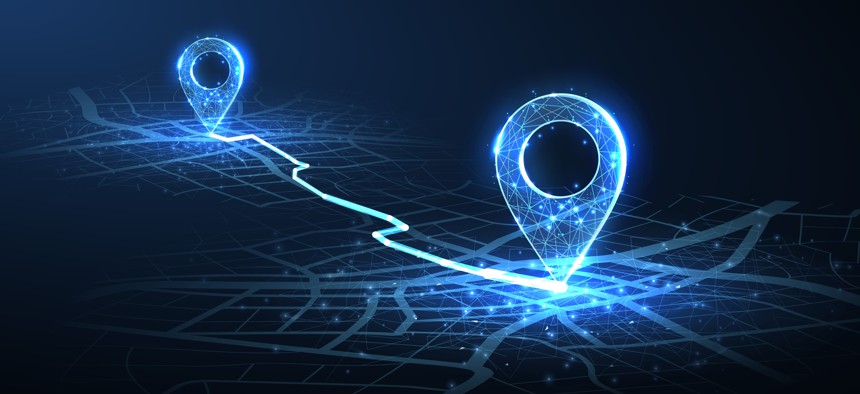
Location accuracy deserves equal attention and can easily be added to existing workflows. Rooftop-level geocoding links an address to a precise physical location rather than a general area, improving emergency planning and response, enabling more accurate routing of field services, and supporting better geographic analysis of community needs.
Build trust into the government modernization process
Government modernization inherently brings higher expectations for security and compliance. A basic tenet of digital government services is being able to verify citizen information without exposing sensitive records to unnecessary risk. Secure, real-time application programming interfaces (APIs) support that goal by allowing agencies to validate information as it is collected or used, without relying on persistent storage of Personally Identifiable Information (PII) as data moves between systems. FedRAMP® offers an alternative to periodic batch processing, allowing agencies to tap into accurate location and contact data within a cloud environment assessed against federal security requirements.
Melissa's FedRAMP®-authorized GovCloud Address Suite, for example, supports address verification, geocoding, and USPS® National Change of Address processing. These services help agencies identify errors during actual transactions and prevent questionable data from moving downstream.
Modern systems need data that keeps pace
Government services, and the constituents who rely on them, benefit greatly from fast, nimble automated systems designed to improve response time and simplify decision-making. But digitizing a bad record doesn’t make it good. The key is to ensure these systems are powered by smart, clean, enhanced citizen data – from the outset and throughout the data lifecycle.
Accuracy is not just something to be achieved. It’s a value that must be consistently maintained. Otherwise, agencies risk using modern technology to arrive at the same old problems, only at greater speed and scale.
Melissa partners with Carahsoft, The Trusted Government IT Solutions Provider®, to help government agencies make informed decisions based on verified, enriched, and secure citizen data. Through Carahsoft’s reseller network and major public-sector contract vehicles, agencies can now more easily access Melissa’s FedRAMP®-authorized address management, data quality, and identity solutions. Whether the application is national security or tax compliance, Melissa and Carahsoft equip public servants to use data in new ways to better serve constituents.
This content is made possible by our sponsor Melissa Data. It is not written by and does not necessarily reflect the views of NextGov/FCW's editorial staff.
NEXT STORY: Indeed: What agencies can do to future-proof hiring practices