
National Institutes of Health names Maureen Falvella as permanent CIO
Mark Wilson/Newsmakers via Getty Images



She served as acting CIO for roughly 10 months before moving into the role officially.
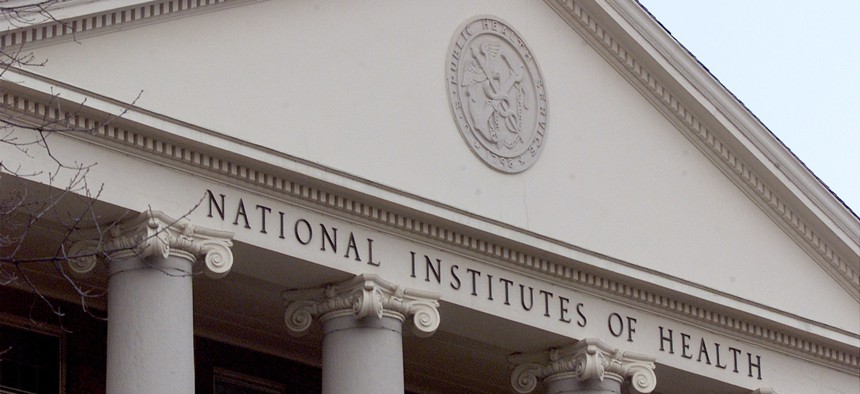
The National Institutes of Health has a new permanent chief information officer after its last permanent CIO, Adele Merritt, left the agency in August 2025.
Maureen Falvella became the CIO and director of the Office of the Chief Information Officer effective July 26, 2026, she announced on LinkedIn. Falvella is an NIH veteran, having spent more than 15 years at the agency in various technology and cybersecurity roles such as deputy chief information security officer, according to an NIH webpage.
She has worked on projects like the RECOVER long COVID research initiative, NIH’s first extramural research risk management framework and security standards for NIH controlled-access data repositories during her time at the agency.
“Looking ahead, I want to bring more unity to how NIH's 27 Institutes and Centers are supported by IT, and to open-source more of what we build — compliance-as-code, design patterns, metadata schemas — so the broader biomedical research ecosystem can build on it too,” Falvella posted on LinkedIn. ”I'm also excited to support NIH's Bio Genesis Mission and the Real-World Data Platform initiatives.”
Falvella oversees the agency’s $1.9 billion IT infrastructure and coordinates with leadership, institutes, centers and industry partners to advance biomedical research, according to NIH.
The NIH CIO role Falvella holds is a bit different from what it was several years ago, when the agency’s decade-long CIO and center for information technology director, Andrea Norris, was at the agency, according to Alastair Thomson, a former National Heart, Lung and Blood Institute CIO.
The CIO now reports to the center for information technology director while they used to report to the NIH director and principal deputy director, he told Nextgov/FCW.
And the position is now focused on IT policy, cybersecurity and capital planning, without direct science support such as the Biowulf supercomputer cluster and the STRIDES cloud services program within its purview anymore, he added.