
‘Faster and more disruptive’ tech underscores need to revamp the Fed's operations, its governor says
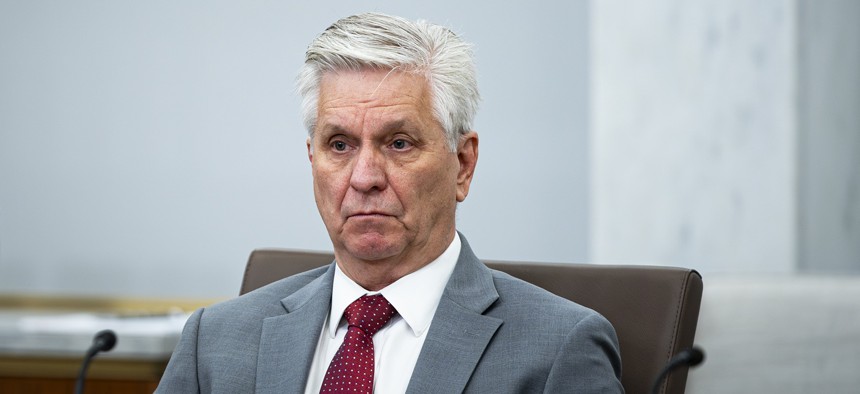
Christopher Waller, governor of the US Federal Reserve, during the Federal Reserve Board open meeting ion March 19, 2026 in Washington, DC. Al Drago/Getty Images





“The pace of technological change today means that the Fed does not have the time to sit back and ruminate about changes for months and years on end,” Federal Reserve Governor Christopher Waller said.
Federal Reserve Governor Christopher Waller called for an overhaul of the central bank’s operations on Tuesday, saying that external factors like new technologies and the need for modernization necessitate a push to streamline the 12 regional reserve banks’ business functions.
Speaking at a Brookings Institution event, Waller said core operations like human resources, IT oversight and procurement, and vendor management “are increasingly platform-based, technology-driven and scale-intensive,” adding that “these functions are not delivered better or more efficiently with geographic dispersion.”
These types of operations are currently overseen by each of the reserve banks individually. Waller said that the Fed needs to revamp this model because “the external environment has changed.” This decentralized oversight approach, he added, conflicts with “faster and more disruptive” technologies.
“Artificial Intelligence is a coming storm that threatens to alter — and I believe, improve — all organizations,” Waller said. “The pace of technological change today means that the Fed does not have the time to sit back and ruminate about changes for months and years on end. If we are going to ride this wave and not be drowned by it, we need greater agility to capture efficiencies and manage risk, such as cybersecurity, and incorporating AI into our system processes.”
The Fed has already operationalized some AI capabilities to improve its systems. In a February speech on its AI use, Waller said the 12 regional banks were “moving toward a Federal Reserve System-first approach — with shared standards and infrastructure, while preserving decentralization where it matters most, particularly for monetary policy and economic research.” He added that “AI is a case study of what this approach looks like in practice.”
Waller — who is the Fed governor responsible for reserve bank oversight — outlined two models for overhauling these core business functions. The first approach, Waller said, would focus on “standardization within centralized system leadership.”
Under this model, “ the current physical footprint of the Reserve Banks remains largely intact, but each major support function — IT, HR, finance, procurement, vendor, management facilities — is placed under a single senior leader who runs that function within a reserve bank for the entire system.”
The second approach, Waller said, “goes further” and “adds physical consolidation across key functions, or placing stuff in low-cost, appropriate-talent cities.”
In this proposed scenario, he said “some reserve banks may face lower levels of employment in the future,” and added that “I believe we will need to rethink the physical footprint of the reserve banks going forward.”
Waller’s remarks came the same day that Kevin Warsh, President Donald Trump's nominee to lead the Fed, testified before the Senate Banking Committee and said he believed that greater AI adoption across the U.S. workforce will ultimately help to boost the economy.