
2026 diplomacy: own the data layer before the AI layer
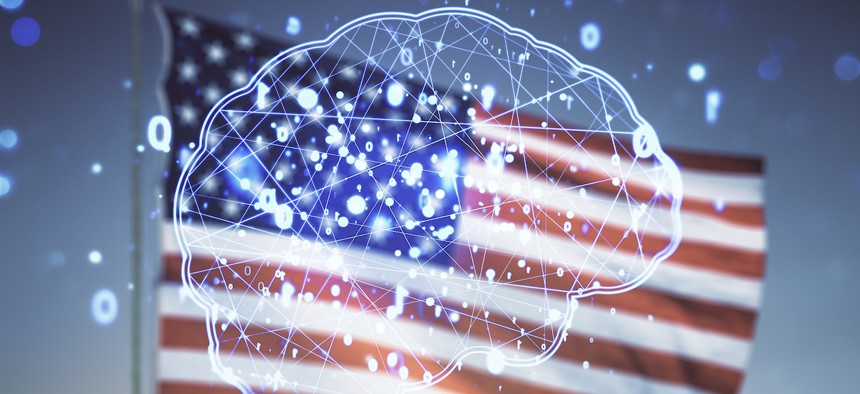
Igor Kutyaev/Getty Images




COMMENTARY | As global diplomacy enters 2026, infrastructure is destiny.
Washington is captivated by artificial intelligence. Some celebrate its transformative promise; others warn of its risks. The most forward-looking leaders understand AI will reshape the foundations of diplomacy. Amid the surge of pilots, task forces and strategy documents, a quieter and more consequential shift is taking place inside the U.S. government. AI may be the headline, but data infrastructure is the real story.
Data bottlenecks routinely slow diplomacy. The problem is rarely a lack of information. In fact, most governments produce a staggering volume of it. What we lack is the infrastructure to organize, connect and deploy that information in real time. The data infrastructure decisions diplomatic entities make in 2026 will determine whether this shift becomes a strategic advantage or a missed opportunity. And the ultimate beneficiary or casualty is constituents.
AI without the foundation is illusion
The State Department's recent strategic sequencing underscores a fundamental truth: AI capability is downstream from data capability. The department released its Enterprise Data Strategy before releasing its AI strategy, reflecting the recognition that no model, however advanced, can outperform a foundation built on disorganized, inaccessible, or poorly governed data.
The U.S. government generates an immense volume of information, ranging from diplomatic reporting to climate simulations, economic indicators, social-media sentiment and migration data. Yet these data pools are not interchangeable. Each carries its own structure, assumptions and contextual nuance, shaped by distinct missions and policy environments. When treated as uniform inputs, even the most advanced analytic systems struggle to deliver reliable insight.
What is required is not a single, top-down data solution, but infrastructure that can rapidly organize and adapt to the uniqueness of each domain, making data searchable, interoperable and intelligible as conditions change. Without this flexibility, scale becomes a liability rather than an advantage.
In diplomacy and national security alike, effective systems must adapt to the people, missions and decisions they are meant to support, not the other way around. The most effective uses of agentic intelligence recognize that value emerges only when systems are grounded in a clear understanding of domain context and paired with UI/UX interfaces that reflect how people actually work. Without that alignment, even advanced capabilities risk introducing friction rather than improving outcomes.
The quiet rebuild Is already underway
Amid the noise surrounding AI, the State Department is quietly rebuilding its data backbone. By the end of 2025, the department set out to double the number of domestic data experts, increase workforce training, expand data fluency among ambassadors and launch a dozen Post Data Programs in embassies around the world. These efforts are not mere technology procurements; they are investments in long-term fluency.
At the center of this rebuild is Data.State, a secure data platform designed to increase access to the department’s data and AI tools, intended to help those within the department make smarter policy decisions. It is the digital equivalent of constructing ports before deploying boats or laying fiber optic cables before streaming data. It is the type of early, foundational work that large institutions often overlook. This gives reason for optimism, but leveraging American private industry — particularly startups — in its construction and iterative deployment will prove imperative to maintaining a competitive edge.
While these infrastructure improvements are a step in the right direction, they alone are not the solution. As data systems mature, value increasingly depends on how they are operationalized. This must happen through interfaces that reflect the realities of segmented workforces and complex decision environments. Generic, blank-canvas AI interfaces may demonstrate technical capability, but they rarely translate into sustained institutional adoption.
Infrastructure Is destiny
The transformation underway at the State Department may appear bureaucratic, but it represents one of the most important shifts in modern diplomacy. Enduring impact in diplomacy and peacemaking will not come from chasing the shiniest AI model. It will come from building the systems that make innovation in statecraft scalable and sustainable.
For governments seeking to deploy AI effectively, whether in diplomacy or across other domains, the decisive factor is neither ambition nor algorithms. It is instead the integrity, adaptability and usability of the underlying data systems. Progress will depend not only on government reform, but on American companies innovating and working to understand end users and build tools designed for how institutions actually function.
As global diplomacy enters 2026, infrastructure is destiny. Those who invest not just in scale, but in purpose-built systems that evolve with the world around them will be far better positioned for the era ahead.
Joseph A. Farsakh is the Co-Founder and President of Helios, an AI-native platform transforming how policy decisions are made through its flagship product, Proxi. Before founding Helios, Joseph served as a Senior Policy Advisor at the U.S. Department of State, where he worked on U.S. policy in the Arabian Gulf and negotiations to end the civil war in Yemen.