
CBP expands facial recognition for non-citizens at borders
Nicolas Economou/NurPhoto via Getty Images




 By
Natalie Alms
By
Natalie Alms
U.S. citizens can opt out of the facial recognition process, which CBP intends to expand to all air, sea and land ports.
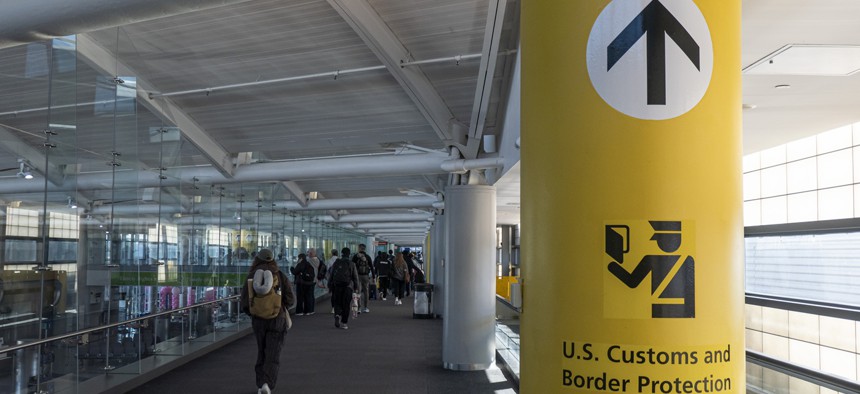
Customs and Border Protection is now authorized to require biometrics from all non-citizens leaving the United States, according to a final rule published by the Department of Homeland Security on Monday.
The goal is to use facial recognition to identify travelers in the name of immigration enforcement, finding people using fraudulent documents and individuals who’ve overstayed visas. U.S. citizens can opt out of the process, DHS says.
The agency has already widely implemented entry checks using facial recognition, and piloted the exit checks at 57 airports. Eventually, DHS intends to expand its entry-exit system to all air, sea and land ports.
The latest rule, which removes previous restrictions against using the technology on children under 14 or people over 79, will take effect on Dec. 26.
The checks rely on photographs taken of travelers as they leave or enter the United States.
Typically, DHS prepares a gallery of photographs of people expected to arrive or leave and then matches those against a live photo of an individual to verify their identity. For places where DHS doesn’t get advance information on who is coming or going from places like land points of entry for pedestrians, it simply matches the photograph against the image on their identity document.
In practice, this can look like federal officers in airports taking photos of passengers with cellphones. CBP is also partnering with airlines and airports to use their own technology and staff to implement the system during boarding.
While DHS says that the system is required in statute — and will help verify identities and pinpoint criminals, terrorists and people overstaying their visas — the expanded identity checks have caused anxiety for some travelers in the midst of ongoing immigration crackdowns.
The use of facial recognition may also raise concerns about security and accuracy. A DHS pilot program for land exits was breached in 2019, for example, and the U.S. Commission on Civil Rights released a report last year highlighting the disproportionate impact of facial recognition on marginalized groups.
CBP says that its minimum accuracy rate for the matching algorithm is 97%, and its operational data doesn’t show any differences in how the algorithm performs based on demographics.
U.S. citizens can opt out of the biometric program and go through a manual inspection, although oversight reports have previously critiqued the signage informing them of their ability to do so. DHS itself acknowledges in its rulemaking that there have been instances where U.S. citizens say they were told that they wouldn’t be able to board a plane without biometrics.
Photos of U.S. citizens are stored only for up to 12 hours, DHS says. Photos of non-citizens are transferred to the DHS central biometric database, where records can be held for up to 75 years. Photos of U.S. citizens in the Global Entry program are also put in that system.
Jeramie Scott, the senior counsel and director of the nonprofit Electronic Privacy Information Center, said that there is a risk of mission creep for the system, especially given the lack of U.S. regulations for biometrics and the Trump administration’s push to connect datasets across the government — a move that’s resulted in several lawsuits.
“What CBP is using it for now may not be the only way it uses it later on,” he said. “We’ve already seen this administration use information collected for one purpose for a different purpose, and it’s not a stretch to think that the same thing could happen in this context.”
If you have a tip you'd like to share, Natalie Alms can be securely contacted at nalms.41 on Signal.
NEXT STORY: SBA probing 8(a) fraud allegations at tribal-owned contractor