
Cyber Command carried out over 8,000 missions in 2025, director says
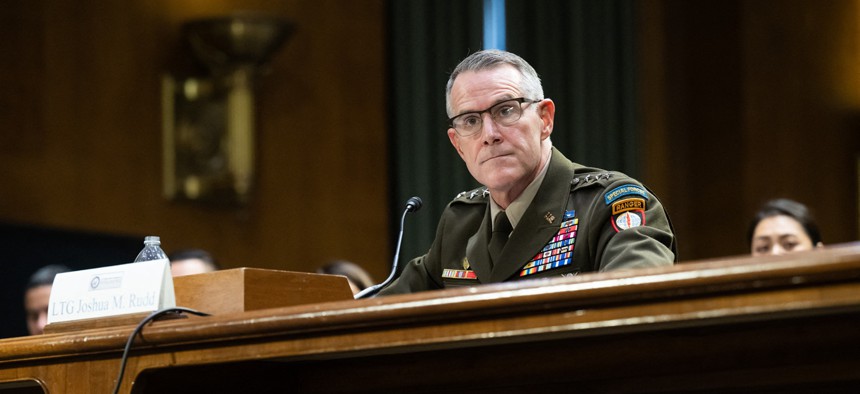
Gen. Joshua M. Rudd testifies during a Senate Intelligence Committee hearing on his nomination to be director of the National Security Agency, on Capitol Hill in Washington, DC, January 29, 2026. SAUL LOEB / AFP via Getty Images





The command expects to exceed that number in 2026, Gen. Josh Rudd told lawmakers Tuesday. A new Pentagon cyber strategy is also on the way, according to senior cyber official Katie Sutton.
U.S. Cyber Command, the digital combatant command tasked with defending the nation’s cyberspace and supporting other military components’ offensive and defensive operations, carried out over 8,000 missions in 2025, its new director said Tuesday.
Gen. Josh Rudd, recently confirmed to lead Cyber Command and the NSA in a dual-hatted capacity, told lawmakers on the House Armed Services Committee that he expects that number to increase through the remainder of 2026. He testified alongside Katie Sutton, the assistant secretary of defense for cyber policy.
The 2025 total is a 25% increase compared to 2024, Rudd added. The figures, which he did not elaborate on, help to underscore how cyber elements are becoming more ingrained into military activities.
The Trump administration has sought to highlight the command’s involvement in its broader military missions. Gen. Dan Caine, chairman of the Joint Chiefs of Staff, has acknowledged Cyber Command’s role in operations that targeted Iranian nuclear facilities and the ousting of Nicolás Maduro from Venezuela. More recently, the command has played a role in Iran war efforts.
“Our participation in Operation Absolute Resolve and Operation Epic Fury are prime examples of this integration in action,” said Rudd, referring to Venezuela and Iran, respectively.
Cyber Command often conducts “hunt forward” operations, defensive missions designed to identify, mitigate and learn from foreign cyber threats that target allied host nation networks.
Sutton, in her testimony, said her office is working on a new cyber strategy expected for release this summer.
“We’re taking all of those and really making it an integrated approach that’s going to be a very bold transformation of how we think about cyberspace,” she said, describing how the Defense Department is drawing on previous national security strategies to inform the crafting of this new framework.
The department last released a cyber strategy in 2023.