
Potential NSA, Cyber Command leader nomination transmitted to Senate
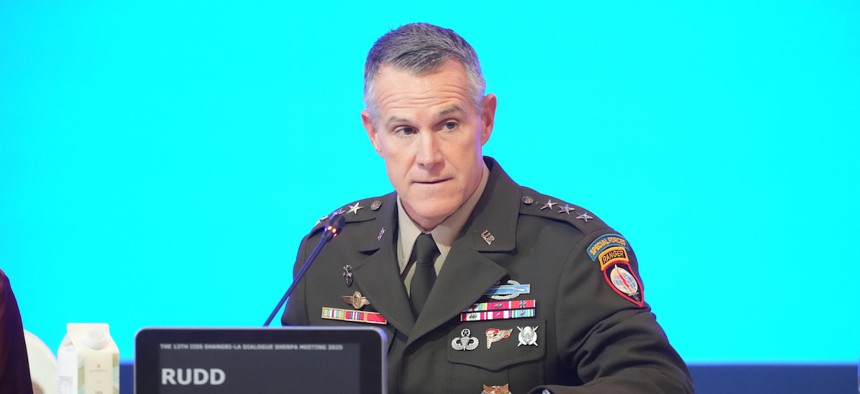
Lt. Gen. Joshua M. Rudd, deputy commander of U.S. Indo-Pacific Command, traveled to Singapore where he met with senior military and government officials and participated in the International Institute for Strategic Studies’ Shangri-La Dialogue Sherpa Meeting, Jan. 18-22, 2025. Photo courtesy of U.S. Indo-Pacific Command






The signals intelligence titan and combatant command have been without a permanent leader for months since far-right activist Laura Loomer pushed for the firing of Gen. Timothy Haugh in April.
The Trump administration on Monday night transmitted Army Lt. Gen. Joshua Rudd to the Senate Armed Services and Intelligence committees for promotion to the rank of general, signaling he is likely to be nominated for director of the NSA and Cyber Command.
Rudd, deputy director for Indo-Pacific Command, appears to not have previously served in a military cybersecurity position, but a person familiar with the matter confirmed the nomination and said his background in a global region that includes China would align with U.S. goals to counter Chinese cyber threats.
The Senate received President Donald Trump's nomination of Rudd for the potential leadership role on Monday, as noted in the Congressional Record. A four-star general is traditionally tapped to lead NSA and Cyber Command in a dual-hatted capacity.
The signals intelligence titan and combatant command have been without a permanent leader for months since far-right activist Laura Loomer pushed for the firing of Gen. Timothy Haugh in April. Since then, Lt. Gen. William Hartman has led the agency in an acting capacity.
Hartman is expected to retire once a full-time leader is put in place, two people familiar with the matter previously said.
NSA has been facing waves of internal strain and lower morale across its workforce amid a mix of leadership gaps, program cuts and recent extensions of deferred resignation offers, Nextgov/FCW reported last month. It recently achieved its goals to shed around 2,000 people from its workforce this year.
The NSA specializes in hacking and foreign eavesdropping and is deemed a “combat support agency” that faces oversight from both the Office of the Director of National Intelligence and the Defense Department. Both components get oversight from the Senate’s intelligence and armed services panels.