Insider Threats
Intelligence agency employee pleads guilty to trying to share classified info with foreign government
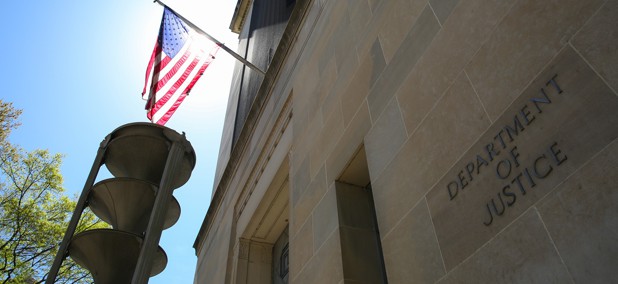
Nathan Vilas Laatsch was allegedly disgruntled by the Trump administration and willing to share sensitive data with the foreign country. The FBI set up a dead drop operation to intercept the classified materials.


From trusted insider to threat: Why it’s time to modernize insider threat protections for national security systems
COMMENTARY | Insider threats to national security systems are changing with technology, but requirements to defend those systems aren't keeping pace.
Unmonitored networks put US nuclear arsenal at risk, GAO finds
A Government Accountability Office report found that the Energy Department cannot effectively monitor potential insider threats to U.S. nuclear security because department staff “have not identified the total number of DOE’s stand-alone classified networks.”


Jury: Former DHS watchdog official stole software, employees’ personal info
The verdict is in for the last holdout in a scandalous scheme to defraud the government.


Jury: Former DHS Watchdog Official Stole Software, Employees’ Personal Info
The verdict is in for the last holdout in a scandalous scheme to defraud the government.


Modernizing Federal Cybersecurity Must Go Beyond Nation-State Defense
Insider risk can’t be overlooked.

Click ‘Like’, Get Punished Under Pentagon’s New Anti-Extremism Policy
First update since 2012 adds rules for social-media behavior.
White House embeds cyber EO in FISMA reporting
Federal agencies will be reporting on zero-trust adoption and automation efforts in their annual cybersecurity reports to the Office of Management and Budget.
Zero-trust has a branding problem
A zero-trust approach to cybersecurity is intended to increase vigilance and minimize risk, but without the necessary context, the concept could raise discomfort or even hostility among federal workers.


DDS Security Clearance Tool Evolves into ‘SITH’ Insider Threat Program
The Defense Digital Service’s automated investigations tool turns to the dark side of insider threat hunting and gets rebranded to match.
Zero trust, EMS top Air Force cyber priorities
Lt. Gen. Timothy Haugh, the commander of the 16th Air Force, said implementing zero trust principles was "foundational" to improve data use and mitigate vulnerabilities from the defense industry supply chain.


3 Essential Steps in Implementing a Comprehensive User Monitoring Program
Agencies must implement a comprehensive user monitoring program that effectively combines the human intelligence and artificial intelligence.
Microelectronics supply chain challenges and zero trust
When it comes to microelectronics supply chain, better security risk assessment as manufacturers base contend with ongoing threats.



Background Check Agency Wants a Social Media Search Tool
The Defense Department office charged with investigating potential insider threats wants to use social media to add context to allegations.
Agency zero trust does not start from point zero
The good news is that consistent IT policy spanning previous presidential administrations has allowed the federal government to slowly put the necessary building blocks in place for the inevitable zero trust architecture journey.
Small businesses ask Congress to focus CMMC on primes and DOD
Jonathan Williams, a partner at the Washington, D.C.-based law firm PilieroMazza, told lawmakers much of small businesses concerns could be assuaged if DOD and prime contractors shoulder the burden.
Supreme Court narrows scope of hacking law, but questions remain
The Supreme Court's ruling on Thursday decided a police officer did not violate a 1980s anti-hacking law, but the court ultimately left open questions about the Computer Fraud and Abuse Act's applicability for other purposes such as cybersecurity research.
Army wants teleworkers to switch off smart IoT devices
The Army announced it would require all military, civilian, and contractors to rid their telework environments of internet of things devices, such as smart TVs and speakers.
DHS Launches Internal Probe to Root Out 'Domestic Violent Extremism' Within Its Ranks
Department will work "with urgency and focus to address" insider threats, secretary says.
Supply chain risk: Addressing a multitude of single points of failure
As recent attacks have demonstrated, supply chain risks extend to the software and update process as well.


Defending Against Cybersecurity Moles Inside Your Agency
The move to a virtual workforce has been a boon to industrious hackers.
