5G

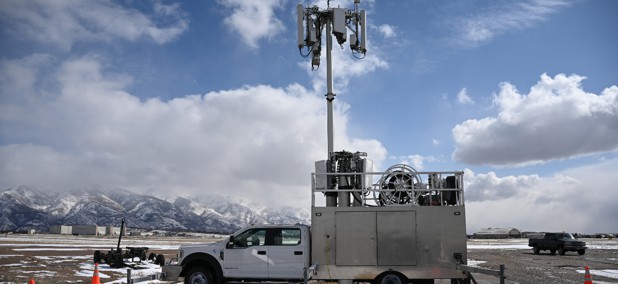
DOD issues private 5G deployment guide for military bases
The Department of Defense said it anticipates most military installations will use commercial 5G solutions but that “under certain circumstances, commercial networks may not fulfill an installation's requirements.”


3 Government and technology predictions for 2024
Technologies are moving ahead at warp speed.


Pentagon CIO prepares to take over 5G network portfolio
The plan is to build on existing test programs, like smart warehouses, while exploring new territory.


Meet the new GDIT
GDIT President Amy Gilliland discussed how the large systems integrator is responding to market shifts in a conversation with Nextgov/FCW.


US Proposes Designating Portion of Radio Spectrum for 5G in the Americas
If approved, the proposal could enable countries in the Americas to use the band to deploy 5G mobile services.




GSA Issues Guidance to help Agencies Buy Secure 5G
The guidelines for federal agencies detail best practices throughout the 5G ecosystem.


DOD’s Cyber Mission Depends on Skilled Workforce, Streamlined Tech, Officials Say
As the Pentagon works to implement zero trust architecture and a forthcoming national cybersecurity strategy, DOD components are moving to prioritize international partnerships, streamline tech capabilities and enhance recruitment and training initiatives to meet current needs.


Thousands of US Telecom Workers Needed to Deploy Broadband, Watchdog Says
The Government Accountability Office found “mixed evidence” that there is a shortage of skilled workers needed to carry out broadband deployment efforts.


NTIA Wants to Know How Best to Spend $1.5B in Grants for Secure, Open 5G
The money will be available to suppliers of information and communications technology in an effort to move away from Chinese companies like Huawei and ZTE.


GDIT-Led Coalition Working to Drive 5G Adoption Across Government
The coalition includes Amazon Web Services, Cisco, Dell Technologies, Splunk and T-Mobile.


FCC Bans Sale of New Devices From Chinese Companies Huawei, ZTE and Others
Friday’s order to ban new sales and imports from five Chinese companies is the first time in its history that the agency has blocked the sale of telecommunications equipment on national security grounds.


Almost 9 in 10 Federal Agencies Using or Considering 5G, Per Study
General Dynamics Information Technology’s survey of 500 federal employees identified concerns about costs, cyber risks and integration challenges when it comes to adopting 5G capabilities.





Lockheed Martin, Verizon Demonstrate Capabilities of 5G-Enabled Drones for DOD
Recent tests showcase how multiple drones can conduct real-time transfers of intelligence, surveillance and reconnaissance data to geolocate military targets.


How Will the Military Use 5G? A New Drone Experiment Offers Clues
High-speed, low-latency networks promises to help bring AI to bear on floods of battlefield sensor data.


Ligado’s 5G Network Will Interfere With Some DOD Satellite Services, Report Finds
The study determined that Ligado’s terrestrial wireless network will not cause ‘significant harmful interference’ for most GPS receivers, but will potentially impact Iridium satellites used by the Defense Department.


5G and Cloud Can Work Together to Improve Government Operations, Experts Say
Government and private sector officials explained how 5G can be an “underlayment” for scale and speed.


The U.S. Army Is Hunting For More Soldier-Connected Tech
A recent solicitation calls for soldier-centered networking and information technology that will link existing and prototype technologies together.


5G Presents a Need for Spectrum Coordination Among Federal Agencies
A Senate hearing underscored the need for federal telecommunication agency teamwork surrounding 5G spectrum deployment.


DOD Launches 6G R&D Center as it Eyes Transition to NextG Wireless Tech
The center will be part of the Department of Defense’s Innovative Beyond 5G Program and provide public and private sector collaboration on the emerging technology.


The Navy Is Testing 5G For Future Forward Operating Bases
From drone-deployed 5G networks to digital twinning, a small 5G pilot is rewriting the rules for battlefield connectivity.
