
2026 Government Eagle Award: Jeffrey Koses
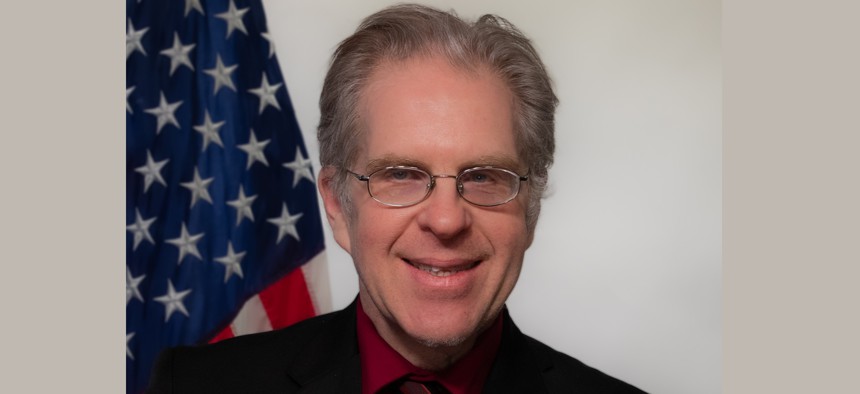
Jeffrey Koses is the senior procurement executive at the General Services Administration. Courtesy: GSA






Koses landed at GSA initially buying furniture for the federal government and found the agency's mission "fascinating."
Jeffrey Koses paced the floor of his home in the middle of the night in 1995, trying to get his newborn son back to sleep by talking him through potential responses to a stack of procurement protests waiting on his desk.
Somewhere in those 2 a.m. conversations, three ideas took hold. The government needed to communicate better with industry to avoid protests. The workforce shouldn’t be stuck working 16-hour days just to keep up. And technology should make the job easier, not harder.
Today, as the senior procurement executive at the General Services Administration, Koses applies those same principles to one of the government’s most ambitious acquisition reforms: the Revolutionary Federal Acquisition Regulation Overhaul.
Koses’ path into federal acquisition wasn’t planned. With a degree in history and political science and “no clue” what to do next, he landed in a GSA management development program buying furniture for the federal government.
“I found the mission was just fascinating, because GSA is the behind-the-scenes engine that keeps the rest of government working,” he said. “Any initiative that I saw going on in the country, any story in the paper, I would find a GSA connection.”
He moved between operations and writing policy, often having to live with what he wrote. Policy, he learned, isn’t something people sit down to read; it has to be clearly written for the contracting officers and industry partners who use it.
That personal experience shaped his approach to major initiatives. Koses served as the executive sponsor behind OASIS, a professional services contract vehicle that first launched the scorecard model and became one of GSA’s flagship programs. He also introduced transactional data reporting to the Federal Supply Schedules, shifting pricing toward real-world marketplace data.
Koses recognized early that the real challenge in rewriting the FAR would be driving a culture change.
Instead of relying solely on the traditional rulemaking process, he built a cross-agency “tiger team,” brought practitioners and technologists into the process, and used deviations to test changes in real time.
Within six months, the text of the FAR was reduced by 25%, eliminating 484 pages and 2,724 “must-do” requirements and giving acquisition professionals greater flexibility to make judgment-based decisions.
That flexibility, Koses believes, will change how the system operates. He paired the overhaul with a push for transparency and engagement, such as industry-only sessions designed to encourage candid feedback on public platforms like Acquisition.gov.
For Koses, that work reflects a broader leadership approach: go where the problems are.
“I always looked for the office or the program that was seen as troubled,” he said. “If I go to something that’s struggling, I can make it better.”
Decades after that sleepless night, the throughline remains the same: simplify the system, empower the people using it and make government work better from the inside out.