
AI info-sharing center is in development, CISA official says
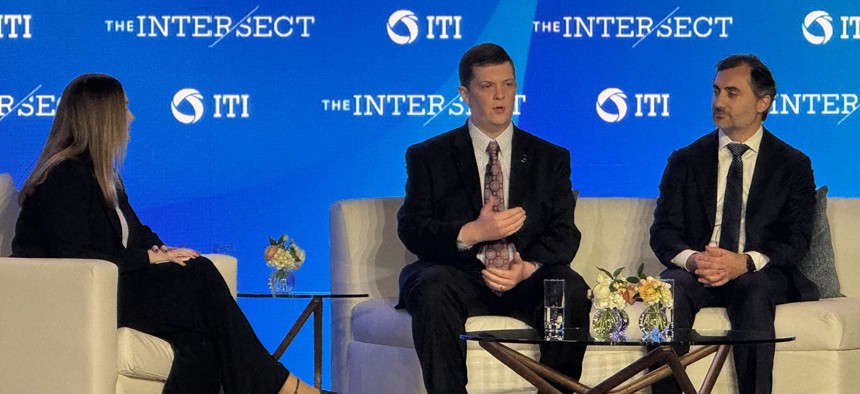
(L-R) Courtney Lang, ITI VP of Policy, Nick Andersen, EAD for Cybersecurity at CISA, and Drew Bagley, chief privacy officer CrowdStrike, speak onstage during a Feb. 3 Information Technology Industry Council summit. David DiMolfetta/Staff




CISA’s Nick Andersen told reporters that he didn’t know of a completion timeline, but talks were ongoing across government and industry.
An “ongoing policy dialogue” between stakeholders is the latest update in the development of a cyber intelligence-sharing body focused on AI security that the White House ordered last year, a top Cybersecurity and Infrastructure Security Agency official said.
Nick Andersen, CISA’s executive assistant director for cybersecurity, provided the update about the AI Information-Sharing and Analysis Center, or AI-ISAC, at the Information Technology Industry Council’s Intersect policy summit on Tuesday.
The info-sharing group, unveiled last summer as part of the sweeping White House AI strategy, is being discussed among industry and government officials working to pull together the right resources for the center without accidental duplication, Andersen said.
“We just want to make sure we’ve got the right elements of, how do we pull together people, and how do we take advantage of the leadership position that we have” early on, he said. He added that the U.S. doesn’t want to stand up an information-sharing initiative too similar to what may already exist among private-sector players.
ISACs are organizations that act as a central data-sharing hub for owners and operators of key infrastructure sectors like water, finance and healthcare. The AI-ISAC, led by the Department of Homeland Security — where CISA is housed — aims to overwatch AI-linked cybersecurity threats.
The talks underscore the complexity of standing up a government-backed AI information-sharing effort that spans both regulators and private firms. Such an ISAC would give government agencies and companies a formal channel to quickly transmit threat intelligence, vulnerabilities and incident reports tied to AI systems.
Asked about a completion and launch date for the AI-ISAC, Andersen told reporters after his on-stage appearance that he doesn’t know of a timeline associated with its release.
“It’s a pre-decisional memo right now that’s working its way through,” he said. “So we’ve got a couple of different options that we want to be able to consider.” The most important part “is just making sure that we find the right balance in the approach between government and industry leadership to make sure it’s going to be as effective as possible.”